
 活动
活动
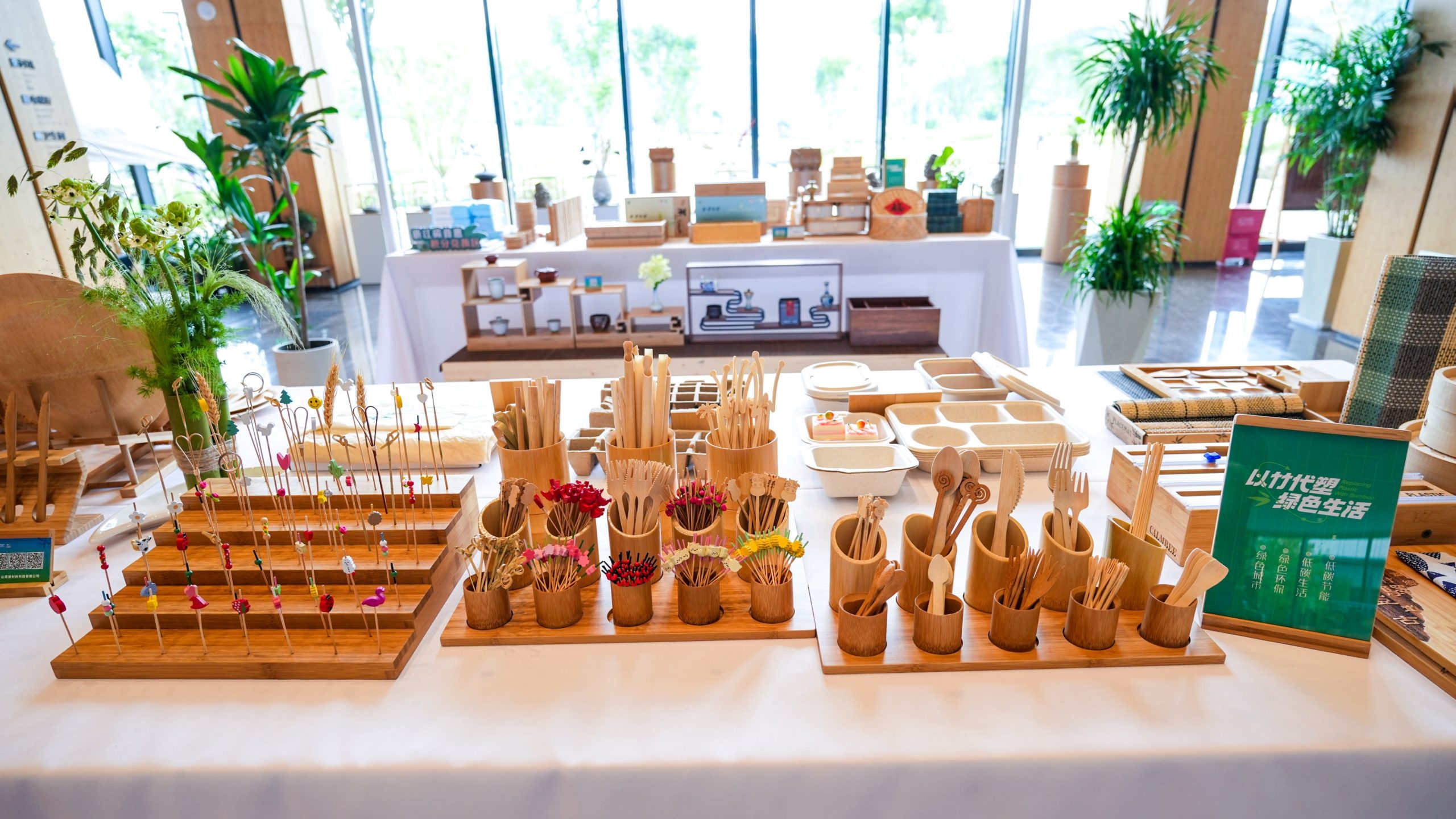
First International Symposium on Bamboo as a Substitute for Plastic
First International Symposium on Bamboo as a Substitute for Plastic
If you are interested in attending, please fill out and send the registration form, a copy of your passport identification page, and a brief CV to .
EVENT
First International Symposium on Bamboo as a Substitute for Plastic
WHEN
7 – 8 November 2023
WHERE
China National Convention Center
7 Tianchen East Road, Chaoyang District, Beijing, P.R. China
OVERVIEW
The main theme of the symposium is “Collaborative Innovation to Globally Promote Bamboo as a Substitute for Plastic.” This symposium will be a good platform for global stakeholders to exchange knowledge and best practices, explore innovation opportunities, improve market mechanisms and encourage policy formulation.
This symposium encompasses an opening session, keynote presentations, four parallel sessions and a closing ceremony.
The four parallel sessions will focus on the following thematic areas:
Theme 1: Enabling policy to support the Bamboo as a Substitute for Plastic Initiative
Theme 2: Innovative technologies in bamboo cultivation
Theme 3: Industry and enterprise development for green economic development
Theme 4: Innovative technologies for value addition at industrial scale
OBJECTIVES
This symposium marks the first anniversary since launching the Bamboo as a Substitute for Plastic Initiative. The objectives of the symposium are:
- To provide a platform for sharing research progress and engaging in a dialogue for mobilizing INBAR Member States and the international community to accelerate the progress of the Bamboo as a Substitute for Plastic Initiative;
- To raise awareness on the potential of Bamboo as a Substitute for Plastic, especially in terms of mitigating plastic pollution and climate change; and
- To showcase research and innovation as well as share success stories and good practices aimed at promoting collaboration among INBAR Member States.
BACKGROUND
Plastic pollution is one of the most pressing environmental issues facing humankind today. An estimated 450 million tonnes of plastics are produced annually, and the majority (~85 percent) ends up in landfills or in natural environments, causing havoc across terrestrial and marine ecosystems. Most plastics are produced from fossil fuels, and greenhouse gases are emitted throughout the life cycle of plastics. To mitigate plastic pollution and climate change, more than 100 countries have imposed restrictions or bans on certain single-use plastics. An Intergovernmental Negotiating Committee (INC) was established by the UN General Assembly to develop a legally binding instrument on plastic pollution, including in the marine environment, and INBAR is part of the committee.
On 7 November 2022, during the Opening Ceremony of the Celebration of INBAR’s 25th Anniversary and the Second Global Bamboo and Rattan Congress, China and INBAR formally launched the Bamboo as a Substitute for Plastic Initiative. Since the launch, a number of actions have been undertaken to advance the goals of the Bamboo as a Substitute for Plastic Initiative, including: (a) formulating a Global Action Plan for Bamboo as a Substitute for Plastic; (b) planning and launching the project “Research and Demonstration of Key Technologies in INBAR Member States”; (c) facilitating the inclusion of bamboo into global policy frameworks by participating in INC-1 and INC-2 as well as the World Trade Organization (WTO) Dialogue on Plastics Pollution and Environmentally Sustainable Plastics Trade; (d) promoting the Bamboo as a Substitute for Plastic Initiative at international and national levels, including at the UNFCCC COP 27, 5th UN Conference on the Least Developed Countries, UNFF-18, World Environment Day, China International Consumer Products Expo and more.
The symposium is hosted by INBAR and the National Forestry and Grassland Administration of China (NFGA), and organized by the INBAR Secretariat and the International Centre for Bamboo and Rattan of NFGA.
Event information
-
 7 - 8 November 2023
-
 Beijing, China
-

Sun Lianpeng


