International Bamboo and Rattan Organization

International Bamboo and Rattan Organization

BAMBOO AS A SUBSTITUTE FOR PLASTIC INITIATIVE

THE BASP INITIATIVE SEEKS TO REDUCE PLASTIC POLLUTION AND TACKLE CLIMATE CHANGE.

The Bamboo as a Substitute for Plastic (BASP) Initiative is an important part of the Global Development Initiative (GDI), an international tool for accelerating the achievement of the 2030 Agenda for Sustainable Development.

24 JUNE 2022

At the High-level Dialogue on Global Development hosted by the Government of China, the BASP Initiative, set to launch by the Government of China and INBAR, was included in a list of deliverables in the Chair’s Statement.

20 SEPTEMBER 2022

At the Ministerial Meeting of the Group of Friends of the GDI, China announced it would implement the BASP Initiative, jointly formulate the Initiative’s Global Action Plan with INBAR, and work with all parties to address global plastic pollution.

7 NOVEMBER 2022

At the opening ceremony of the 25th Anniversary of INBAR and the Second Global Bamboo and Rattan Congress, the Government of China and INBAR jointly launched the BASP Initiative with INBAR Council’s support.

7 NOVEMBER 2023

At the First International Symposium on Bamboo as a Substitute for Plastic, China and INBAR released the official Global Action Plan for Bamboo as a Substitute for Plastic (2023–2030) with INBAR Council’s approval, which will function as the main framework for coordinating and implementing the BASP Initiative.

BASP INITIATIVE

The initiative is aimed at deepening cooperation of the Global Development Initiative by realizing the outstanding advantages and potential of bamboo in reducing plastic pollution, replacing plastic products and providing a nature-based solution for energy-intensive and difficult-to-degrade plastic products, while making a positive contribution to the implementation of the 2030 Agenda for Sustainable Development.

GLOBAL ACTION PLAN

The BASP Initiative is guided by the framework of its Global Action Plan. It sets forth a series of actions that seek to marshal global resources and key actors to tackle plastic waste and climate change.

GOAL 1

Releasing support measures at a faster pace

GOAL 2

Improving research levels

GOAL 3

Encouraging exploration in innovative fields

GOAL 4

Promoting the development of market mechanisms

GOAL 5

Intensifying promotion

GOAL 6

Consolidating the foundation of partnerships

HAZARDS OF PLASTIC POLLUTION

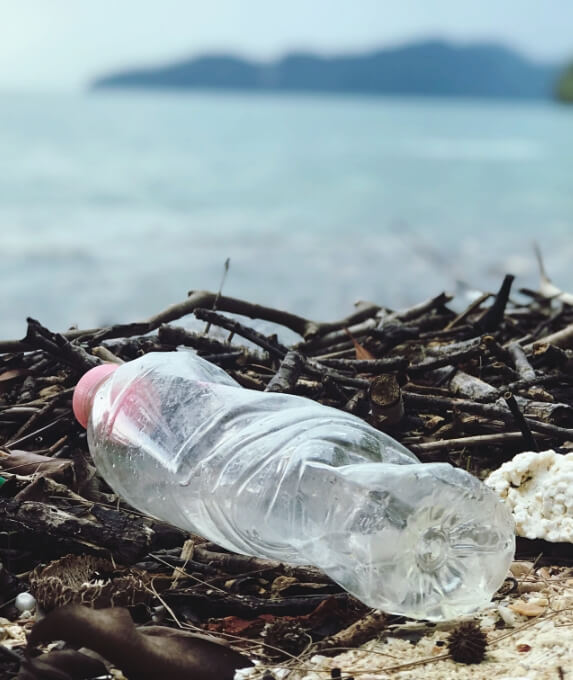
Plastics are an important part of our modern lives, with uses in packaging, construction, textiles, and more. However, with over 400 million tonnes of plastic waste generated annually, there have also been severe drawbacks to the world’s embrace of the material.

Over the last fifty years, billions of tonnes of plastics have ended up in landfills or been discarded in natural environments, wreaking havoc on terrestrial and marine ecosystems. Plastic waste leaches harmful chemicals into soils, contaminating farmland and compromising food security. In oceans, plastic waste accounts for 85% of all ocean waste,leading to declines in marine biodiversity and damaging aquatic ecosystems.

Plastics also contribute to climate change. Mainly produced by fossilfuels, greenhouse gases are emitted throughout the life cycle ofplastics. As plastics use and waste increase globally, these emissions are expected to double by 2060 if the world does not introduce new policies.
BENEFITS OF BAMBOO

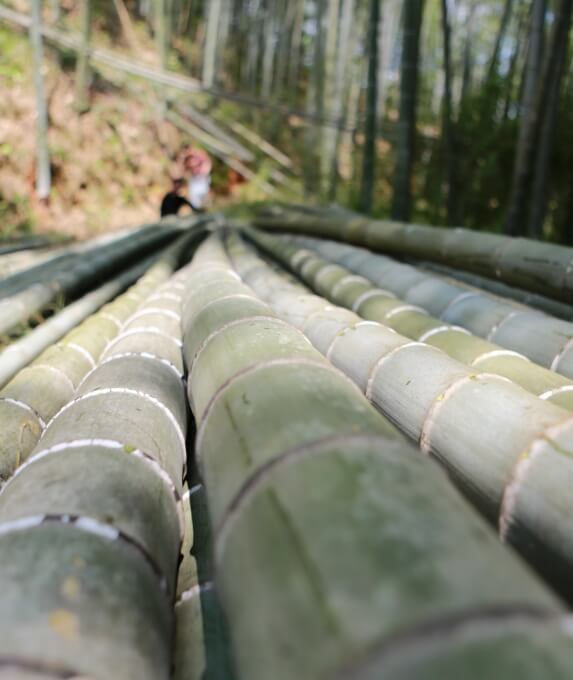
Bamboo grows across over 50 million hectares, most of which is in the Global South, and features many other advantages to plastics.

Bamboo is annually harvestable, maturing in three to four years. It is also biodegradable, capable of breaking down within two to six months with proper composting. Conversely, some plastics take hundreds of years to break down, degrading into microplastics with potentially harmful impacts.

Bamboo forests act like a giant carbon sink, efficiently sequestering more carbon than some tree species. On top of that, durable products made with bamboo lock in carbon for the product’s entire lifespan, unlike plastics which mostly rely on fossil fuels and energy-intensive processes.

Over 10,000 types of bamboo products have already been developed, from daily necessities to construction materials. The world is now waking up to the promise of bamboo as a critical tool for ushering in a biobased low-carbon economy and defeating the scourge of plastic pollution.

BASP INITIATIVE RELATED EVENTS

BASP Initiative Related Publications

Bamboo's Solution to Plastic Pollution

Bamboo as a Plastic Substitute to Address Plastic Pollution and Climate Chang...

Bamboo and Plastic Pollution: Fact Sheet

This fact sheet provides a brief introduction to the Bamboo as a Substitu...