International Bamboo and Rattan Organization

International Bamboo and Rattan Organization

ECONOMIC REVITALIZATION WITH BAMBOO IN ECUADOR

Ecuador

2021
2023

Donors

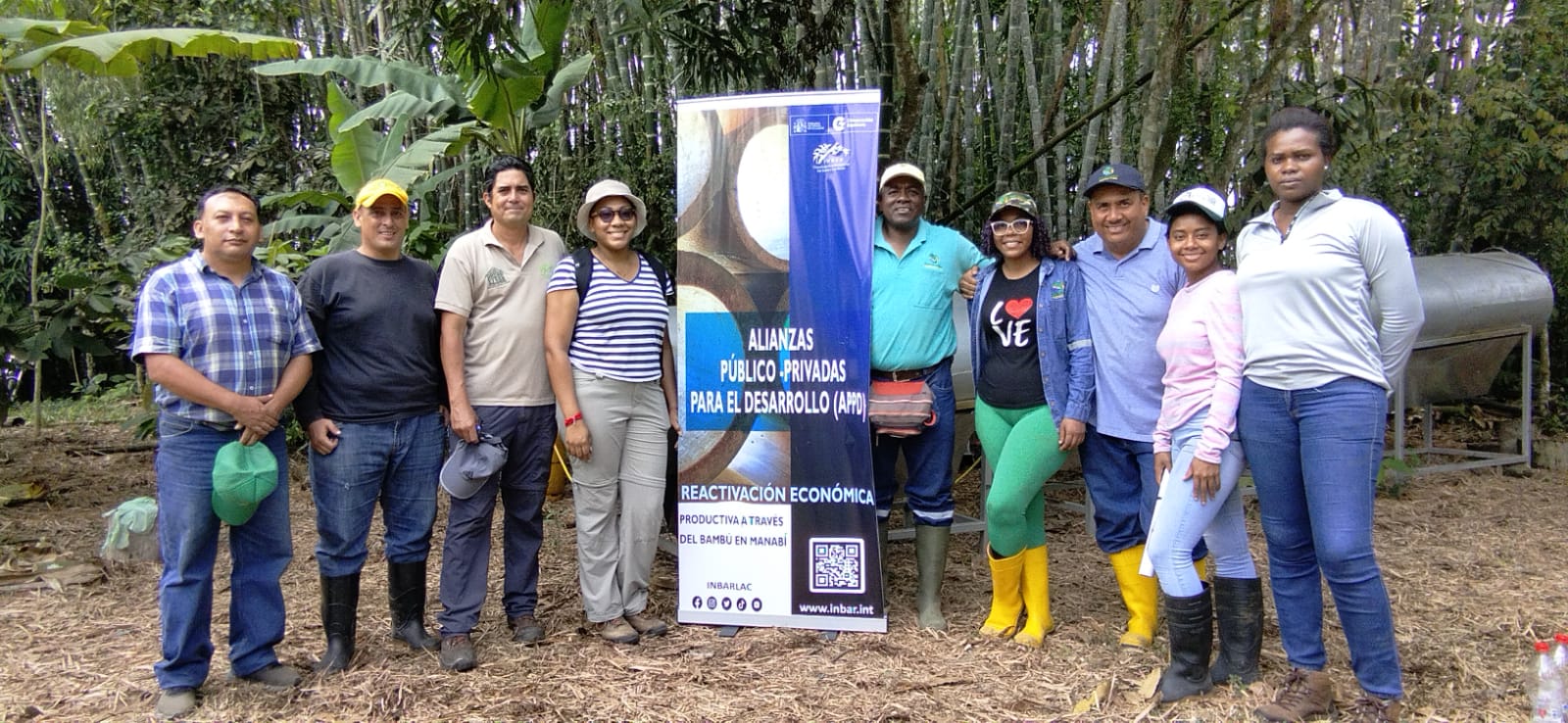
Support to the economic-productive revitalization of the province of Manabi through sustainable development based on bamboo, including the creation of public-private partnerships for development

The impact of COVID on local economies and the need to seek options for sustainable development has led us to look for opportunities by using the available resources in the countries. Bamboo, a resource abundant in the region for thousands of years, provides opportunities to generate truly sustainable development and at the same time an economic revitalization for the most vulnerable population. The creation of public-private strategic partnerships is a key element in the implementation of this project, that will allow the development of the industry, new job opportunities and the increase and expansion of the bamboo market.

These partnerships will allow the commercialization of primary bamboo products including their production, supply, processing and final distribution. A cost analysis of the entire process will be carried out, from handling to internal commercialization or export of the processed fibre according to the specifications of potential buyers. Likewise, a communication and dissemination mechanism will be consolidated on good practices in the sustainable construction of infrastructures with bamboo by local governments and the promotion of this type of work.

Objectives

The general objective of this project is to support and promote the bio-based economy as an engine for sustainable development, green recovery and post-COVID economic revitalization.

Specific objective

  • Support for the economic-productive revitalization of the province of Manabi through sustainable development based on bamboo, including the construction of public-private partnerships for development.
2021

The project began its activities at the end of 2021 by identifying the most vulnerable groups affected by the impact of COVID-19. Municipalities, the Federation of Construction Chambers, private actors and the academy were reached out to determine the mechanisms to generate business through the sustainable use of bamboo and the incorporation of public-private partnerships

There are more than 30 bamboo producers in the province of Manabí, interested in starting the recognition processes for the implementation of good practices on bamboo management and preservation, through local guarantee committees, which will allow them to offer high-quality products that are recognized in the market.

2022

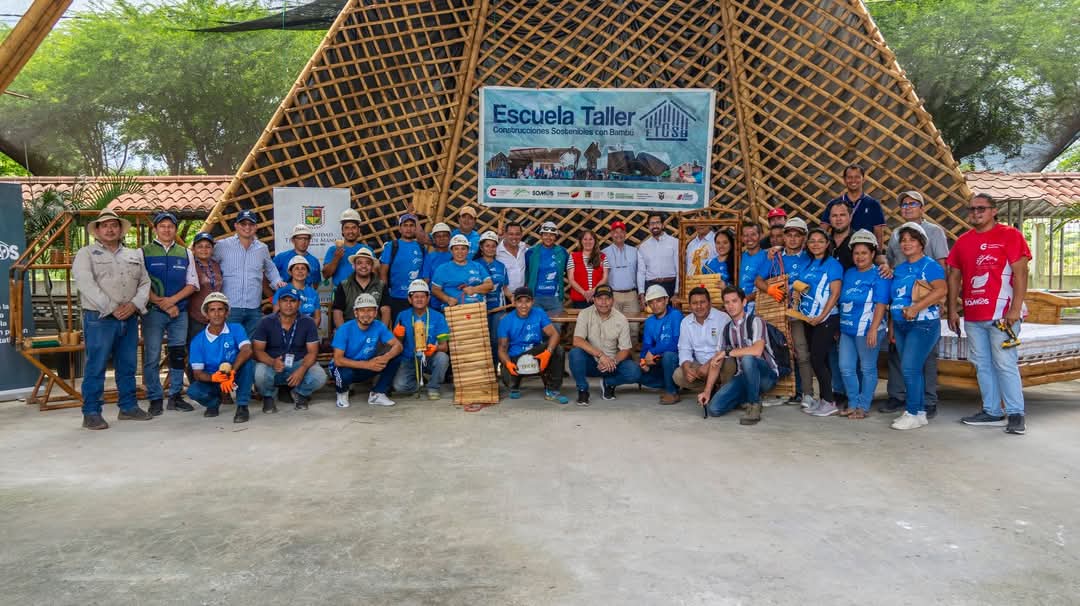
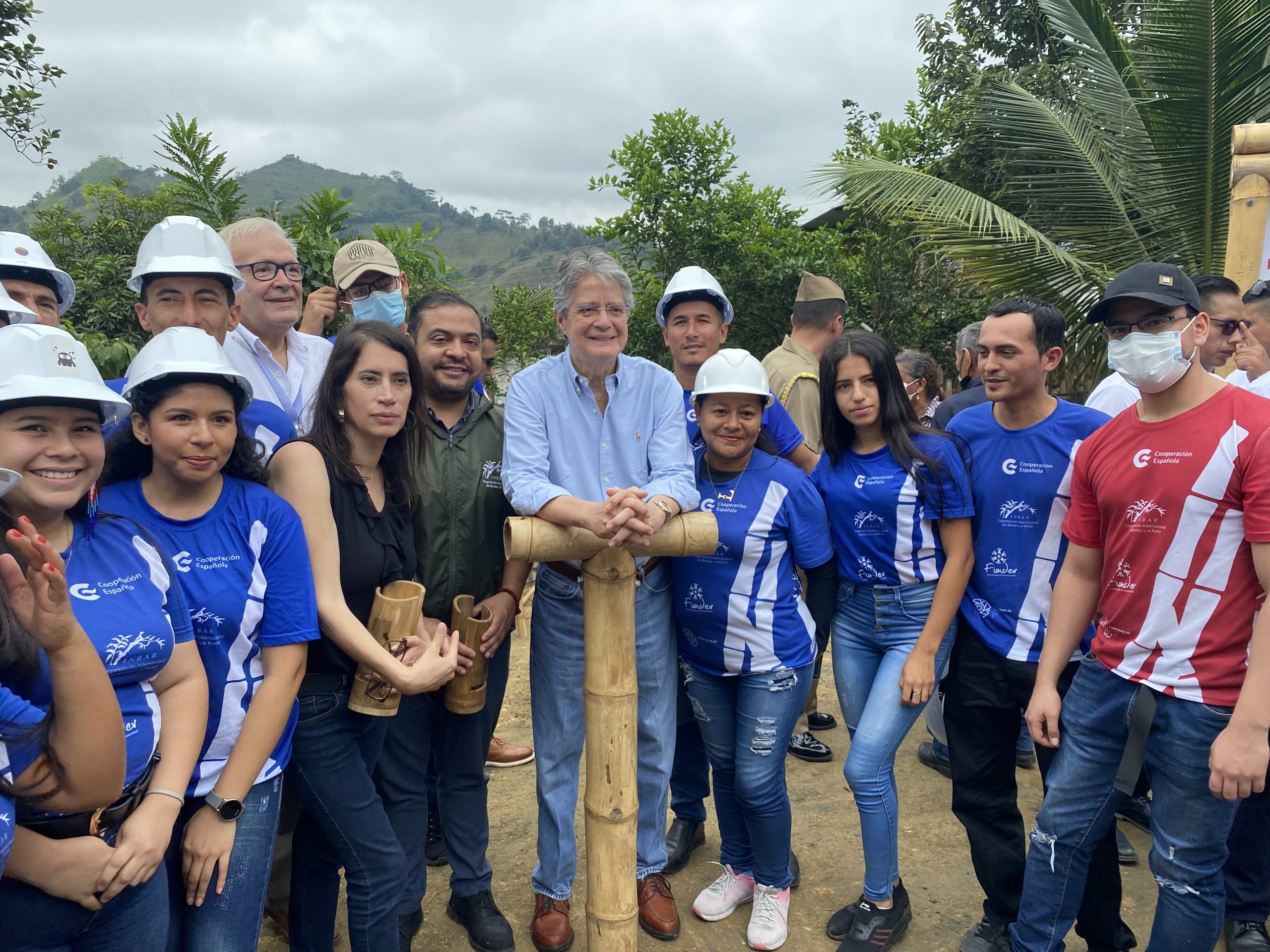
The project has supported the construction of the first low-income social housing with bamboo promoted by the Ministry of Urban Development and Housing (MIDUVI) as part of a sustainable cities plan presented by the President of Ecuador, Guillermo Lasso. The house is being built in the Olmedo canton of the Manabí province by graduates of the Workshop School and is expected to be ready in October 2022.

2023

The Project has facilitated the strengthening of productive processes throughout the sustainable bamboo construction chain, both with a view toward international trade and for internal supply. This process includes an increase in local demand by raising awareness among local and central governments, as well as the private sector, about incorporating bamboo into various construction projects such as social housing, productive, educational, commercial, tourism, and public-use structures. Additionally, there are now more consolidated organizations for the associative management of bamboo, including groups of producers and builders offering goods and services related to bamboo. Experiences of public-private partnerships around bamboo construction have been systematized, including a mapping of stakeholders and their roles in each case for potential replication and to identify lessons learned.

  • 5 Studies developed: i) Estimation of the current and potential supply of bamboo in 7 Municipalities of Manabí,ii) Export model of round bamboo and latillas including operation costs,iii) Systematization of experiences of public-private management model in the sustainable chain with bamboo, iv) Guide for public procurement of constructions with bamboo, v) Communal Housing Plan with indicators of sustainability, energy efficiency and climate change mitigation in its construction and maintenance, includes typology of rural house.
  • 1 Remote sensing course with satellite images for vegetation mapping with emphasis on bamboo with 22 participants.
  • 108 Workshop School Graduates employed in activities related to their training, representing 68% of all graduates.
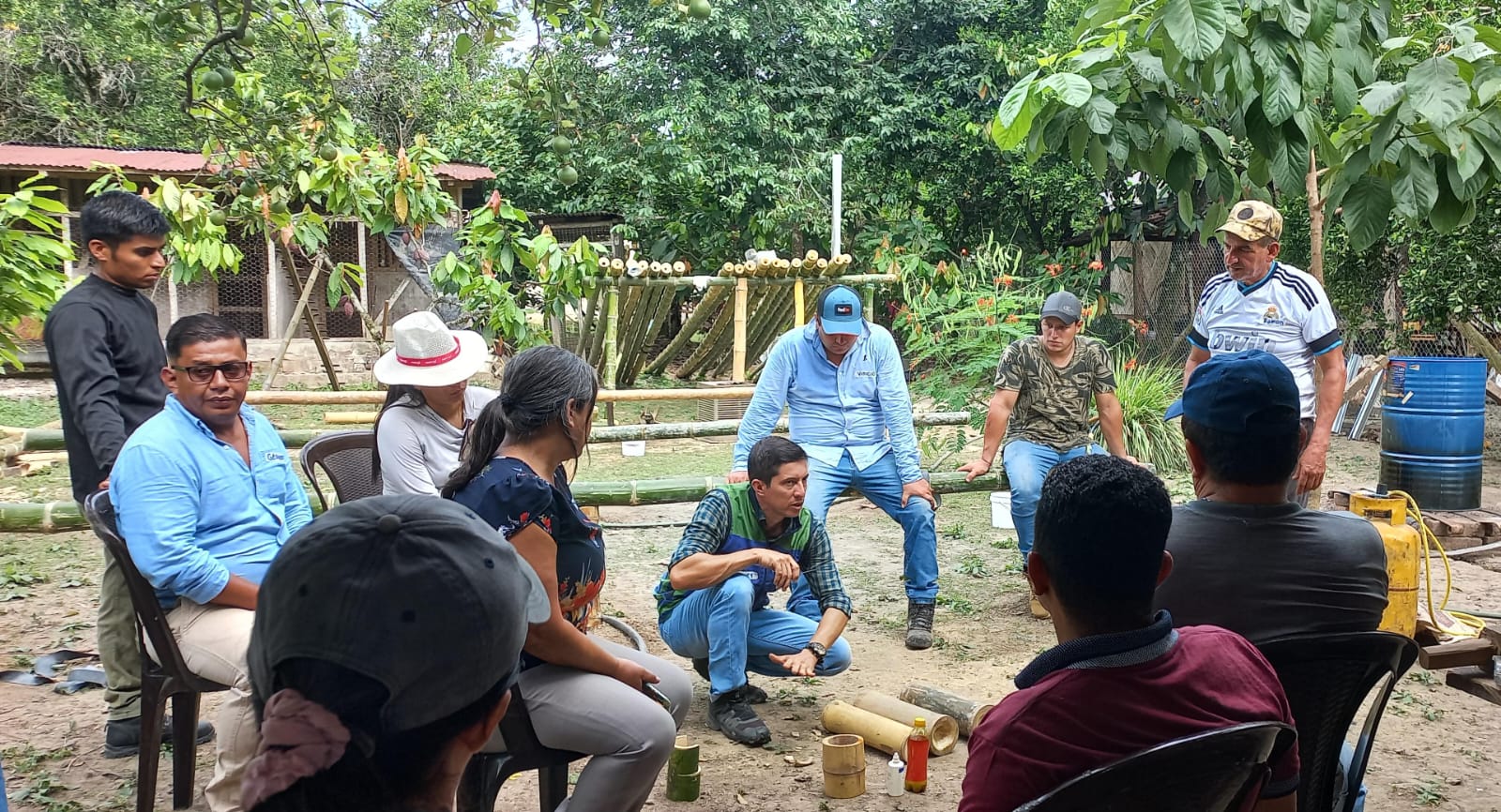
  • Fourth Trainer of Trainer course for sustainable bamboo management and one FFS in Chone with 15 bamboo producers.
  • Two Experience Exchange Tours: for bamboo constructions, and for bamboo preservation centers with 48 participants in total from Napo, Esmeraldas, and Manabí provinces.
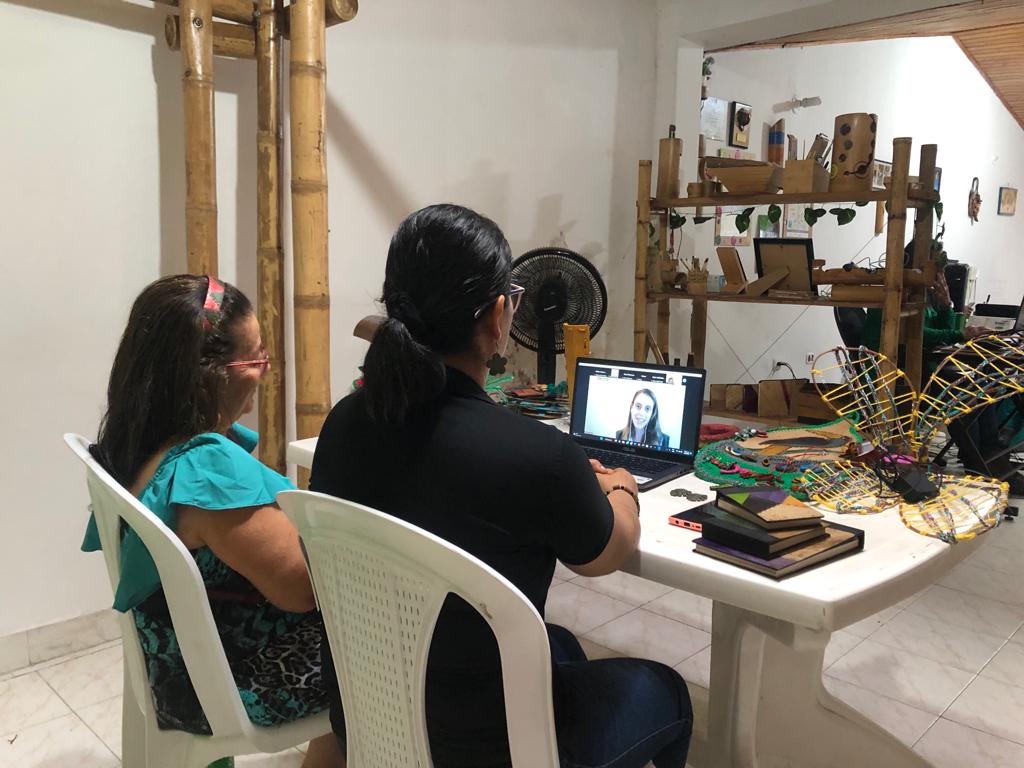
  • Basic Accounting and Tax Training for three bamboo-related organizations.
  • Operational Mobile Tank for Bamboo Preservation capacity for 75 culms each load, two loads per day with high temperature on preservation solution.
  • Technical Visit from Colombian Specialist Dr. Jorge Augusto Montoya from June 5-8 for bamboo preservation and drying training with solar dryers, with 25 participants including 13 public officials.
  • New Designs of Bamboo Structures such as a model corral for cattle, built on the model farm of GAD Chone; a washing area for exporting bananas with FENAPROPE; and a nursery-greenhouse with the ABE LAC IUCN program.
  • Collaboration with Ministry of Urban Development and Housing (MIDUVI) for updating a social housing prototype model with bamboo.

Bamboo Constructions: Commercial Premises in El Rosario Community, a public-use structure in the 4 Hermanos community, improvements to a fire-damaged house in El Carmen, a bus stop with the Maicito Agricultural Association, a cafeteria and agroecological store in Portoviejo with Fundación FIDES, and a 230m2 multi-purpose cover in Jaime Roldós Aguilera Educational Unit’s grounds built with parents, Las Tunas teachers, and participants from the Colombian Tacuara training course.

Contact

For more information about the project, please contact:

Pablo Jacome, Regional Director, Latin America and the Caribbean Region,  inbarlac [at] inbar [dot] int

Fabian Moreno, Project Manager, fmoreno [at] inbar [dot] int

Project News