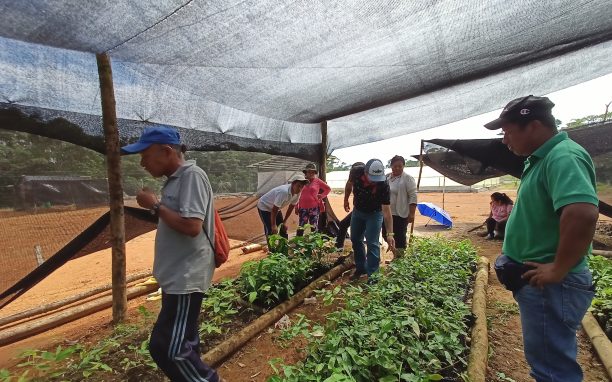
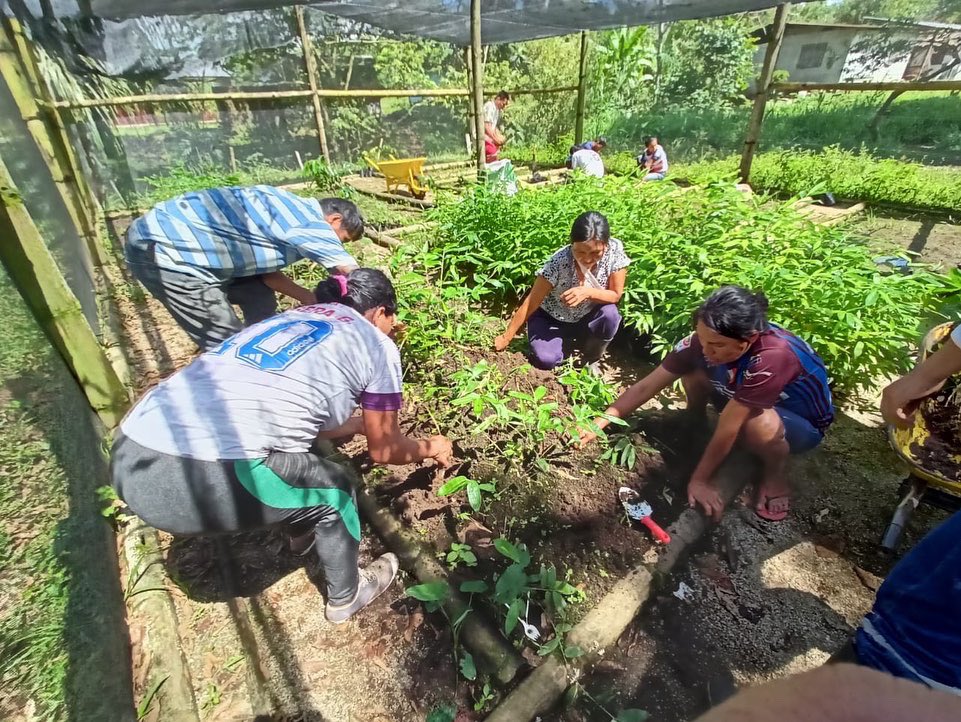
The project involved two indigenous organizations across four communities in Napo Province, located in the Ecuadorian Amazon Region. It established Schools of Life, which included elders, women, and young members of the communities. These schools facilitated discussions on biodiversity, natural resources, food systems, landscape changes, climate change, and territorial management, promoting ancestral knowledge and local perspectives on these topics. The project enabled the development of biocentric restoration plans for each community, provided technical guidelines for restoration, and supported four local nurseries to propagate 152 different plant species. These plants were significant for biodiversity, the Amazonian diet and ancestral medicine, local food systems, and landscape restoration. A crucial starting point for the work with indigenous communities was the agreement on Free, Prior, and Informed Consent Letters with community leaders and project participants. The project also helped recover local traditional gastronomy by highlighting the importance of using local plants, including a dish made from Guadua shoots called Wamag Yuyo.
1 Free, Prior and Informed Consent Agreement Letter for the implementation of the Project’s activities with two organizations and 4 communities.
25 workshops with the participation of 123 beneficiaries (75 men / 48 women) focused on: Biodiversity and natural resources, food systems, landscape changes, climate change, and territorial management practices.
1 consolidated database and needs assessment of the intervention area.
4 biocentric restoration plans, 1 implementation guide, and 4 technical booklets for training.
4 community nurseries; they have produced 20,678 plants of 152 different species.
55.59 hectares implemented with climate-smart restoration practices.
Participation of 114 beneficiaries (65 men / 49 women) in 2 experience exchanges towards successful local community initiatives.
3 thematic videos and a report on the development of the initiative.