International Bamboo and Rattan Organization

International Bamboo and Rattan Organization

THE RESTORATION INITIATIVE IN CAMEROON

Cameroon

2019
2024

Donors

Supporting landscape restoration and sustainable use of local plant species and tree products (bambusa spp, irvingia spp, etc) for biodiversity conservation, sustainable livelihoods and emissions reduction in Cameroon

A project part of the International Restoration Initiative.

This project will evaluate the potential of bamboo and other native Non-Timber Forest Products (NTFP) to restore degraded land in Cameroon. It is one of the twelve projects under the umbrella of The Restoration Initiative (TRI), funded by the Global Environment Facility (GEF) and with the overall objective of contributing to the Bonn Challenge, the New York Declaration on Forests, the African Forest Initiative (AFR100) and the Cameroon engagement to restore 12.6million ha of land by 2030.


Objectives

The general objective of the Cameroon TRI project is to support the implementation and scaling up of Forest Landscape Restoration in Cameroon.

The specific objectives of the project are:

  • Improving Cameroon Government policy commitment to forest landscape restoration and sustainable land management.
  • Piloting and assessing the effectiveness of restoration with Bambusa spp and other indigenous NTFPs, and the development of their value chains to support biodiversity conservation, sustainable livelihoods and GHG emissions reduction.
  • Enhancing institutional capacities and financing arrangements for large-scale forest landscape restoration in Project sites in Cameroon.
  • Improving knowledge of best practices in landscape restoration and Monitoring and Evaluation among Project stakeholders.
2019 - 2021

The Cameroon TRI project started in August 2019. A collaborative approach involving the different project technical partners (MINEPDED, MINFOF, INBAR, IUCN and CSOs) and local communities led to the attainment of the following outputs during the reporting period (August 2019 – December 2021):

  • Supported Cameroon government Ministries (MINFOF and MINEPDED) in:
    • The elaboration of a policy document laying regulations for the transportation of NTFPs harvested plantations;
    • The elaboration of agroforestry notebook for the revision of bamboo and NFPs plantations in order to attest private ownership and the training of over 250 forest administrators on the utilization of the agroforestry notebook;
    • The finalization of the framework of the National Strategy for FLR in Cameroon and the elaboration of the Action Plan (2021-2030) for the Fight Against Forest and Land Degradation in Cameroon.
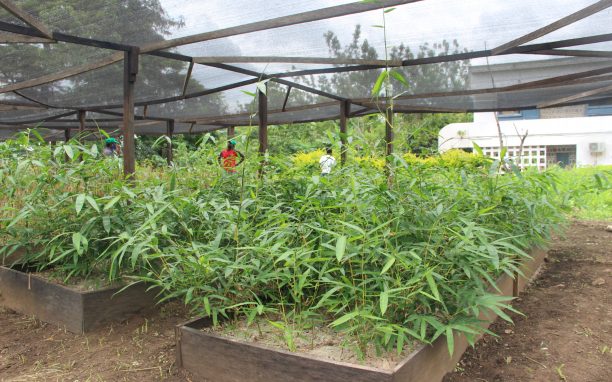
  • Established 12 nurseries for bamboo and NTFP and over 105,042 plants produced (46,982 bamboo, 54,060 NTFPs and 4,000 mangroves);
  • Restore 249.75ha of degraded land with bamboo and NTFP (67.68ha in Douala Edea, 109.99ha in Mbalmayo and 72.08ha in Waza landscape).
  • Support more than 200 farmers to establish agroforestry plantations;
  • 525 local stakeholders trained on bamboo and NTFP agroforestry techniques and value chain development;
  • 48 farmers trained on NTFP vegetative plant production techniques and supported in the establishment of 03 community nurseries;
  • 05 project stakeholders attended the Yale University online course on FLR (with a certificate);
  • The project Monitoring and Evaluation document elaborated and endorsed by MINEPDED;
  • The FLR Policy Influence Plan for Cameroon elaborated and endorsed by MINEPDED;
  • 1 policy note elaborated and endorsed by MINEPDED
  • 1 scientific note elaborated and endorsed by MINEPDED
  • The ROAM assessment conducted for the Mbalmayo, Douala Edea and Waza landscapes, report elaborated and endorsed by MINEPDED
  • 01 NTFPs and bamboo market study conducted and endorsed by MINEPDED and MINFOF;
  • 02 stories elaborated and published in the TRI programme newsletter/Year in Review;
  • 10 communications of project activities (through the media like TV and press, online platforms, gadgets with project logo, flyers, brochure and block notes)
  • 01 video documentary produced, diffused through CRTV, CRTV News, INBAR website, TRI programme website and online platforms.
2022

In 2022, the following key achievements were accomplished:

  • The ROAM assessment report was edited and published as an INBAR working paper;
  • Supported the Ministry of Environment, Protection of Nature and Sustainable Development (MINEPDED) in the elaboration of a Harmonized Action Plan (2020-2030) for the restoration of degraded land and forest landscapes in Cameroon;
  • 106,586 seedlings (plants) were produced for planting in the 3 project landscapes;
  • 146.684 ha of degraded land were effectively restored (This includes newly established plantations, estimated at 123.56 ha in degraded agricultural lands, 19.12 ha in degraded forest and forest land, 4 ha of degraded wetlands mangroves) and 2602.85 ha of degraded forest lands under improved management to benefit biodiversity;
  • 142 local stakeholders (136 men and 6 women) trained on FLR practices, NTFPs and bamboo agroforestry, processing and value chain development;
  • A manual for the integration of bamboo in agroforestry systems in Cameroon has been developed, endorsed by MINFOF and published as an INBAR working paper;
  • 3 FLR local committees were created (1 per landscape), each legalized with Prefectural Decision, involving all FLR stakeholders in each landscape.
2023

In 2023, the following key achievements were accomplished:

  • Supported the Ministry of Forestry and Wildlife (MINFOF) for the identification of the eleven (11) best-performing bamboo and NTFP plantations, and the agroforestry notebooks have been allocated to their owners in the Mbalmayo landscape;
  • Supported the Ministry of Forestry and Wildlife (MINFOF) in the validation of the electronic platform for information and exchange between suppliers and buyers of bamboo and NTFP products;
  • Supported the Ministry of Environment, Protection of Nature and Sustainable Development (MINEPDED) in the drafting of a manual on FLR good practices in Cameroon and printing of 200 copies for distribution;
  • Additional 160,740 bamboo and NTFP seedlings/plants produced;
  • 188 ha of plantation established;
  • Areas restored evaluated, and mapped in the three project landscapes and report submitted;
  •  An EOI (Project idea) was submitted and a Project Identification Form (PIF) was elaborated for GEF-8 STAR Country Allocations on Climate Change, Biodiversity and Land Degradation;
  • 30 actors of the Bakossi Bayang-Mbo’o trained in bamboo agroforestry and sustainable management of the bamboo plantations;
  • 01 training workshop was organized and at least 03 advocacy notes were drawn up: the first one on the classification of bamboo charcoal from plantations and areas restored with bamboo as “ecological charcoal”; the second advocacy note on securing land for restoration activities in TRI project sites; the third and advocacy note on making the Restoration Opportunities Assessment Methodology (ROAM) mandatory in all forest land and landscape restoration projects in Cameroon;
  • The ROAM assessment was conducted. As a result of this, the report was elaborated and endorsed by the Cameroon government;
  • NTFPs and bamboo market study conducted, the indicator for this is that a report was elaborated and submitted for publication as INBAR working paper;
  • One (01) study realized and validated on Assessment of the potential of bamboo as a sustainable source of household energy in Cameroon;
  • 05 TRI project steering committee and 04 project coordination meetings were organized;
  • 03 FLR local committees were created (01 per landscape), each legalized with Prefectural Decision, involving all FLR stakeholders and coordinated by the local delegate for
  • 04 stories were elaborated and published in the TRI programme newsletter;
  • 02 stories were elaborated and submitted to the project team.
2024

The Cameroon TRI project started in August 2019. A collaborative approach involving the different project technical partners (MINEPDED, MINFOF, INBAR, IUCN and CSOs) and local communities led to the attainment of the following outputs during the reporting period (January to June 2024):

  • A document on evaluation of the potential of bamboo as a sustainable source of domestic energy in Cameroon, elaborated and validated by the Government, and disseminated as soft copy to concerned administrations and stakeholders of the TRI Project. It provides an overview of the potential of bamboo as a sustainable energy source in Cameroon.
  •  Effective implementation of the 3rd and last GIS mapping of restored plots in the 3 TRI project landscapes.
  • Additional 5,634 seedlings/plants (5,092 NTFP and 542 bamboo) produced for planting in the 3 project landscapes.
  • Additional 228.04 ha of land restored with bamboo, NTFP and mangrove plantation and 8,473.07ha of forest brought under improved management to benefit biodiversity.
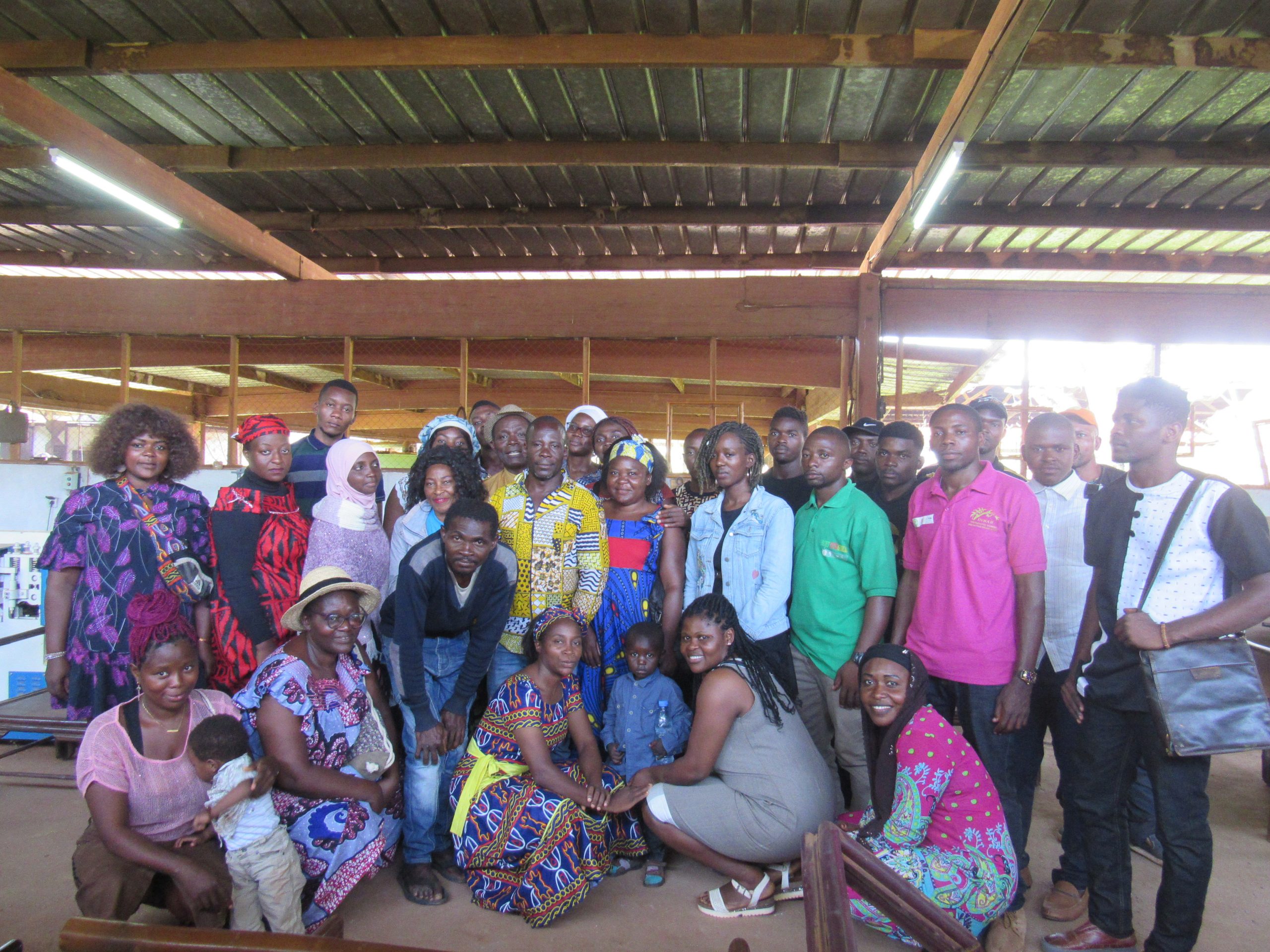
  • One (01) neem oil press machine donated to a women’s association in Waza landscape, enabled them to increase their neem oil production from 120 litres to 168 litres per year, with an increase in income of 40%.
Contact

For more information about the project, please contact:

Rene Kaam, Project Coordinator and Regional Director, Central Africa Region,

Fogoh John Muafor, former Project Coordinator

Project News

Project resources