Organización Internacional del Bambú y el Ratán

Organización Internacional del Bambú y el Ratán

Búsqueda avanzada

-

Publicaciones seleccionadas

Publicaciones de INBAR - General Information

Guía para Facilitar el Aprendizaje sobre el Manejo Sostenible del Bambú

Este trabajo es una publicación de INBAR producida en el marco del desarrollo de dos ciclos de Formador de Formadores en Manejo Sostenible de bambú y la implementación de Escuelas de Campo de Bambú entre 2020 y 2022, en el marco del Proyecto “Innovación y producción del bambú a través de procesos de investigación-acción para […]

Publicaciones de INBAR - Annual Highlights

Resumen Anual de INBAR 2024

El resumen anual describe las actividades, programas y publicaciones de INBAR de 2024.

Publicaciones de INBAR

Publicaciones de INBAR - Informes de política

INBAR Policy Discussion – UNCCD

This document was prepared for the UN Convention to Combat Desertification to raise awareness about how bamboo can be included in national land restoration policies.

Publicaciones de INBAR - Informes de política

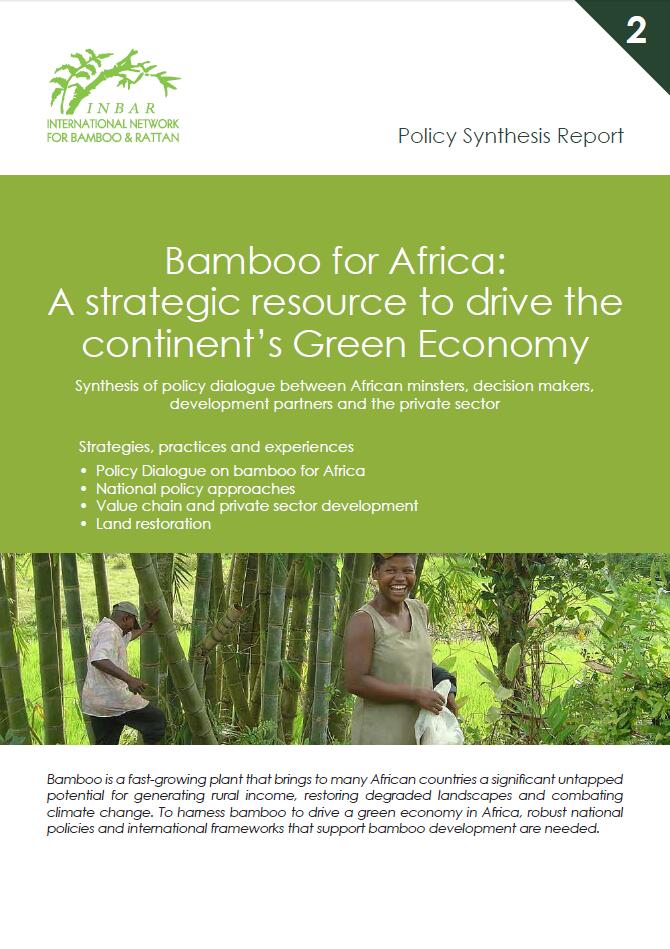
Policy Synthesis Report 2. Bamboo for Africa: A Strategic Resource to Drive the Continent’s Green Economy

How can bamboo be integrated into Africa’s Green Economy? With so many advantages to offer, why is bamboo not on the countries’ development and Green Economy agendas as a tool to improve livelihoods and the environment? This was the key question addressed by the 200 policy makers, national planners, researchers and development professionals at the […]

Publicaciones de INBAR - Modelos de transferencia de tecnologías

Bamboo Emergency Shelter Construction Manual

This manual explains how to construct an emergency shelter using locally-available bamboo.

Publicaciones de INBAR - Modelos de transferencia de tecnologías

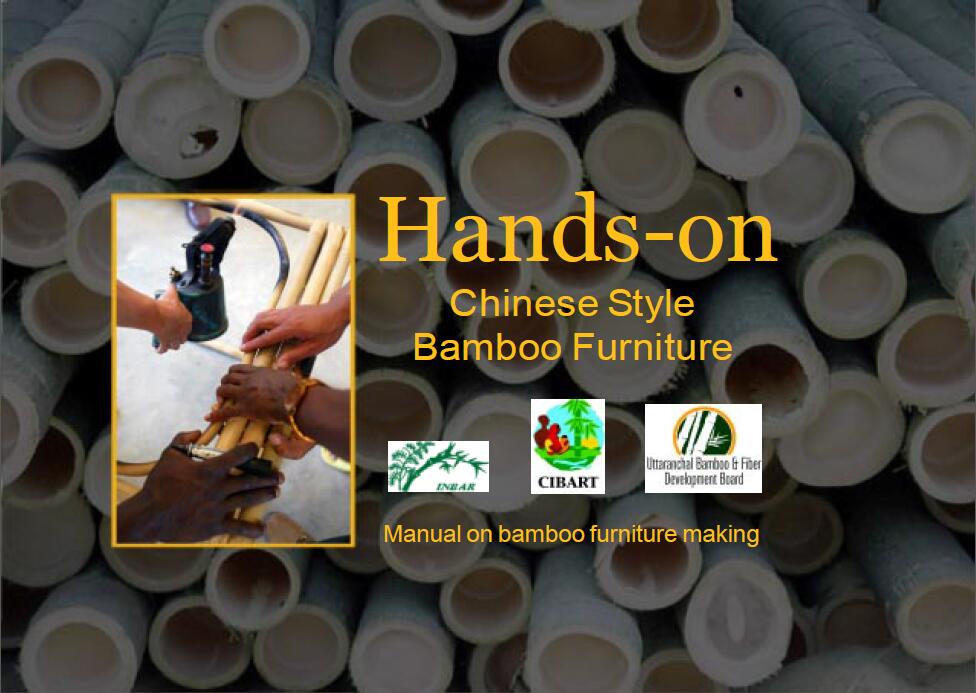
A Manual of Bamboo Furniture Making

The basic technique of traditional furniture making in China is called «Yu». This technique involves making a bent mortise which ties the different components together and forms a strong framework. This manual provides a practical step-by-step guide to producing Yu style furniture, from selecting the bamboos to use, to finishing and producing various additional design […]

Publicaciones de INBAR - Información general

Press Release: GABAR Launch

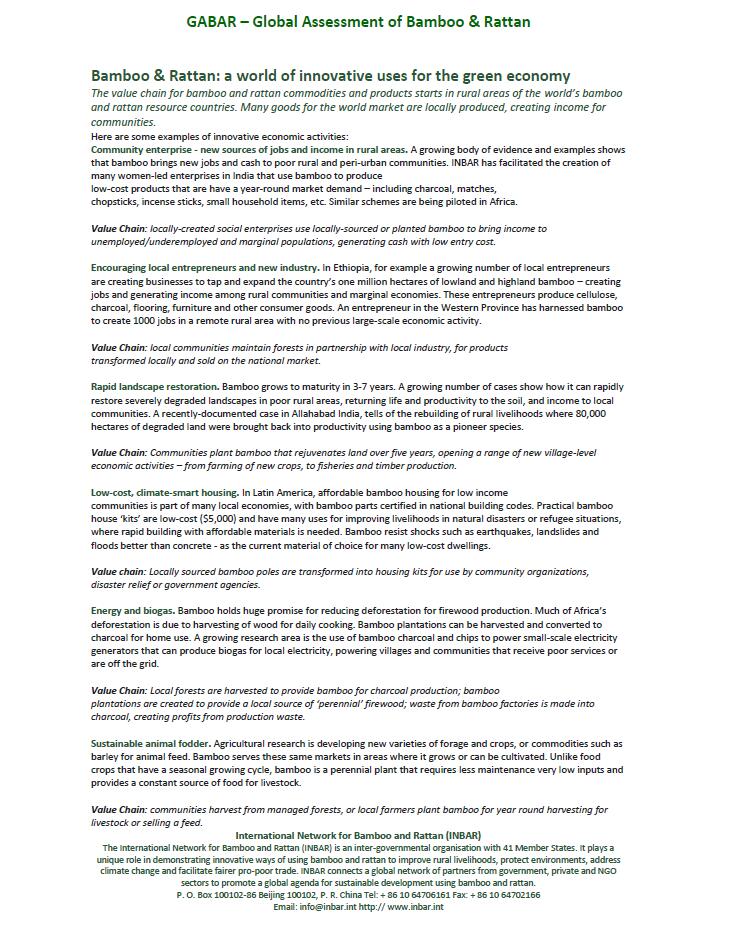
A statement from the Global Assessment of Bamboo and Rattan for green development to the World Forestry Congress in Durban on the potential of bamboo and rattan for rural communities in creating local economic growth, new income streams, regenerating degraded lands and forests.

Publicaciones de INBAR - Información general

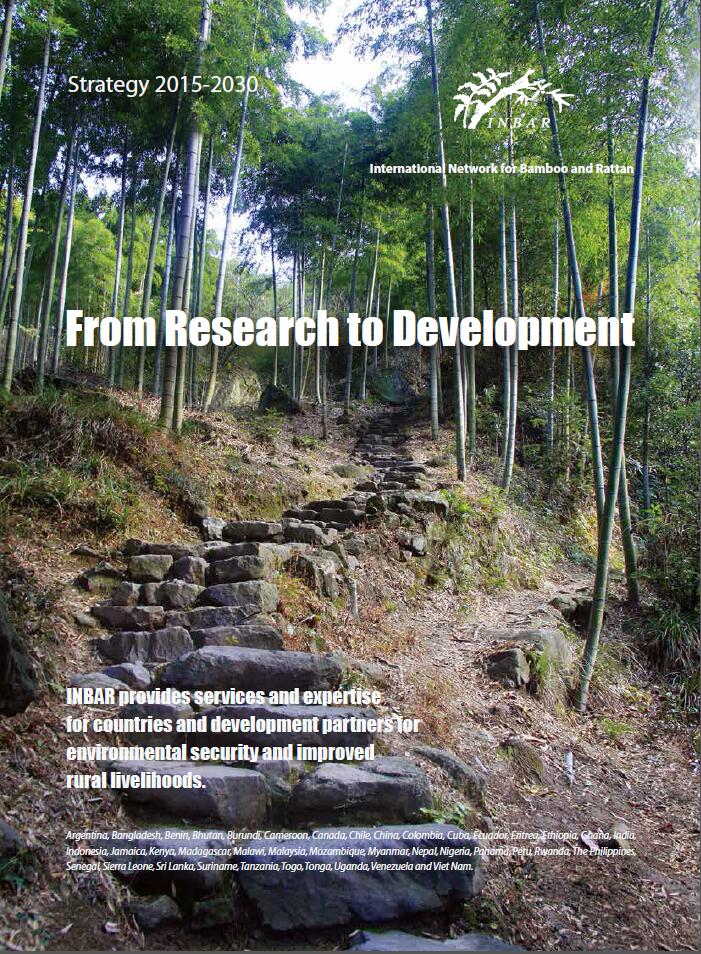
INBAR Strategy 2015-2030: From Research to Development

INBAR’s Strategy 2015-2030 aims to carry the message of the promise of bamboo and rattan as practical and economically attractive options in building sustainable solutions to the challenges of future development of producers and users of these products. The Strategy focuses on INBAR’s efforts in four main areas: policy shaping, representation and advocacy, knowledge sharing […]

Publicaciones de INBAR - Documentos de trabajo

Bamboo in Sustainable Contemporary Design

This book explores contemporary design of bamboo products, and their relation to sustainability. It outlines the concept of sustainability and the basics of the bamboo plant, before delving into processing resources, infrastructure, and the various products bamboo is used to make.

Publicaciones de INBAR - Documentos de trabajo

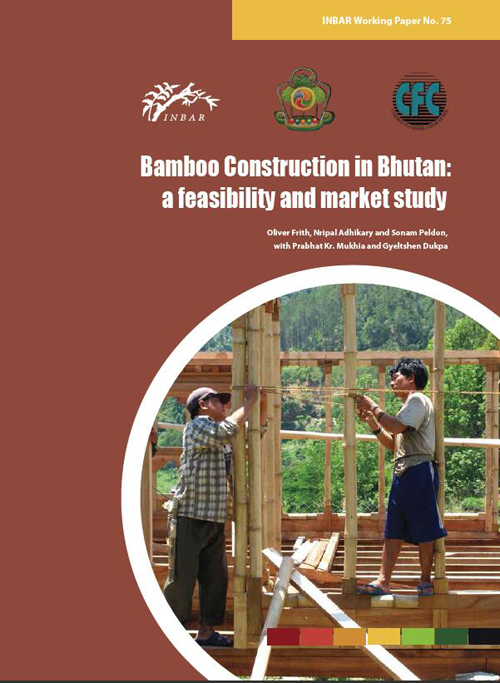
Bamboo Construction in Bhutan: A Feasibility and Market Study

The study assesses potential structural market applications for unprocessed, round culm bamboo which is locally available and relatively inexpensive, and thus well-suited for applications in rural settlements. Although engineered bamboo panel and lumber products that have similar properties to equivalent timber products are produced in other Asian countries, such as India and China, and could […]

Publicaciones de INBAR - Documentos de trabajo

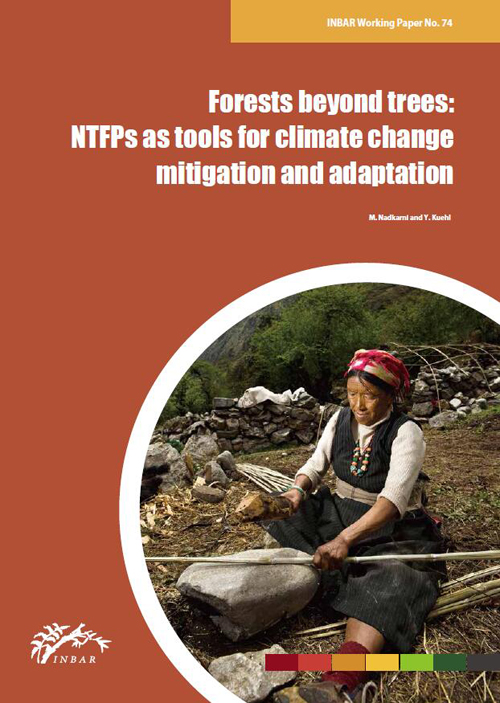
Forests Beyond Trees: NTFPs as Tools for Climate Change Mitigation and Adaptation

Non-timber forest products (NTFPs) contribute to livelihoods of about 2 billion poorest of the rural and urban poor, and are among the most valuable plant resources for present and future food security. They provide food, fuel, medicine and incomes, and keep traditional knowledge alive. NTFPs have an important role in forests and – consequently – […]