


International Bamboo and Rattan Organization

International Bamboo and Rattan Organization

Atmospheric Measurements for Bamboo Forests’ Carbon Sequestration

China

2022
2027

Donors

Utilization of Atmospheric Measurements to Establish the Carbon Sequestration Capacity of Bamboo Forests

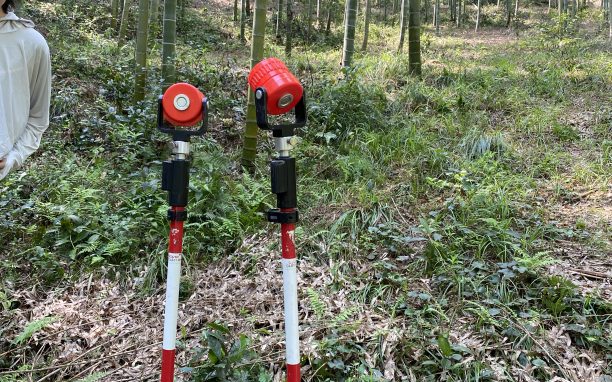
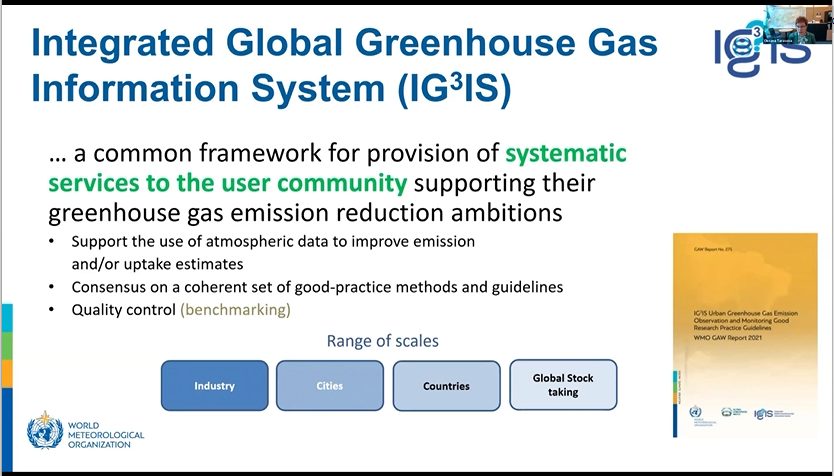
Coordinated by the World Meteorological Organization (WMO), and implemented by the International Bamboo and Rattan Organization (INBAR); GNS Science, New Zealand; the National Institute of Water and Atmospheric Research (NIWA), New Zealand; the Chinese Meteorological Administration (CMA), China; and the Zhejiang University of Technology (ZJUT), China, the project aims to combine the traditional approach to the emission estimate complemented with the innovative observations-based methodology that has been developed and promoted by the WMO Integrated Global Greenhouse Gas Information System (IG3IS) initiative.

The IG3IS approach employs accurate atmospheric measurements combined with inverse modeling, to assess the carbon sink of individual bamboo plantations. Attribution of fluxes to the specific sources/sinks in the study area will be done using additional carbon isotope measurements. Data analysis and interpretation for different management practices and environmental conditions will be used to establish the emission factors and contribute to the update of bamboo forest inventory methodologies. The comparison between results from observations and inversion analysis with measurement-based stock change methods —the recommended method in the IPCC 2006 Guidelines— aims to minimize uncertainty within this emissions sector and assess potential biases inherent in the stock change method.

Objective

The general objective of the project is to develop a methodology for the objective assessment of the carbon sequestration potential of bamboo forests, including a contribution to the IPCC Task Force on National Greenhouse Gas Inventories (TFI) guidance. It will also evaluate such potential in correlation with land management practices and environmental conditions.

2022
  • The project team identified the study areas in Anji County based on careful examination and evaluation of climatological and terrain features. A technical report of site selection was produced by the team accordingly.
  • To understand the carbon uptake and removals of bamboo forests, a group of INBAR research team conducted a baseline assessment of bamboo biomass carbon of the selected study area in Anji County by adopting the traditional bottom-up inventory approach. A total of 30 monitoring plots, each sized 400 m2 (20m X 20m), have been randomly set up in the Moso bamboo (Phyllostachys pubescens) forests across the project study areas. In each monitoring sample plot, key indicators, such as the bamboo density, age structure and average diameter at breast height of individual bamboo culm and understory vegetation have been meticulously examined to assess both the above-ground and the below-ground biomass. A baseline report on biomass carbon inventory for selected bamboo forest areas in Anji County was produced accordingly, covering the management practices of bamboo forests in Anji. The baseline carbon stock in bamboo forests will be used to measure the carbon fluxes —mainly caused by carbon sequestration and biomass extraction from bamboo forests— throughout the project’s time frame.
  • To support the inverse model analysis led by ZJUT, INBAR has facilitated a working meeting with principal researchers from ZAFU and ZJUT and discussed the possible collaboration on the project inverse mode analysis.
2023
  • The INBAR research team has continued annual monitoring of land management practices and biomass extraction in the selected forest for the second year. By adopting the traditional bottom-up inventory approach, it has been measured the above-ground biomass (AGB) and the below-ground biomass (BGB) of the 30 monitoring plots representing the different management categories established in 2022, as well as the carbon stock of Moso bamboo forest. A report on the second year Emission Inventory of the Studied Bamboo Forest Area in Anji County was produced accordingly.
  • A webinar scheduled for 22 May 2024, is currently being planned to introduce the methodologies used in the project to the INBAR Member States, which will help to enhance the understanding and capacity building on the observations-based assessment of the bamboo carbon uptake to forestry technicians and relevant stakeholders.
2024
  • On 22 May 2024, the International Day for Biological Diversity of 2024, the World Meteorological Organization and INBAR, together with Zhejiang University of Technology, the New Zealand Institute of Geology and Nuclear Sciences, the New Zealand National Institute of Water and Atmospheric Research, and the China Meteorological Administration jointly held a webinar on the “Evaluation of Carbon Sequestration Capacity of Bamboo Forests,” sharing innovative approaches to assess carbon sequestration capacity of bamboo forests to INBAR member countries, which will help to enhance the understanding and capacity building on the observations-based assessment of the bamboo carbon uptake to forestry technicians and relevant stakeholders from INBAR member countries. (Innovative approaches to assess carbon sequestration capacity of bamboo forests | International Bamboo and Rattan Organization (inbar.int))
  • INBAR research team has continued annual monitoring of the land management practices and biomass extraction in the selected forest for third year.
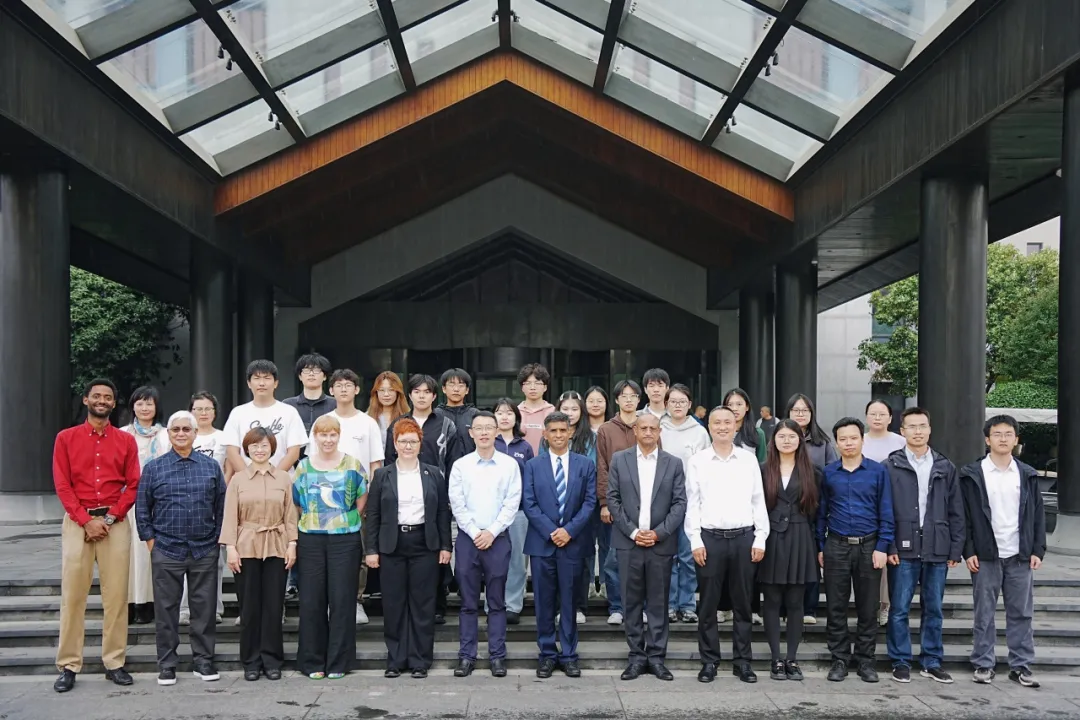
  • From 15 to 18 October 2024, the International Conference on Methodology of Estimating Carbon Sequestration Capacity of Forests was successfully held in Hangzhou and Huzhou, Zhejiang Province, China. The conference was hosted by Zhejiang Carbon Neutral Innovation Research Institute of Zhejiang University of Technology and co-organized by INBAR.A diverse range of experts, practitioners and stakeholders participated in the conference from both China and abroad, with members from the World Meteorological Organization (WMO), GNS Science of New Zealand, National Institute of Water and Atmospheric Research of New Zealand, China National Environmental Monitoring Center, Zhejiang Agricultural and Forestry University, Ethiopia, the United States, and the Philippines in attendance (https://www.inbar.int/conference-on-carbon-storage-in-forests-convenes-in-china/ ).
2025
  • On February and August, respectively, INBAR research team has continued annual monitoring of biomass extraction in the selected bamboo forest for fourth year.
Contact

For more information about the project, please contact:

Qinghui Liu, Senior Programme Officer, qhliu@inbar. int

Project News