News
NewsInnovative approaches to assess carbon sequestration capacity of bamboo forests
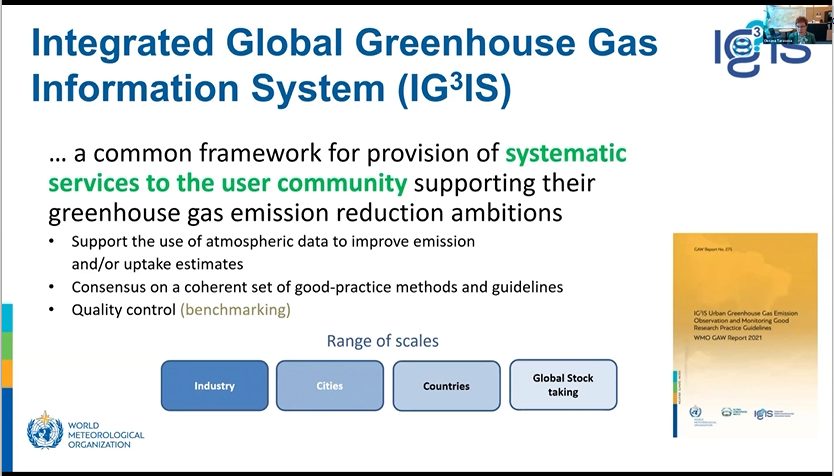
Webinar highlights new methodologies for assessing carbon sequestration capacity of forests.
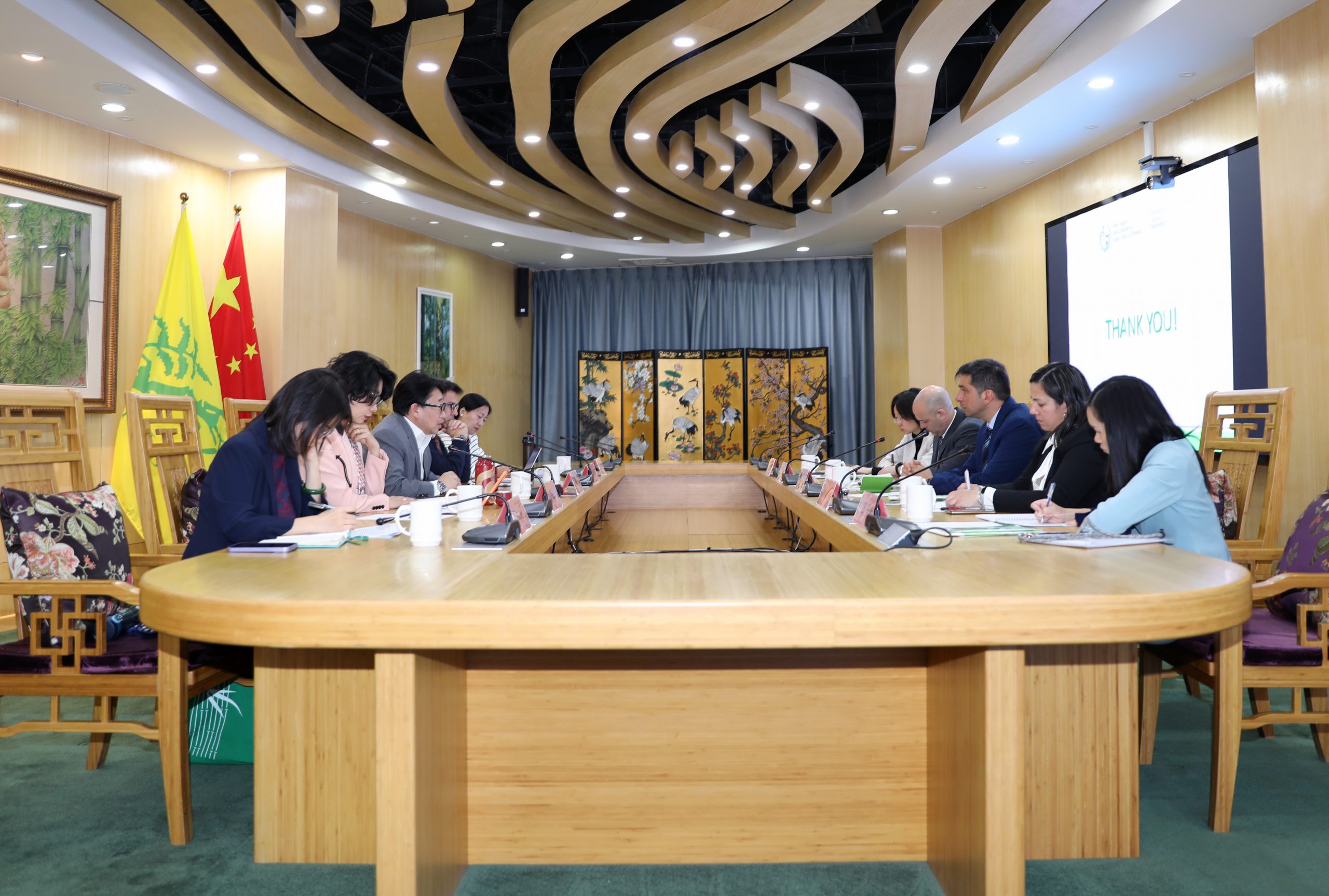
On 22 May 2024, the International Day for Biological Diversity of 2024, the World Meteorological Organization and INBAR, together with Zhejiang University of Technology, the New Zealand Institute of Geology and Nuclear Sciences, the New Zealand National Institute of Water and Atmospheric Research, and the China Meteorological Administration jointly held a webinar on the “Evaluation of Carbon Sequestration Capacity of Bamboo Forests,” sharing innovative approaches to assess carbon sequestration capacity of bamboo forests from a project entitled the Utilization of Atmospheric Measurements to Establish the Carbon Sequestration Capacity of Bamboo Forests funded by the Quadrature Climate Foundation.
This session presented the latest scientific research and development into innovative methodologies for assessing the carbon sequestration capacity of forests, including bamboo, highlighting traditional emission inventory (bottom-up) approaches and observations-based (top-down) approaches as ways for obtaining best forest characterization. Dr. Oksana Tarasova, Senior Scientific Officer, World Meteorological Organization, kicked off the webinar and introduced the Integrated Global Greenhouse Gas Information System (IG3IS), which provides accurate atmospheric measurements combined with inverse modelling, an innovative observations-based methodology that links inventory and flux model-based information with atmospheric observations and modelling to provide unbiased estimates of greenhouse gas emissions at national and urban scales. Dr. Oksana Tarasova also introduced the bamboo project about using atmospheric measurements to measure the carbon sequestration capacity of bamboo forests in China.

Dr. Sara Mikaloff Fletcher, Principal Scientist – Carbon Chemistry and Modelling, National Institute of Water and Atmospheric Research, New Zealand, shared practices in New Zealand for evaluating the carbon uptake capacity of forests from atmospheric measurements, as well as opportunities and challenges in using atmospheric measurements to validate greenhouse gas emissions, laying the foundation for how to use an observations-based (top-down) approach in carbon uptake estimates of forests.
Ms. Li Yanxia, Senior Programme Officer of INBAR, introduced the traditional emission inventory (bottom-up) approach for the carbon estimation of bamboo forests and preliminary results of bamboo forests carbon emission/uptake from the bamboo project in Anji, Zhejiang. Dr. Lin Yi, on behalf of Dr. Fang Shuangxi, Executive Director, Zhejiang Carbon Neutral Innovation Research Institute of Zhejiang University of Technology, also introduced inversing models for bamboo forest carbon estimation and preliminary analysis and results from the bamboo project.

Bamboo is among the most rapidly growing plants in the world, comprising an integral part of forest resources, with an estimated 50 million hectares of land across Africa, Asia and the Americas. With careful management and selective harvesting, the annual rate of carbon sequestration of many bamboo forests can be higher than fast-growing tree forests. Given its fast growth and considerable resources, bamboo can be an excellent tool for carbon sequestration, with untapped potential for addressing climate change. Therefore, quantifying and assessing carbon sequestration and carbon emissions reduction through sustainable forest management and restoration is critical to understanding the role of forest ecosystems in climate change mitigation and adaptation, and also complements technical indicators to measure progress towards Target 8 of the Kunming-Montreal Global Biodiversity Framework.

However, there are currently no specific requirements for bamboo forest carbon assessment in IPCC guidelines on national greenhouse gas inventories. When it comes to measuring biomass and carbon, bamboo is different from trees, mainly because bamboo is hollow inside, and the correlation between the diameter or the diameter and height of the bamboo culm with bamboo biomass or net bamboo volume largely depends on culm age, bamboo species and site condition. Furthermore, many clumping bamboo species have dense culms, which makes it impossible for surveyors to measure the diameter of the culms.
Considering the different biological and ecological characteristics of bamboo, INBAR developed the publication A Manual for Bamboo Forest Biomass and Carbon Assessment, providing clear instruction for conducting bamboo forest inventories and bamboo carbon assessment. These traditional inventories are useful but quite costly, especially for countries that do not already have a national inventory. Therefore, there is a need to develop more cost-effective, time-efficient and accurate alternatives. Working on this idea, the bamboo project is testing this innovative approach, using atmospheric measurements combined with inverse modelling and traditional inventory for carbon emission estimates of bamboo forests, which will facilitate building capacities for countries and providing support for the application of more cost-effective carbon emission measurement methodologies.
Presentations and recordings can be downloaded at Spring webinar series of IG3IS | World Meteorological Organization (wmo.int)