News
NewsTeaming up with UNESCO for sustainable consumption
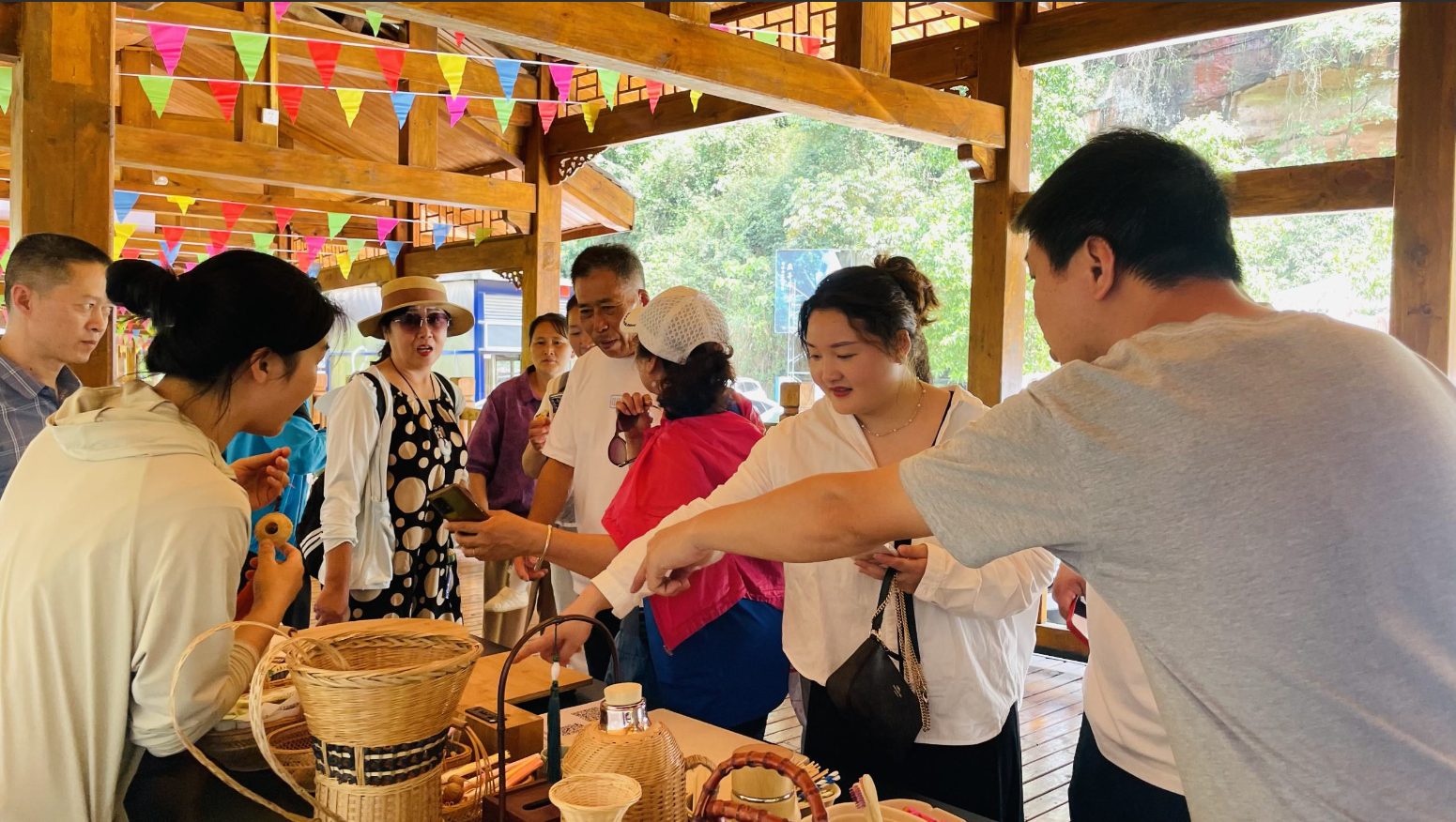
Outreach event in Chishui helps educate the public about the importance of green and low-carbon consumption.
From 28 April to 2 May 2024, a public event themed “Green and Low Carbon Consumption at a World Heritage Site” was co-hosted by INBAR and the United Nations Educational, Scientific and Cultural Organization’s (UNESCO) Regional Office for East Asia, with implementation support from the Chishui Forestry Bureau. The event took place at two locales: 1) the Chishui Danxia World Heritage Site; and 2) the Xiangzhanglin Square of Chishui City. The goal was to advocate for green and low-carbon consumption, actions and lifestyles with environmentally friendly bamboo products.
This public event is one of the deliverables emerging from the Chishui World Heritage Sustainable Livelihood pilot project, “Bamboo for Carbon Neutrality in Rural Areas,” which is being implemented by INBAR with support from the Chishui Forestry Bureau. The Bamboo for Carbon Neutrality in Rural Areas pilot activity is one of the flagship initiatives within the framework of the UNESCO-China Youth Development Foundation Mercedes-Benz Star Fund “Conservation and Management of World Heritage Sites in China” Project Phase IV (2021-2024).

The event focused on demonstrating the unique capability of bamboo to defeat the menace of plastic pollution and address climate change, encouraging responsible consumption to help make the planet greener and cleaner. This coincided with the theme of the 55th World Earth Day, “Planet vs. Plastics,” and also synergizes with INBAR’s flagship project, the Bamboo as a Substitute for Plastic (BASP) Initiative, which has similar environmental goals. Chishui is currently spearheading efforts to mainstream the BASP Initiative by raising public support for low-carbon and environmentally friendly bamboo products that can replace plastics. This also serves the purpose of building momentum toward a conservation-oriented society while strengthening the protection of urban and rural environments.
During this public activity, project staff promoted the BASP Initiative and engaged with the public in a variety of ways, distributing promotional materials and setting up posters to spread knowledge of green and low-carbon consumption, encouraging others to scan a QR code to participate in an activity with winnable bamboo prizes, putting BASP products on display for passersby, taking photos, and exchanging empty plastic bottles for bamboo paper towels and mineral water. These actions and more can help reduce plastic waste in World Heritage Sites and scenic spots while helping “tilt” the public consciousness toward greener decision-making.

Regarding the event, Yan Wumei, a tourist visiting the Great Waterfall Scenic Area in Chishui City, said, “I didn’t know much about ‘bamboo plastic substitutes’ before, but I have some understanding now after answering questions. I think they are great!”
Another visitor in Xiangzhanglin Square, Song Daixia, had this to say about the activities: “Through this promotional event, I learned about the benefits of buying green and low-carbon bamboo products. I’ll be buying more green and low-carbon goods in the future. ”
In total, over 1800 people scanned the QR code, with over 2000 souvenirs, prizes, promotional material and other items distributed, representing significant outreach into the Chishui community about the versatile and low-carbon nature of bamboo to replace harmful plastics. Through this event, visitors gained a deeper understanding of bamboo products, low-carbon and green consumption, as well as learned about the intangible cultural heritage of Chishui bamboo weaving and its benefits to local livelihoods alongside its numerous advantages over plastic products.