 News
NewsFunding surge for micro-projects near Cameroon’s Waza, Bénoué, and Kimbi-Fungom National Parks

Refresher training on business development for the Kimbi Fungom National Park.
Thirty eco-entrepreneurs have been selected under the ACREGIR project to undertake a range of green micro-projects.
The Central Africa Regional Office (CARO) of the International Bamboo and Rattan Organization (INBAR) wrapped up 2025 in the best way possible: By selecting 30 new green micro-projects in Cameroon across Waza, Bénoué and Kimbi Fungom National Parks. The selections took place under the project “Increasing the Resilience of Local Communities to Climate Change through Youth Entrepreneurship and Integrated Management of Natural Resources” (ACREGIR).
From 2023 to 2025, approximately 2300 eco-entrepreneurs in Cameroon — half of whom are women and 40% of whom are youth — benefited from trainings led by INBAR. Topics included economic development, business planning, leadership, entrepreneurship and citizenship, legal status of land occupation and the sustainable use of natural resources. In total, 15 candidates per site were pre-selected, resulting in 45 candidates total who presented their business plans before the selection panel.

A female candidate defending her micro-project with the assistance of an interpreter for Waza National Park.
To ensure equity and transparency, the composition of the selection panel was determined by the Minister of Environment, Protection of Nature and Sustainable Development of Cameroon (MINEPDED). The Regional Delegates of MINEPDED served as chairs of the selection panels.

Mr. Ayissi Barnabé Pierre, MINEPDED Regional Delegate for North, welcoming candidates on behalf of the Minister.
To maximize the chances of all candidates, INBAR organized a two-day refresher workshop on business plan development, presentation tips and a detailed explanation of the evaluation criteria used by the selection panel. These criteria included:
- relevance of the proposed activity to conservation and sustainable development;
- technical and economic feasibility of the project;
- involvement of the local community;
- potential for positive environmental impact;
- financial viability and management capacity of the project proponent; and
- administrative compliance of the application.

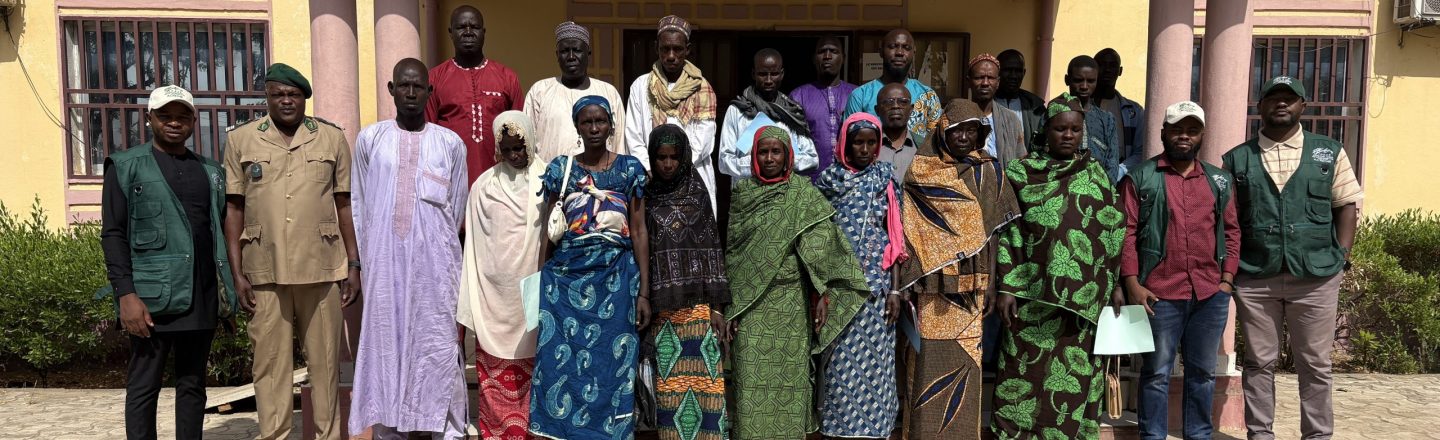
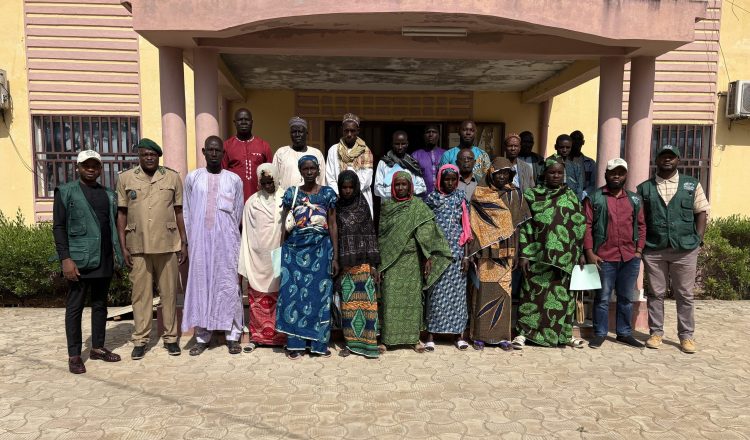
Group photo for Waza National Park.
In Waza National Park, the workshop was held at the Regional Delegation of MINEPDED for the Far North Region from 8 to 10 December 2025, chaired by the Regional Delegate of MINEPDED for the Far North Region, represented by Mr. Omam Abraham Octave, Head of Department.

Group photo for Bénoué National Park.
In Bénoué National Park, the workshop took place at the Regional Delegation of MINEPDED for the North Region from 11 to 13 December 2025, chaired by Mr. Ayissi Barnabé Pierre, Regional Delegate of MINEPDED for the North Region.

Group photo for Kimbi Fungom National Park.
For Kimbi Fungom National Park, as part of the ACREGIR mitigation strategy in response to the crisis in the Northwest Region, the workshop was held at the Technology, Incubation and Innovation Support Centre of the University of Dschang (CATI²–UDs), chaired by Dr. Nguegang Etienne, Regional Delegate of MINEPDED for the West Region.
During the workshops, the respective Regional Delegates welcomed the candidates, highlighted the objectives of the ACREGIR project, explained the selection rules and wished all participants good luck. Part of the selection panel, INBAR was represented by Mr. René Kaam, INBAR CARO Director, who reiterated INBAR’s strong commitment to supporting green micro-projects in Cameroon. He encouraged all candidates, even the ones who would not be selected:
“Congratulations on your pre-selection! This alone demonstrates the quality and relevance of your project. However, only 30 projects will be funded. We believe in all your projects, though. Nothing is ever a true loss: You either win or learn. Best of luck to everyone.”

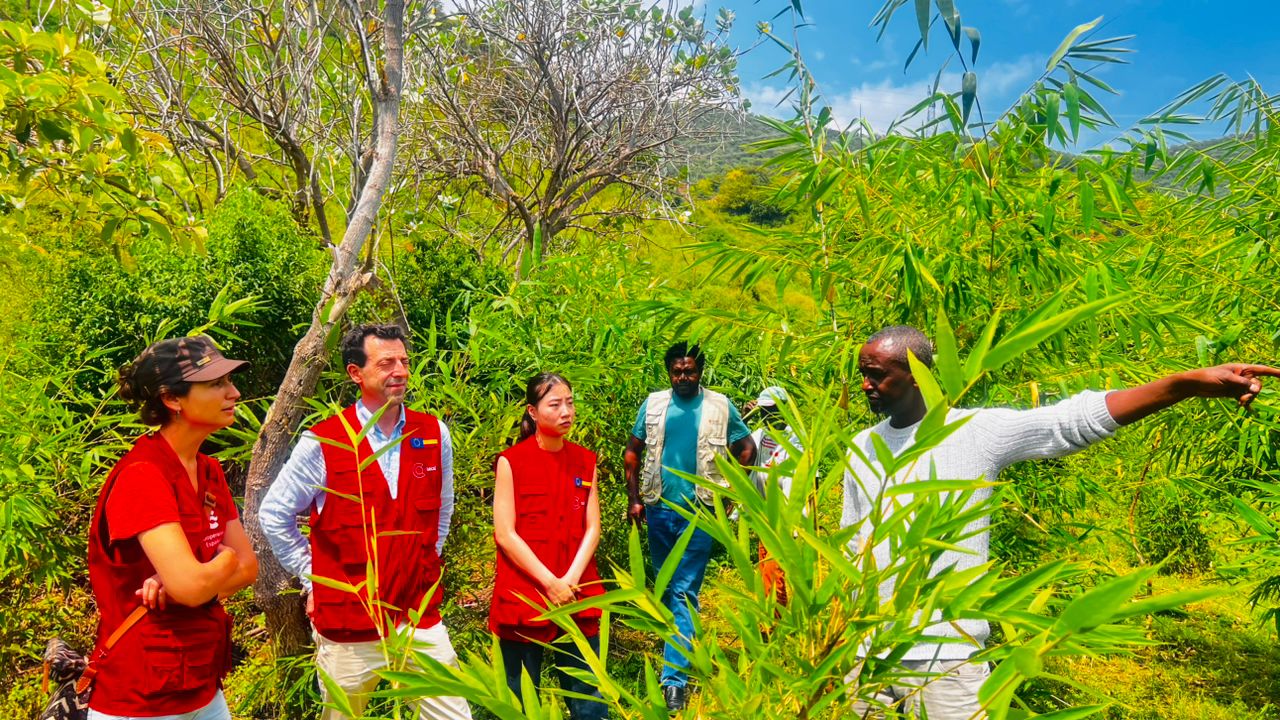
A male candidate defending his micro-project on bamboo for Kimbi Fungom National Park.
The micro-projects all revealed strong potential to contribute to food security, renewable energy, forest landscape restoration, anti-poaching efforts, women’s empowerment and other sustainable development objectives. The selected micro-projects will be funded in 2026 under the ACREGIR Annual Work Plan. INBAR will allocate a total fund of USD 80,000, with an average grant of USD 2500 per project. In line with ACREGIR’s financial mechanisms, the grants will be disbursed sequentially through a microfinance institution. In addition, INBAR and its partner CATI² will continue to provide business coaching to beneficiaries to ensure proper use of the grants and the success of the micro-projects.
The funding of 30 green micro-projects across the three park landscapes underscores INBAR’s commitment to supporting the Government of Cameroon in the sustainable development of bamboo and other non-timber forest product value chains from farm to market.
For more information about this activity, contact René Kaam (rkaam[at]inbar[dot]int).