
 News
NewsINBAR and FAO renew collaboration to advance sustainable bamboo and rattan development
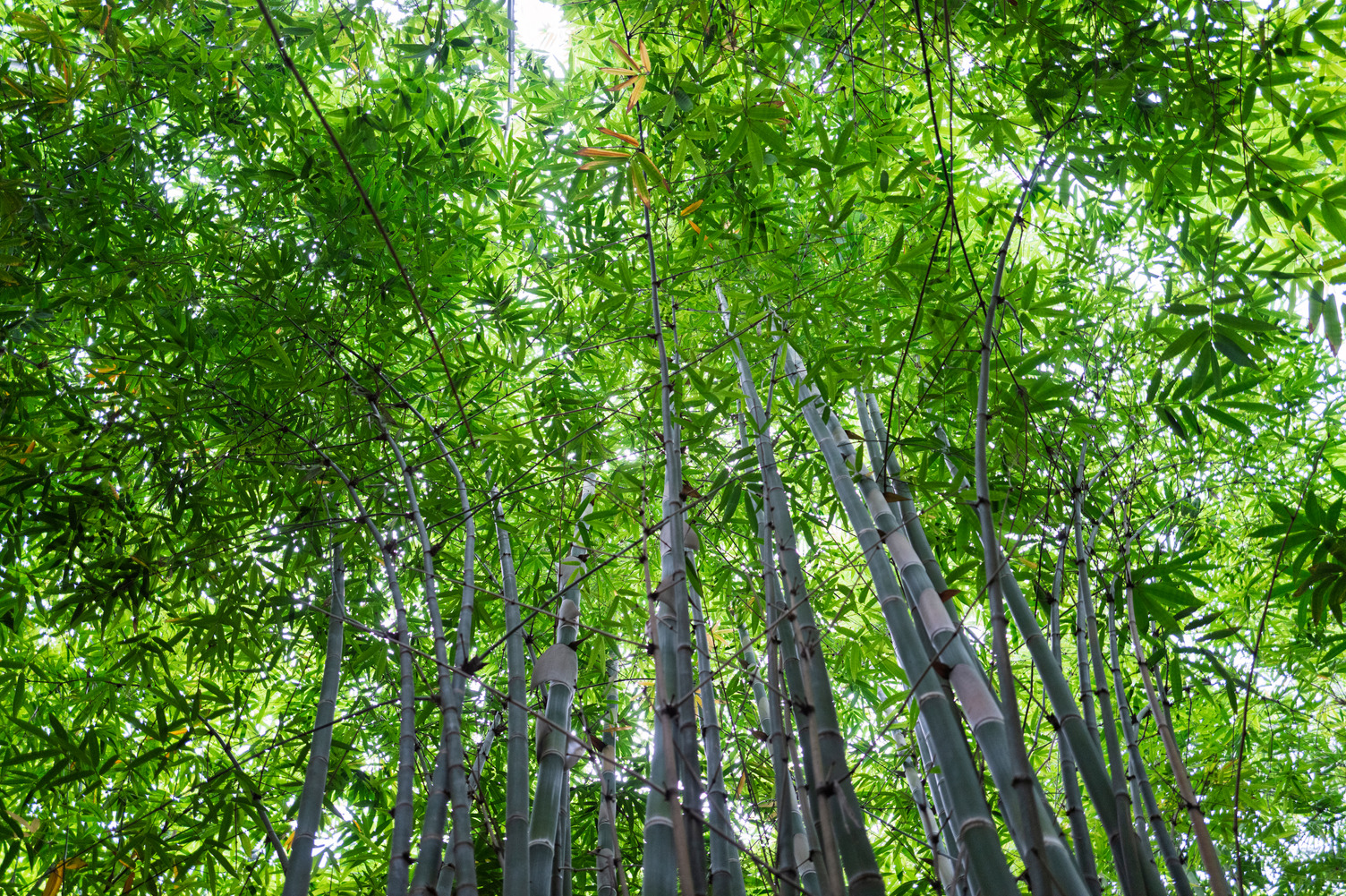
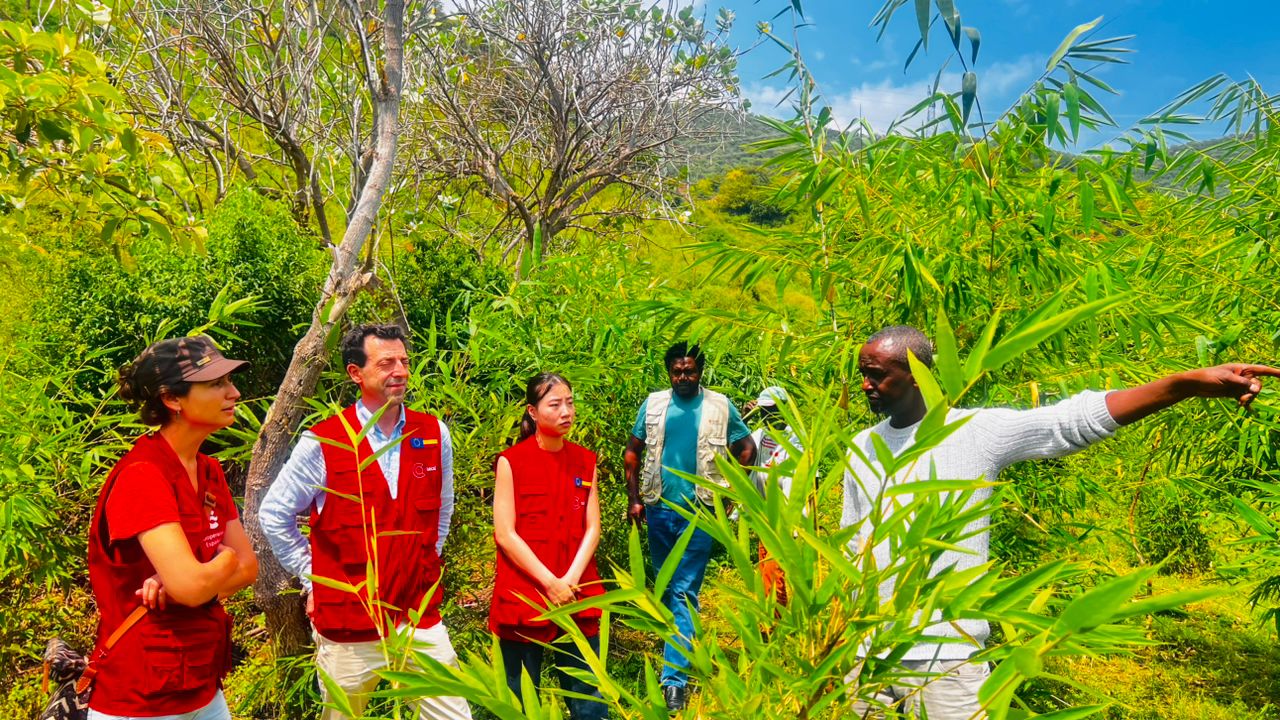
Bamboo near Kontiki Bamboo Works in Hoima, Uganda. Credit: Todd Brown/UNEP
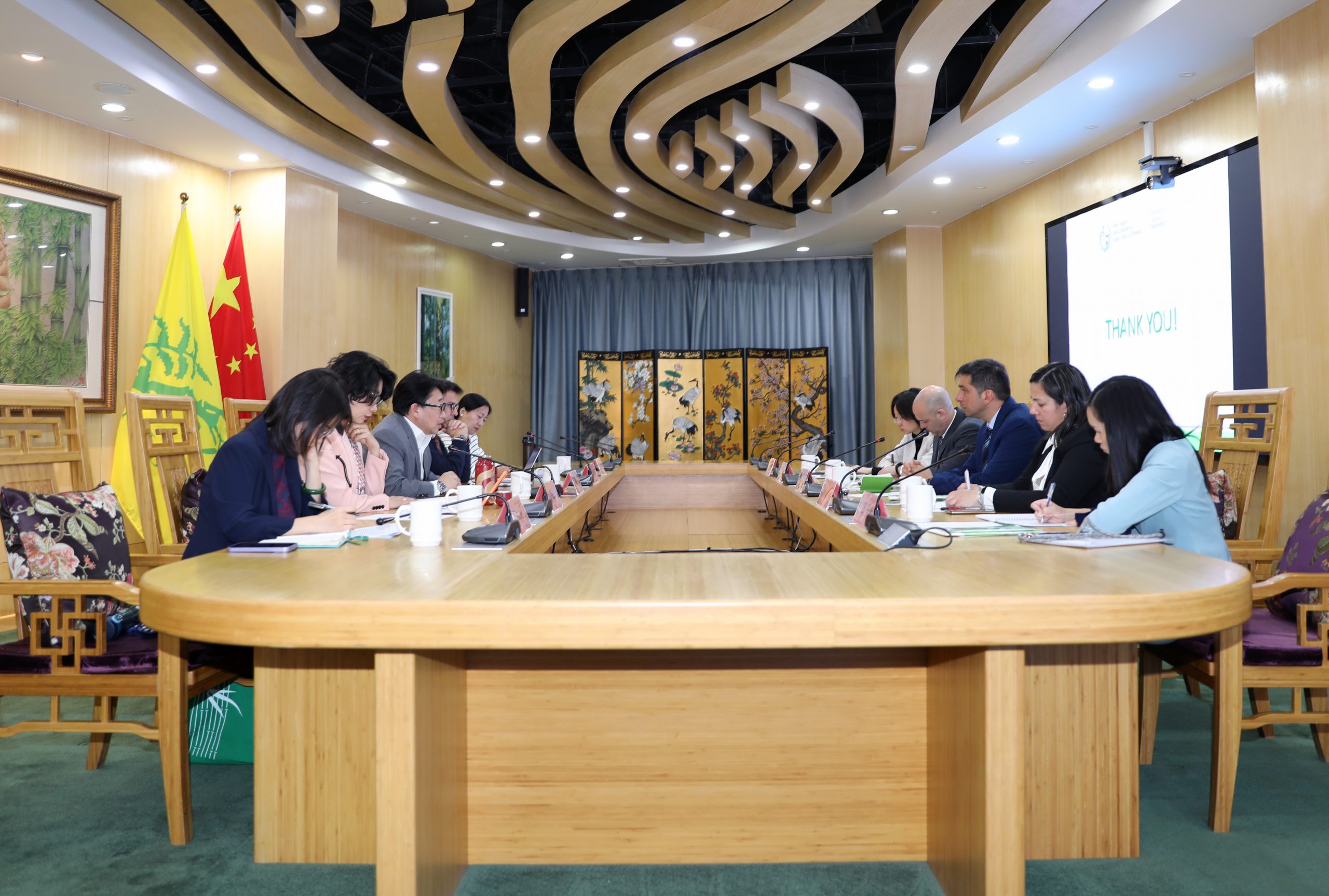
The International Bamboo and Rattan Organization (INBAR) and the Food and Agriculture Organization of the United Nations (FAO) have renewed their commitment to strengthen collaboration on the sustainable development and use of bamboo and rattan resources worldwide.
The two organizations agreed to extend their Memorandum of Understanding (MoU) until October 2030, reinforcing a shared vision to advance global sustainability efforts.
Under the renewed MoU, INBAR and FAO have developed a joint workplan aligned with INBAR’s Strategy 2015-2030 and FAO’s Strategic Framework 2022–31 for cooperation in technical collaboration, knowledge exchange and capacity development, supporting climate resilience and rural prosperity.
Jiang Zehui, Co-Chair of the INBAR Board of Trustees, said: “INBAR is committed to working closely with FAO to promote better production, better nutrition, a better environment, and a better life. Together, we are dedicated to supporting South–South cooperation, strengthening North–South dialogue, and achieving the United Nations 2030 Sustainable Development Goals.”
“Bamboo and rattan can drive sustainable development and build a thriving forest-based bioeconomy that strengthens communities while conserving forests,” said FAO Forestry Director Zhimin Wu. “We look forward to continuing this collaboration with INBAR to make this vision a reality.”
INBAR and FAO
INBAR is an intergovernmental organization founded in 1997 and headquartered in Beijing to promote sustainable development using bamboo and rattan. Last month its work on bamboo-based restoration was recognized as a World Restoration Flagship under the UN Decade on Ecosystem Restoration.
Originally signed in 2020, the partnership between INBAR and FAO has supported joint initiatives that promote bamboo and rattan as nature-based solutions for poverty reduction, sustainable livelihoods and climate action. Over the past five years, INBAR and FAO have worked together to advance sustainable management and utilization of these resources across Africa, Asia, and Latin America and the Caribbean.
The collaboration has supported policy development, knowledge sharing and the dissemination of technical guidance on bamboo and rattan value chains. These efforts in turn have strengthened local capacities, improved rural livelihoods and contributed to global discussions on nature-based solutions.
INBAR and FAO are also working together to develop methodologies to more accurately assess and map bamboo resources globally and to create harmonized trade codes for more reliable trade data.
The two organizations will continue to explore new opportunities for collaboration, including joint research, policy support and field activities that demonstrate the role of bamboo and rattan in sustainable resource management and climate-smart development.
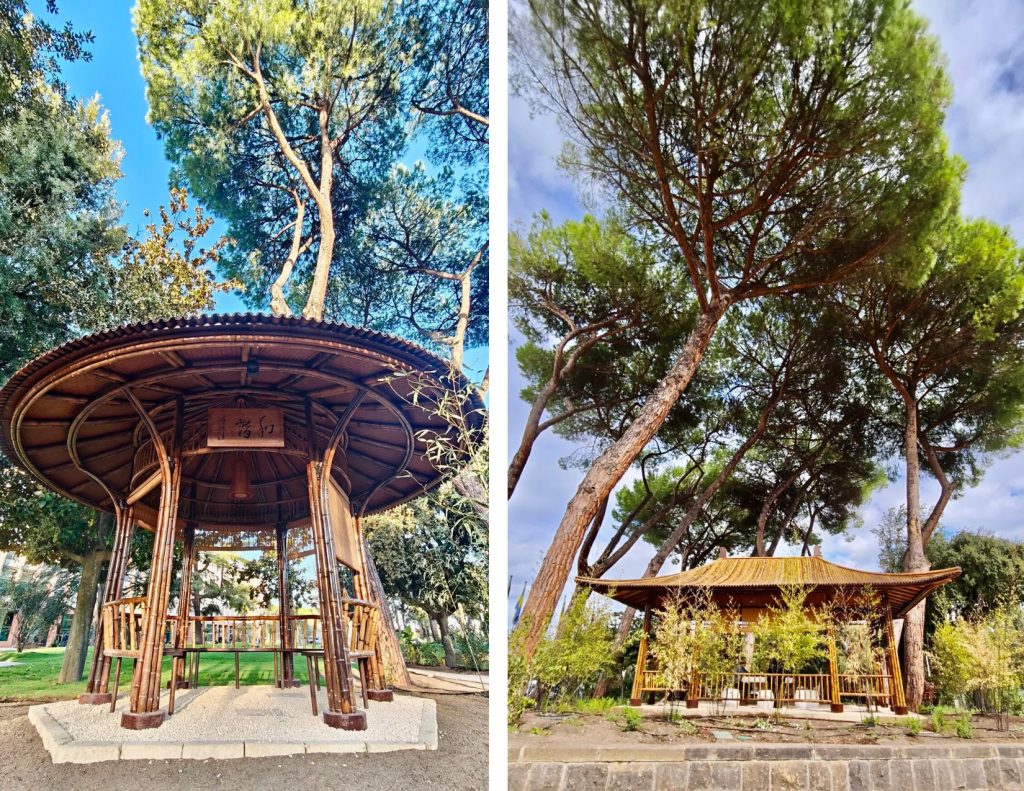
“Pavilion of Harmony” (left) and “Pavilion of Games” (right) donated by INBAR to FAO Headquarters.
INBAR recently donated two bamboo pavilions at FAO’s headquarters in Rome, inaugurated during the World Food Forum. They showcase bamboo’s potential as a sustainable and climate-resilient building material and stand as a symbol of the two organizations’ ongoing collaboration and commitment to innovative, nature-based solutions.