 News
NewsConference on carbon storage in forests convenes in China

International conference aims to improve the assessment and management of forest carbon sinks.
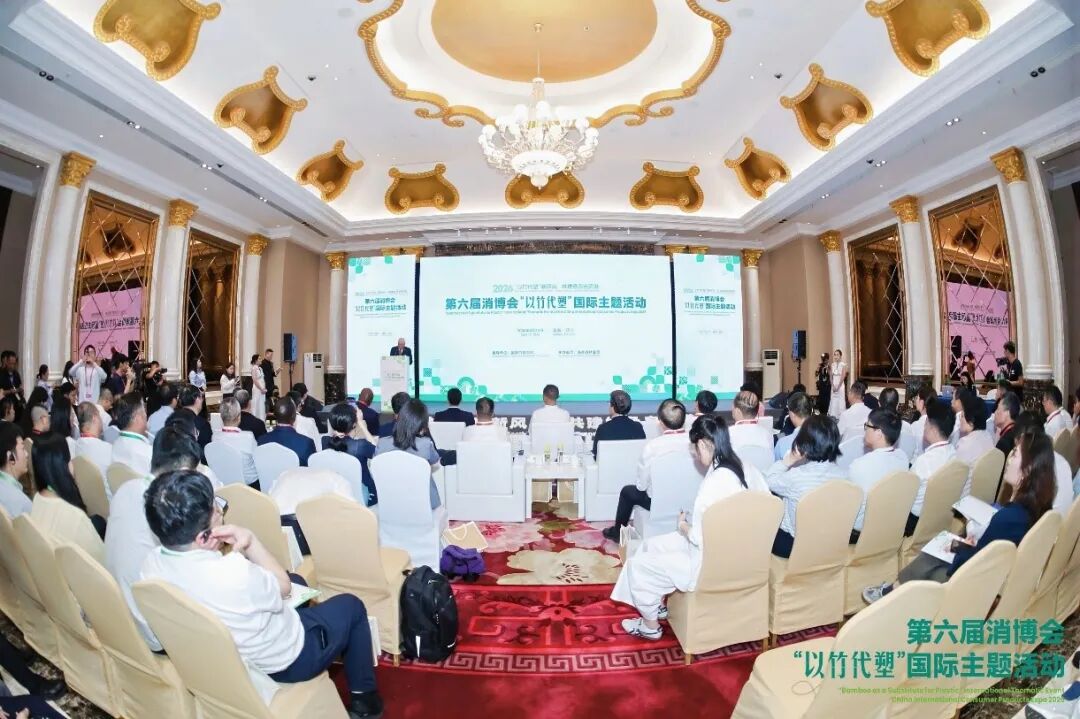
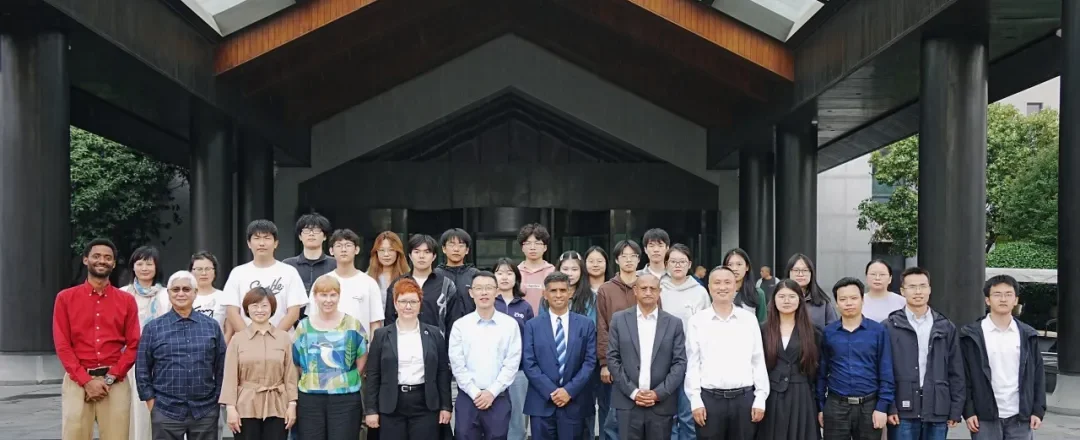
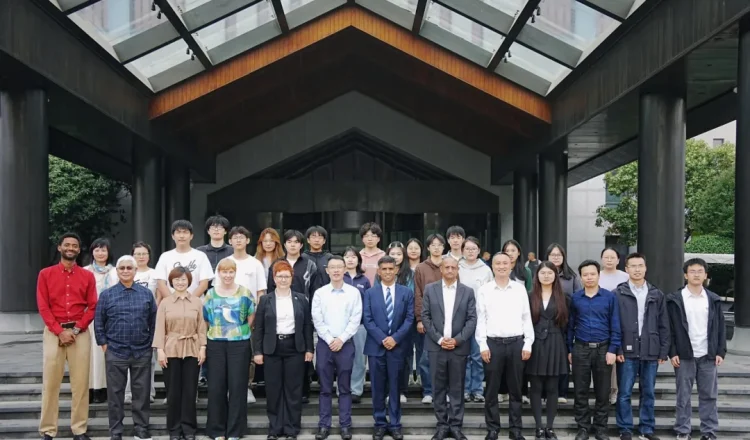
From 15 to 18 October 2024, the International Conference on Methodology of Estimating Carbon Sequestration Capacity of Forests was successfully held in Hangzhou and Huzhou, Zhejiang Province, China. The conference was hosted by Zhejiang Carbon Neutral Innovation Research Institute of Zhejiang University of Technology and co-organized by INBAR.
A diverse range of experts, practitioners and stakeholders participated in the conference from both China and abroad, with members from the World Meteorological Organization (WMO), GNS Science of New Zealand, National Institute of Water and Atmospheric Research of New Zealand, China National Environmental Monitoring Center, Zhejiang Agricultural and Forestry University, Ethiopia, the United States, and the Philippines in attendance.

Oksana Tarasova, Senior Scientific Officer of WMO, said that WMO has launched a number of programs, including the Global Greenhouse Gas Watch (GGGW) and the Integrated Global Greenhouse Gas Information System (IG³IS), focusing on global greenhouse gas monitoring and carbon source/sink assessment, which requires the participation of countries around the world. As an important part of the terrestrial ecosystem, bamboo forests have strong carbon sequestration potential, but there is currently a high degree of uncertainty in the global assessment of the carbon sequestration capacity of bamboo forests. It is believed that through cooperation with Zhejiang University of Technology, INBAR and other partners institutions, the carbon sequestration capacity of bamboo forests can be further clarified, ultimately resulting in a standard accounting methodology for carbon sequestration that can be shared for global benefits.

Jayaraman Durai, Director of INBAR Global Programmes, introduced the role of bamboo in addressing climate change and environmental protection. He pointed out that bamboo has good carbon sequestration capacity. A collaborative project is currently being implemented by INBAR, WMO and Zhejiang University of Technology to verify carbon sink practices being done in Anji bamboo forest and innovate carbon sink assessment technology for bamboo forests, with the hope of providing valuable experience for bamboo forest carbon sink research in different countries and regions. At the same time, he expressed his wish that this meeting will further promote the collision of ideas and further promote multi-party exchanges and cooperation.

Tao Xinyong, Dean of the Institute of Science and Technology of Zhejiang University of Technology, expressed his welcome and gratitude to the experts who attended the conference. He said that this conference invited experts and leaders from relevant international organizations and enterprises to share the latest research and practical results of carbon sink assessment methods. As a premier academic event, the conference provided a good academic exchange opportunity for teachers and students at the school.
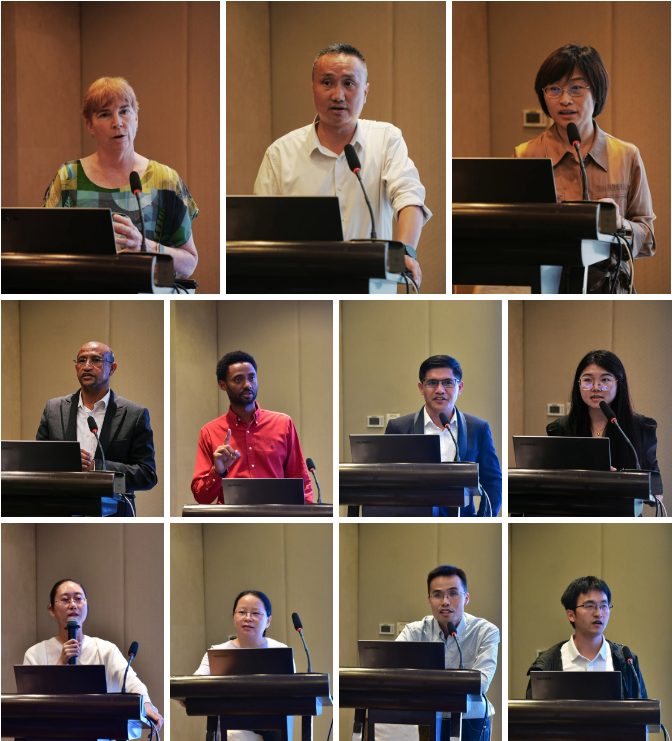
In the following technical report sharing session, Oksana Tarasova shared the current status of global greenhouse gas emission monitoring and forest carbon sink assessment. Dr. Xu Chi from the China National Environmental Monitoring Center introduced the research and progress of China’s greenhouse gas monitoring network and quality control. Dr. Sara Mikaloff-Fletcher, Principal Scientist of the New Zealand National Institute of Water and Atmospheric Research, introduced New Zealand’s forest greenhouse gas assessment method.
Afterward, Professor Fang Shuangxi of Zhejiang University of Technology and Li Yanxia, Senior Programme Officer of INBAR, introduced the international cooperative research project “Using atmospheric measurement methods to assess bamboo forest carbon sequestration capacity” being implemented by both parties in Anji. The project aims to innovate bamboo forest carbon sink monitoring and assessment methods through “top-down” innovative observation and traditional “bottom-up” inventory methods. Through the inversion and comparison of different methods, the uncertainty of the assessment method and emission factors can be reduced, and finally an operational, more economical, efficient and accurate bamboo forest carbon sequestration capacity assessment method can be formed. The project has established 30 fixed Moso bamboo forest carbon sink monitoring plots in Anji, as well as 2 atmospheric carbon measurement observation stations in Hengxiwu Village and Yao Village.

Dr. Jocelyn Turnbull, Lead Scientist of Rafter Radiocarbon Laboratory of GNS Science, New Zealand, and Co-Chair of the WMO Integrated Global Greenhouse Gas Information System (IG³IS) program, introduced how to use C14 tracer isotopes to distinguish carbon emissions from different sources such as biomass and fuels. Dr. Dagnew Yebeyen Burru, Project Coordinator of the East Africa Regional Office of INBAR, shared research on the allometric scaling, biomass accumulation and carbon stocks in natural highland bamboo (Oldeania alpina (K. Schum.) Stapleton) stands in Southwestern Ethiopia. Associate Professor Mei Tingting and Dr. Yu Rong of Zhejiang Agricultural and Forestry University comprehensively introduced the progress of bamboo forest carbon sink monitoring in China and the application of relevant specific technologies such as flux observation, vorticity and BIOME-BGC model in assessing carbon stocks and yield of bamboo forests.
Bryant Beeler from the American company FiveBee Technologies introduced robotic bamboo propagation for biomass and CO2 sequestration. Associate Researcher He Wei from Zhejiang University of Technology introduced the “top-down” and “bottom-up” estimates of regional carbon sources and sinks constrained by satellite observations. Bernard Olaget Bawing, President of the CSFIRST Green Agri-Industrial Development INC., shared the bamboo plantation management scheme in Pangasinan, Philippines for effective forest carbon sequestration. Dr. Liu Shuo from Zhejiang University of Technology shared the effects of green manure intercropping on greenhouse gas emissions in tea plantations.

Those in attendance also visited the atmospheric carbon measurement observation sites in Hengxiwu Village and Yao Village, Anji County, and participated in a discussion on bamboo forest carbon sinks with officials from the Anji County Forestry Bureau.
In their discussions, experts established the foundation for the further optimization of forest carbon sink assessment technology. Ultimately, this conference contributed to the realization of carbon neutrality and climate change mitigation, with generous support from the Zhejiang International Science and Technology Cooperation Base for Carbon Emission Reduction and Carbon Monitoring Technology.