International Bamboo and Rattan Organization

International Bamboo and Rattan Organization

Bamboo as a Nature-based Solution – Regional ARAUCLIMA Project

Colombia, Costa Rica, Cuba, Dominican Republic, Ecuador, Panama, Peru

2022
2025

Donors

Promoting bamboo as a nature-based solution for livelihood development and environmental management for climate change mitigation and adaptation in the Latin American and Caribbean Region

The project will generate capacities among rural producers to provide sustainable management of bamboo resources, including climate-smart practices, and to identify income generation possibilities. In addition, local researchers will generate scientific evidence on the environmental contributions of bamboo. Finally, demonstrative scenarios of different scopes will be implemented according to the reality and priorities of each country, to generate lessons learned with scaling possibilities.

The project will benefit from the experiences developed in Colombia, Ecuador and Peru on the ecosystem services of bamboo and its socioeconomic contributions to strengthening south-south cooperation.

Objectives

The general objective of the project is to promote South-South cooperation to face the challenges of climate change using bamboo as a nature-based solution.

Specific goal

  • Incorporate action research processes with the use of bamboo to increase the resilience to climate change of rural families in Colombia, Costa Rica, Cuba, Dominican Republic, Ecuador, Panama, and Peru.
2024

In Product 1, collaboration and planning spaces are being established for bamboo development in several countries, including Costa Rica, Cuba, Panama, and the Dominican Republic. Evaluations reveal bamboo’s potential in construction and ecology, though challenges such as lack of awareness, funding, and specific regulations remain.

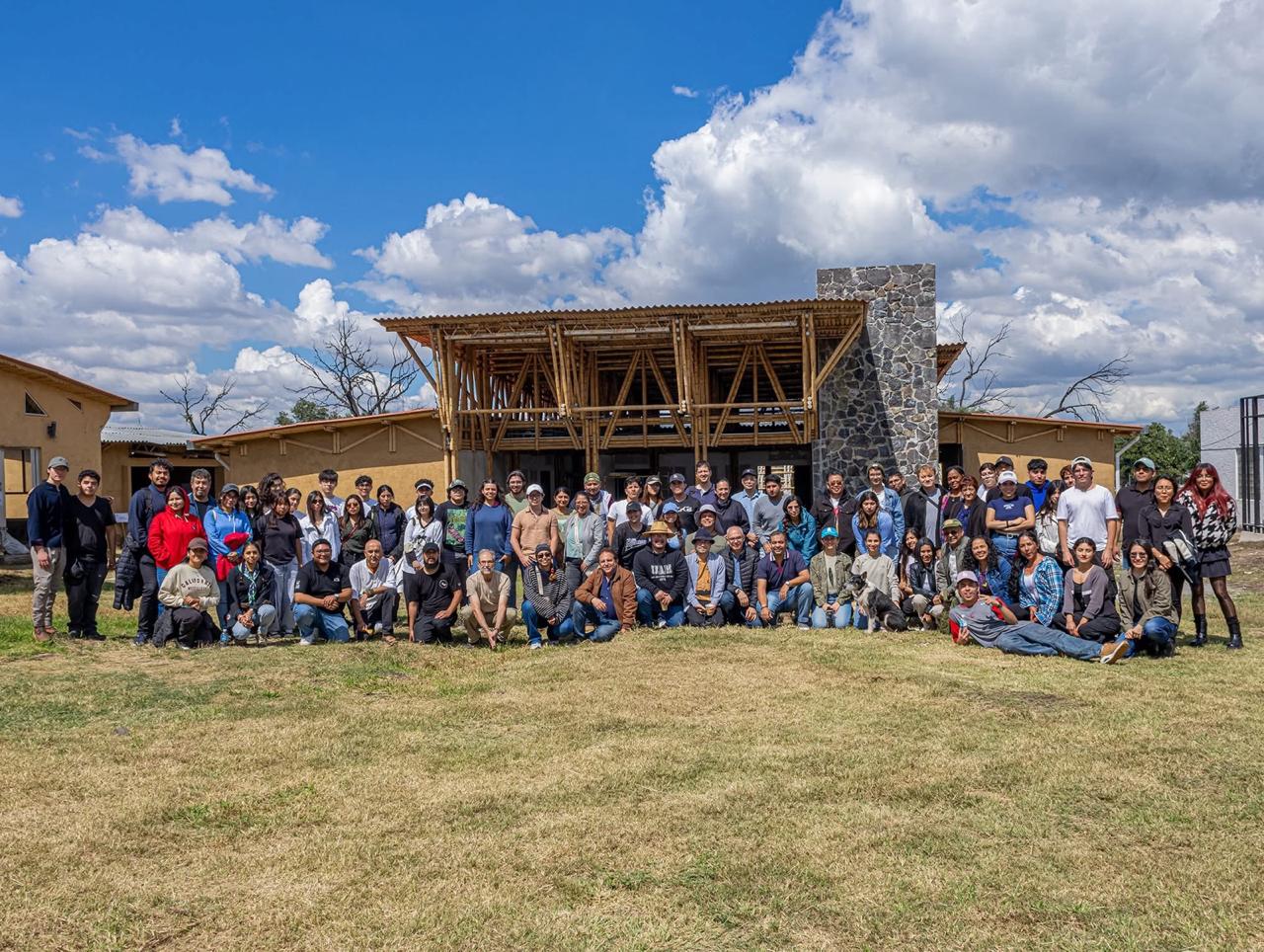
In Product 2, the project trains producers and technicians in climate-smart practices using bamboo. From November 17 to 26, 2023, an exchange tour took place in Ecuador with 25 participants from various countries. Workshops and courses were held on sustainable management, construction, and bamboo charcoal production.

In Product 3, demonstrative models of bamboo use have been established in several countries as solutions to climate change. In Costa Rica, the focus is on construction; in Panama, on ecotourism; in Cuba, on charcoal production; and in the Dominican Republic, on soil restoration. A guide has been created to validate these scenarios.

In Product 4, decision-makers and the community access documents about bamboo through exchange events and social media. Its uses and benefits are promoted through news and interviews. Research topics have been identified in each country regarding environmental impact and sustainable management of bamboo plantations.

  • Completed Rapid Resource Evaluation Reports on Bamboo in Costa Rica (estimated 1,225.5 hectares of bamboo plantations nationwide); Cuba (26,815.76 hectares of bamboo); Dominican Republic (980 ha mainly distributed in La Vega, Monseñor Nouel, Sánchez Ramírez, San Cristóbal, Santiago, Monte Plata, San José de Ocoa provinces).
  • Completed report on the systematic review of national policies and/or regulations in Costa Rica and Cuba.
  • Practical sessions of the Training of Trainers IV 9 participants in Costa Rica, 10 participants in Panama, and 15 participants in Dominican Republic.
  • Development of Bamboo Farmer Field Schools (BFFS) in sustainable bamboo management in Costa Rica with 4 BFFS and 58 participants; Panama with 7 BFFS and 112 participants; and in the Dominican Republic with 1 BFFS with 13 participants.
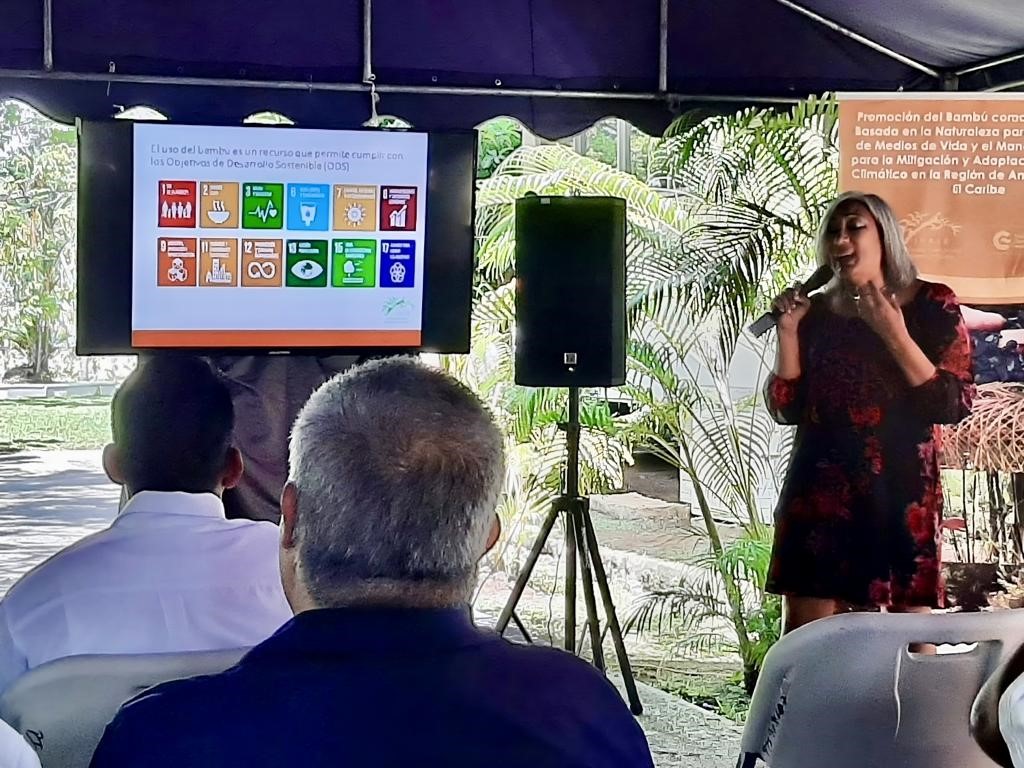
  • National Discussion Spaces for Bamboo Development: Costa Rica had two meetings, with the second held on March 20 with 18 participants; and in Panama, the first national bamboo meeting on May 10 with 100 people in person and 25 virtually.
  • Bamboo Demonstrative Model Scenarios (EMDB): Diversified Production in Costa Rica; in Cuba, bamboo charcoal; and in Panama, in Ecotourism and on Sustainable Bamboo Management.
  • Initiation of research work in Panama on two topics: 1) “Restoration of the Ecosystem of the Sub-Basin of the Zaratí River with Guadua angustifolia kunth species” in coordination with MiAmbiente on the farms of COOSMUZA producers, and 2) Identification of insect impacts on bamboo plantations in Panama and Chiriquí provinces.
2025

Product 1: Governance and Institutional Framework

  • Four studies assessing the availability of bamboo resources in Costa Rica, Cuba, Panama, and the Dominican Republic.
  • Four coordination platforms on bamboo were established or strengthened in Costa Rica, Cuba, Panama, and the Dominican Republic.
  • A study on bamboo market trends and opportunities for Central America and the Caribbean was published.
  • Four policy and regulatory review studies related to bamboo were conducted in Costa Rica, Cuba, Panama, and the Dominican Republic.
  • Three National Bamboo Plans (2025–2035) were developed for Cuba, Panama, and the Dominican Republic.
  • One National Bamboo Program was developed in Panama (2025–2026).
  • Bamboo was successfully integrated into development, climate, and restoration agendas.

Product 2: Capacity Building

Training, Farmer Field Schools, and knowledge exchange accelerated technology transfer and strengthened local capacities. The Bamboo FFS demonstrated that hands-on training motivates bamboo adoption. Research is key to evidencing environmental and socioeconomic impacts and attracting investment.

  • 97 trainers were trained in sustainable bamboo management in Costa Rica, Cuba, Panama, the Dominican Republic, Ecuador, Peru, and Colombia.
  • 501 rural producers were trained through Bamboo FFS (Costa Rica: 123; Cuba: 47; Panama: 154; Dominican Republic: 177).
  • 28 researchers were trained on environmental indicators related to bamboo.
  • 8 scientific and technical articles related to bamboo were published.

Product 3: Demonstration Scenarios and Models

Bamboo demonstration scenarios and models showcase its use as a nature-based solution to social, economic, and environmental challenges. They also serve as training spaces and promote circular economy approaches.

  • 7 Bamboo Demonstration Scenarios and Models (BDSM) were implemented, including:
    • 2 in Costa Rica: diversified production and sustainable construction;
    • 2 in Panama: watershed conservation and ecotourism;
    • 2 in the Dominican Republic: restoration and reforestation;
    • 1 in Cuba: charcoal and biomass production.
  • 179 hectares of bamboo were established and/or managed as part of the demonstration models (CR: 105; CU: 5; PA: 5; DR: 64).
  • A study on the economic and environmental contribution of bamboo was conducted.

Product 4: Knowledge Management and South–South Cooperation

Strengthened technical capacities and promotion through media and social networks improved recognition and confidence in bamboo use. Coordinated work among value chain actors is essential to sustainably position bamboo in the long term.

  • 9 communication products were developed.
  • 7 seminars/congresses were held.
  • The 5th Latin American and Caribbean Bamboo Symposium was organized in Costa Rica, with more than 150 participants from 18 countries across Latin America, the Caribbean, Europe, and Africa.
  • 11 bamboo-related materials were published: 9 training materials, 1 systematization and lessons learned document, and 1 final video.
  • 1 technical tour was organized in Ecuador (Guayaquil, Manta, El Carmen, Chone, Las Tunas, Manabí) with 21 participants from Colombia, Costa Rica, Panama, the Dominican Republic, and Peru.
  • 1 technical tour was organized in Costa Rica (Pérez Zeledón) with 15 participants from Costa Rica, Cuba, Panama, the Dominican Republic, and Colombia.
  • 1 technical tour was organized in Colombia (“Paradise of Guadua and Guadua”) with 12 participants from Costa Rica, Cuba, Panama, and the Dominican Republic.
Contact

For more information about the project, please contact:

Pablo Jácome, Regional Director, Latin America and the Caribbean Region,  inbarlac [at] inbar [dot] int

Socios

COSTA RICA
– Ministry of Agriculture and Livestock
– National University of Costa Rica

PANAMA
– Ministry of the Environment
– National Bamboo Council (CONABA)
– Education for Life Foundation

CUBA
– National Forestry Institute (INAF)

DOMINICAN REPUBLIC
– Pedro Henriquez Ureña National University

– Fernando Arturo de Meriño Agroforestry University
– Ministry of the Environment and Natural Resources
– CoopBambú

COLOMBIA
– National Council of the Productive Chain of Guadua/bamboo and its Agroindustry
– Colombian Bamboo Society
– Technological University of Pereira

ECUADOR
– Ministry of Agriculture and Livestock
– Ministry of Urban Development and Housing
– National Institute of Agricultural Research  (INIAP)
– Bamboo Sectoral Table
– Producer organizations
– Bamboo master builders

PERU
– La Molina National Agrarian University
– National Forestry and Wildlife Service (SERFOR)
– Technical bamboo tables
– Producer organizations

Project News

Project Events