 News
NewsAnnouncing the Winners of the 2024 International Bamboo and Rattan Photo Competition!
The final selections reveal with breathtaking beauty the diverse applications of bamboo and rattan from around the world.
We are excited to unveil the winners of the fifth edition of INBAR’s 2024 International Bamboo and Rattan Photo Competition. With over 200 remarkable submissions from participants worldwide, it was a difficult task for our panel to choose the winners.
The competition continues to highlight INBAR’s dedication to promote bamboo and rattan as vital resources for sustainable development. Through your participation, we have been able to not only celebrate the natural beauty of these incredible plants but also emphasize their potential to tackle global challenges, particularly as sustainable alternatives to plastics.
A distinguished panel of photographers, along with experts from INBAR, meticulously reviewed this year’s entries across three key categories: 1) Bamboo and rattan as plastic alternatives; 2) industrial or craft innovations related to bamboo and rattan as substitutes for plastic; and 3) community impacts of bamboo and rattan.
Winners
Category I: Bamboo and rattan as plastic alternatives
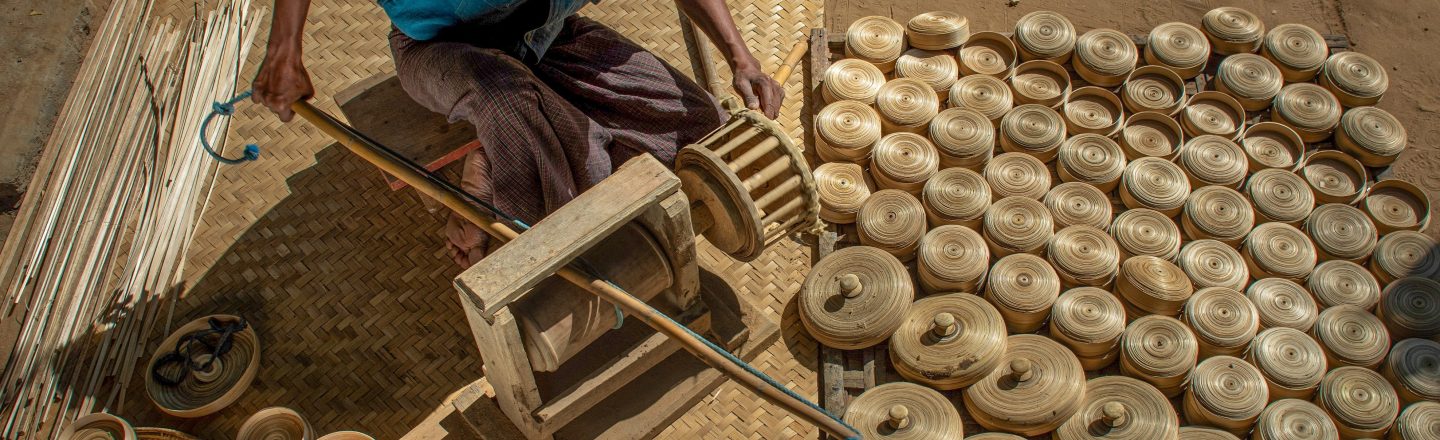
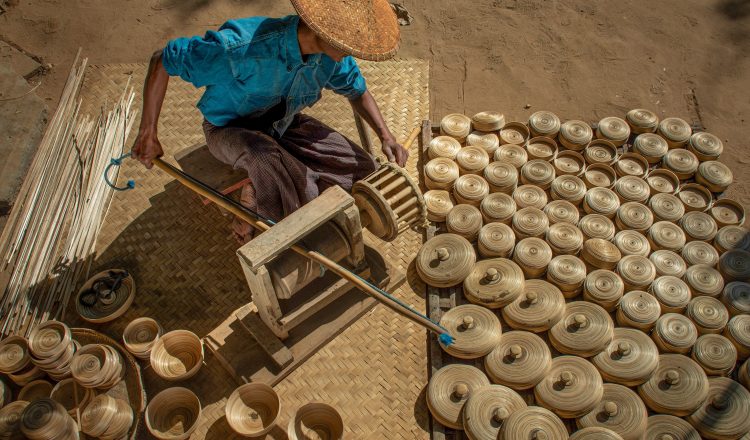
First place: “Making coiled lacquerware with bamboo” by Myat Zaw Hein from Myanmar
Upon arriving in Bagan, Myanmar, I visited several workshops and observed the intricate craft of creating coiled bamboo products. In these traditional factories, artisans weave bamboo strips into elegant, functional items, which are then finished with lacquer. Bamboo is a sustainable material that has been deeply rooted in local craftsmanship for generations. This technique not only preserves cultural heritage but also offers an eco-friendly alternative to plastic.

Second place: “Salted fish maker using bamboo baskets” by Muhammad Syarif. S from Indonesia
On the coast of North Jakarta, Indonesia, salted fish makers expertly process mackerel using traditional methods. Bamboo baskets play a vital role in this process, as they are used to transport the fish after they have been salted and boiled in hot water. Once removed from the baskets, the fish are spread out on drying racks, also made with bamboo, where they are left to dry under the sun.

Third place: “Weaving futures: Rattan craftsmanship sustaining communities and the environment” by Luciano Santiago Abad from the Philippines
In the heart of a sunlit workshop, a young boy sits intently, his hands a blur of motion as he weaves slender strands of rattan into an exquisite piece of furniture. His small fingers nimbly guide the natural material, transforming it into a work of art that is as sturdy as it is beautiful. Each weave, a testament to tradition, is done with care and precision. The boy’s focused expression reveals his connection to the age-old craft, embodying the promise of a future in which sustainable materials like rattan replace plastics, not only preserving the environment but also providing vital livelihoods for entire communities. This scene captures the essence of a movement that blends environmental consciousness with the enduring power of human skill and community resilience.

Category II: Industrial or craft innovations related to bamboo and rattan as substitutes for plastic
First place: “Intrecci liberi” by Iacopo Bertolini from Italy
The entire structure, with its flowing curves and freeform design, is built entirely from biomaterials. The undulating curves of the installation showcase how bamboo and other natural materials can be used not only for their aesthetic beauty but also for functional design that works harmoniously with the environment.

Second place: “The cane-star grandpa” by Amitava Chandra from India
In the northeastern state of Nagaland, India, the tribal community skillfully uses bamboo and rattan to create a variety of utility items from these natural gifts. Both bamboo and rattan grow abundantly in this region, and the handcrafted items made from them serve not only the needs of the community but also appeal to visiting tourists as unique souvenirs. Notably, the village of Khonoma has earned the title of one of the cleanest villages in Asia, where the use of plastics has been banned by local authorities. For the people of Khonoma, utilizing bamboo for both functional and artistic purposes is not only a means of survival but also a cherished tradition that reflects their cultural heritage.

Third place: “The craftsman” by Rabin Chakrabarti from India
The products featured in this photograph are entirely crafted from bamboo, showcasing the beauty and versatility of this natural material. Each product serves as a stunning showpiece, ideal for decorating or ornamenting any space. This collection exemplifies innovative craftsmanship, highlighting the creative potential of bamboo in contemporary design. The photograph was taken in Kolkata, West Bengal, during a crafts fair organized by the local government, celebrating the rich tradition of bamboo craftsmanship and promoting sustainable artistry.

Category III: Community impact of bamboo and rattan
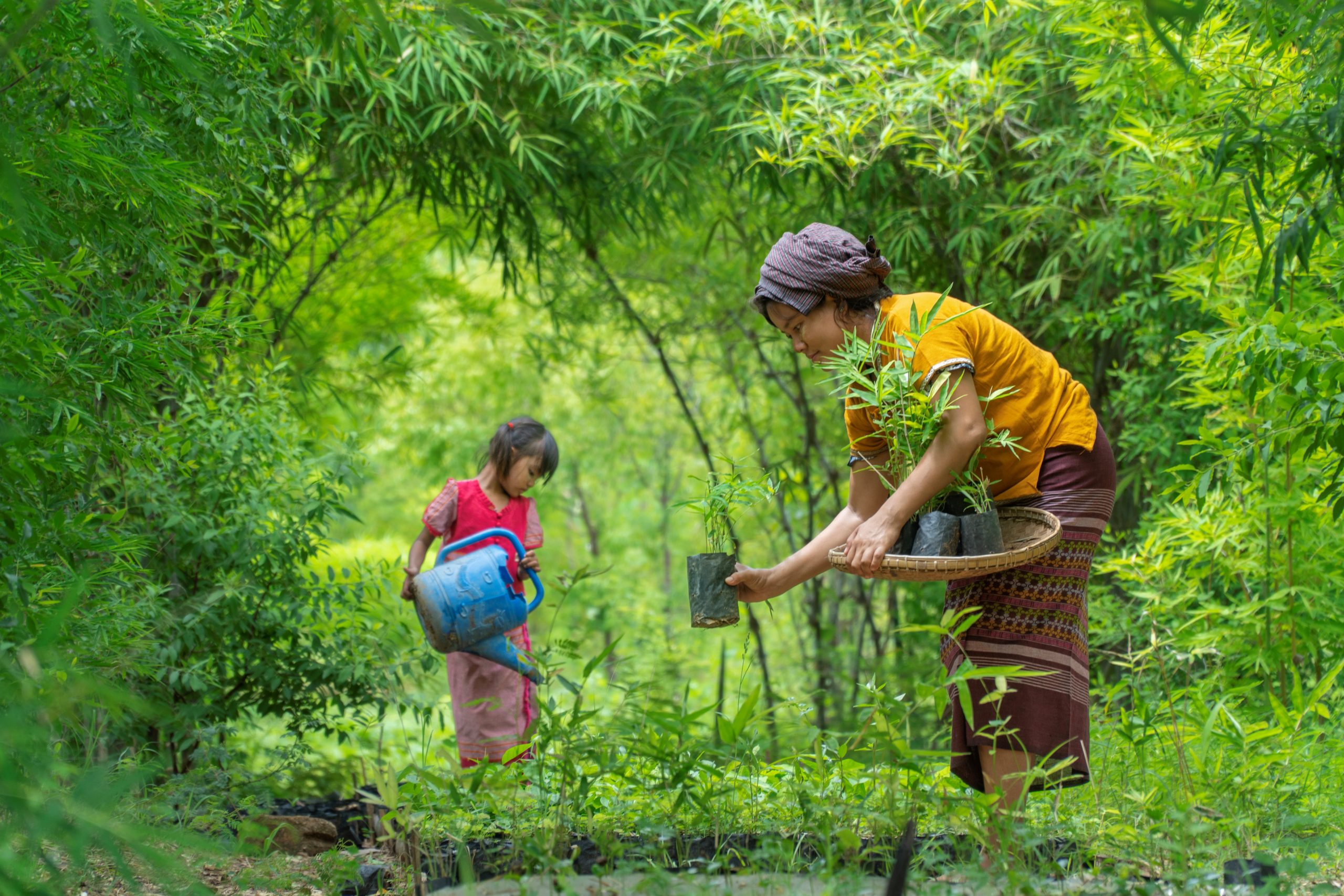
First place: “Planting bamboo” by Aung Kyaw Zaw from Myanmar
Nowadays, bamboo has become increasingly valuable to communities, providing essential utensils, building materials and a variety of crafted items. As a result, many individuals are now dedicated to caring for bamboo plantations, recognizing their importance. This photograph captures the moment when seedlings are planted in a bamboo plantation, highlighting the commitment of local farmers to nurture this sustainable resource, and the vital role bamboo plays in supporting livelihoods.
Second place: “Floating Bamboo Garden” by Klienne Eco from the Philippines
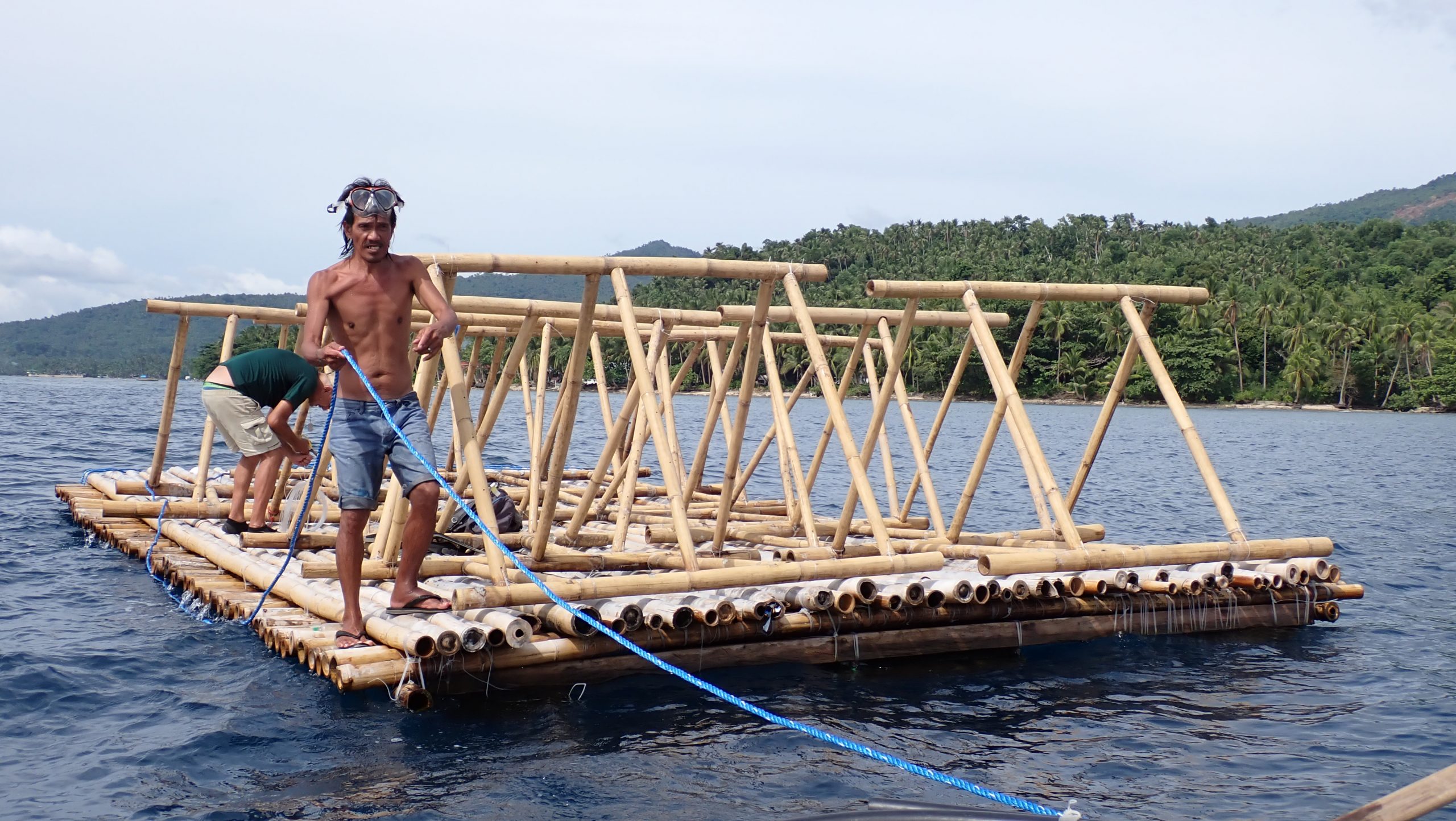
Discover a groundbreaking initiative in the province of San Pablo Laguna, Philippines: A floating bamboo garden that not only purifies the lake for our underwater friends, but also invites tourists to admire nature’s beauty. Crafted as an innovative substitute for plastics, this project developed by the rotary club of the Philippine San Pablo Laguna Chapter sets a shining example of sustainable development and environmental stewardship. Let’s support efforts like these that not only benefit marine life but elevate local communities through eco-friendly solutions.

Third place: “Bamboo Architecture Building” by Moe Wai from Myanmar
This captivating photograph showcases the stunning beauty and artistic design of buildings made from bamboo, featuring two smiling children playing in the space. Bamboo spaces create opportunities for social interaction, fostering joy and community impact. Bamboo is a low-cost but highly valuable species that offers numerous benefits to humanity.

These stunning images illustrate how bamboo and rattan are paving the way for a more sustainable future. We want to extend our heartfelt gratitude to everyone who participated and helped highlight the incredible potential of these materials. Your contributions are greatly appreciated, and we will feature and credit your work across our digital platforms. Be sure to stay connected with INBAR on social media (Instagram, Facebook, Twitter, LinkedIn), where we will share the fascinating stories behind the participating photographs.
Congratulations to the winners!
For further inspiration, view the past winning entries from 2020, 2021, 2022 and 2023.