News
NewsBamboo and rattan for the Congo Basin, carbon sequestration and job creation

Bamboo and rattan highlighted as key tools for sustainable development in the Congo Basin.
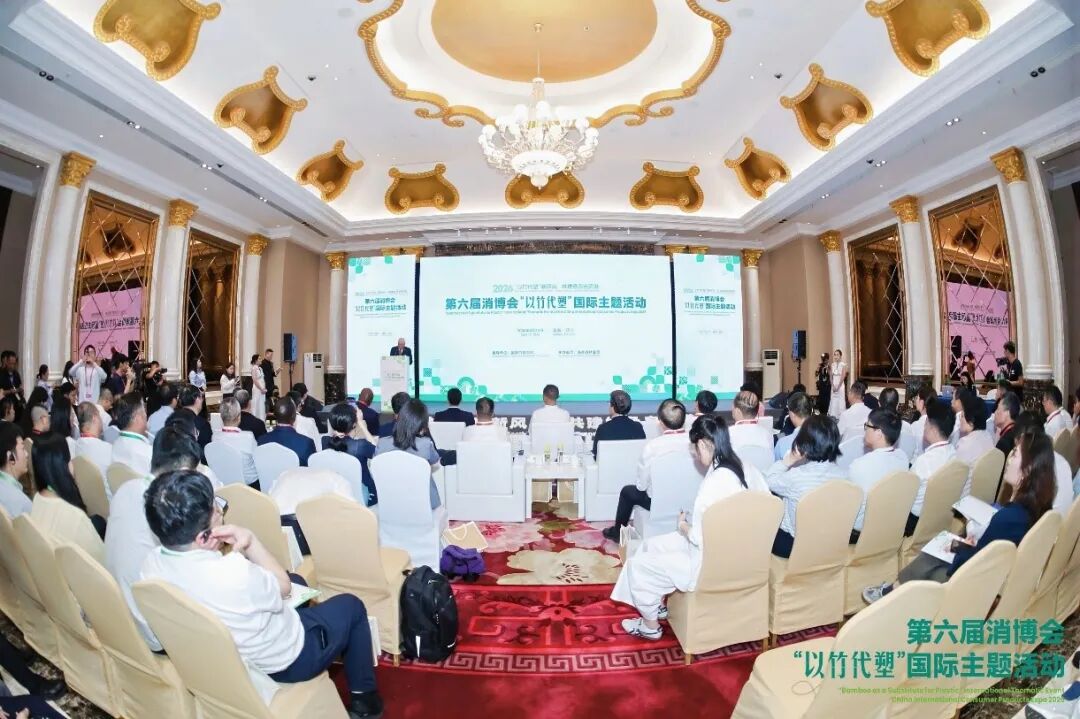
On 19 November 2024, INBAR and the Economic Community of Central African States (ECCAS) co-organized a side event at COP29 titled “Harnessing the Potential of Bamboo and Rattan for the Sustainable Management of the Congo Basin Forest, Carbon Sequestration, and Job Creation in the ECCAS Member States.”
The event was organized at the Pavilion of the Congo Basin Climate Commission / Congo Basin Blue Fund. The event brought together policymakers, experts and stakeholders to discuss the environmental and economic contributions of bamboo and rattan, explore opportunities for collaboration and identify the challenges and solutions to developing the bamboo and rattan sector in the Congo Basin.

Prof. Lu Wenming, Deputy Director General of INBAR, delivered the opening remarks. He emphasized that of the 11 Member States of ECCAS, seven are Member States of INBAR: Burundi, Cameroon, the Central African Republic, Chad, Congo, the Democratic Republic of Congo and Rwanda. In particular, INBAR has supported Cameroon and the Democratic Republic of Congo in the development of National Bamboo and Rattan Strategies. At the continental level, INBAR has facilitated the announcement of the China-Africa Bamboo Centre to be established in Ethiopia, as well as the inclusion of bamboo and rattan development into the Action Plan of Dakar and the FOCAC summit. INBAR is excited to play a role in these developments and will continue its engagement to further promote the bamboo and rattan sectors in Africa.
H.E. Dr. Honore Tabuna, Commissioner and Head of the Environment, Natural Resources, Agriculture and Rural Development, ECCAS, stressed that the Congo Basin is home to the second-largest forest in the world alongside exceptional natural resources, including bamboo and rattan. These two plants have enormous potential to address several development challenges such as poverty, job creation, deforestation, restoration of degraded ecosystems, climate change and more. He opined that ECCAS and INBAR must join hands and collaborate with other regional organizations to build a consortium to galvanize funds for developing bamboo and rattan in the region.

H.E. Prof. Paul Tchawa, Secretary General of the Ministry of Environment, Nature Protection and Sustainable Development of Cameroon showcased several bamboo and rattan developments jointly implemented with INBAR, namely, The Restoration Initiative, ACREGIR and Inter-Africa Livelihood Development Programme, mentioning that these projects have achieved excellent results. He reiterated that it is essential to share best practices, build local capacities and attract more robust investment to support these initiatives. Cameroon is ready to work together with its neighbors to strengthen the impact of these projects on a regional scale.
Dr. François Mankessi, National Coordinator of the National Afforestation and Reforestation Program, Congo (Brazaville) asserted that the Republic of Congo is rich in bamboo and rattan resources. These two NTFPs have been traditionally used in the Congo in a variety of ways such as for construction and fencing especially in rural areas, as hunting and fishing tools, basketry and more. One of the key recommendations emerging from the Three Basins Summit was to rethink the way we use our forestry resources, with an emphasize on underutilized resources with high potential like bamboo and rattan. For the Republic of Congo, this is a clear orientation by the government, and discussions are already underway for a bamboo and rattan workshop to be jointly organized with INBAR in Brazzaville. The workshop will offer a suitable platform for uniting all stakeholders in Congo to come together and devise pathways forward for the development of bamboo and rattan in Congo as tools to improve livelihoods and protect the Congo Basin forest.
Dr. Peter A. Minang, Director for Africa CIFOR-ICRAF, indicated that bamboo can be an excellent agroforestry crop. It can be grown in different forms as a shelter belt, boundary and as block planting. Bamboo can withstand climate vagaries and contribute to both climate change mitigation and adaptation. We need to work at two ends – resource and development – to produce quality planting materials to scale up appropriate resource bases and spur value chain development. INBAR-ECCAS and CIFOR-ICRAF should work together to develop a regional project in Congo Basin countries.

In his closing remarks and vote of thanks, H.E. Dr. Honore Tabuna reiterated that the potential of bamboo and rattan is yet to be realized, and for it to contribute to development goals, stronger cooperation is needed among INBAR, ECCAS, CIFOR-ICRAF, ministries and other key stakeholders. We need to join hands to build a consortium to galvanize financial resources and develop a joint project in ECCAS Member States.
The session was moderated by Jayaraman Durai and Rene Kaam of INBAR.