News
NewsSafeguarding Ethiopia’s waters with bamboo

The INBAR-AECID Ethiopia Bamboo Supply Chain Development project planted bamboo around Lake Hawassa and Lake Abaya.
New project work is putting bamboo seedlings in the ground and generating positive impacts for Ethiopia’s waters.
Bamboo has important applications for reducing siltation and pollution in bodies of water. In order to safeguard Ethiopia’s lakes, INBAR-AECID Ethiopia teamed up with the Office of Environmental Protection and Forestry of the Hawassa City Administration and Forestry Directorate of Sidama Region to produce more than 8000 lowland bamboo (Oxytenanthera abyssinica) seedlings. Over 300 of these seedlings were subsequently planted across the shores of Lake Hawassa.

Project staff planting seedlings across the shoreline.
Arega Barse, head of the Office of Environmental Protection and Forestry Development of Hawassa City, said that the office has been working with multilevel stakeholders to achieve green development goals and mitigate climate change. Arega added that the work of raising and planting lowland bamboo species in the region is at the trial stage. Bamboo seedlings will also be accessible to farmers around the lake, and the work of adapting different bamboo species will be strengthened.
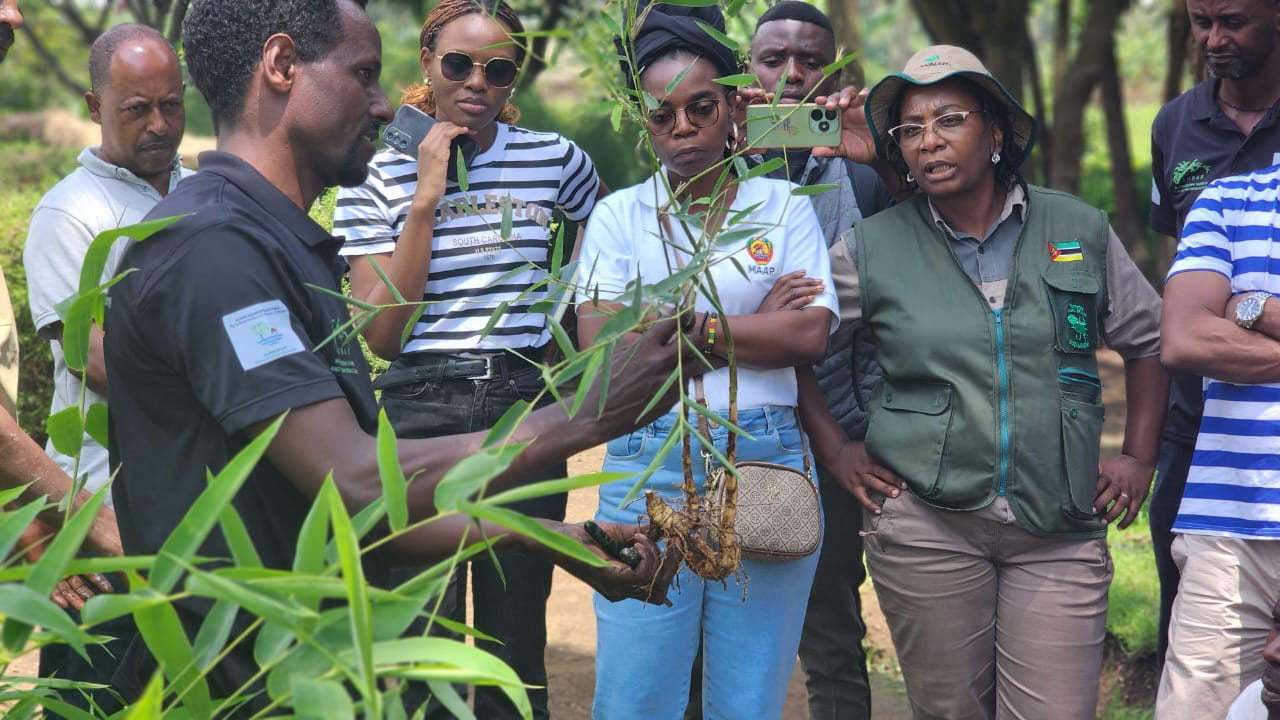
Dr. Selim Reza, Program Manager of INBAR’s East Africa Regional Office, stated that INBAR along with partner organizations across the country is working to safeguard the environment by raising and propagating bamboo seedlings. The organization has been also providing sustainable bamboo management and harvesting as well as skill development trainings to farmers, youth and forestry experts around the country.

Dr. Selim Reza, Program Manager of INBAR’s East Africa Regional Office getting his hands dirty with bamboo.
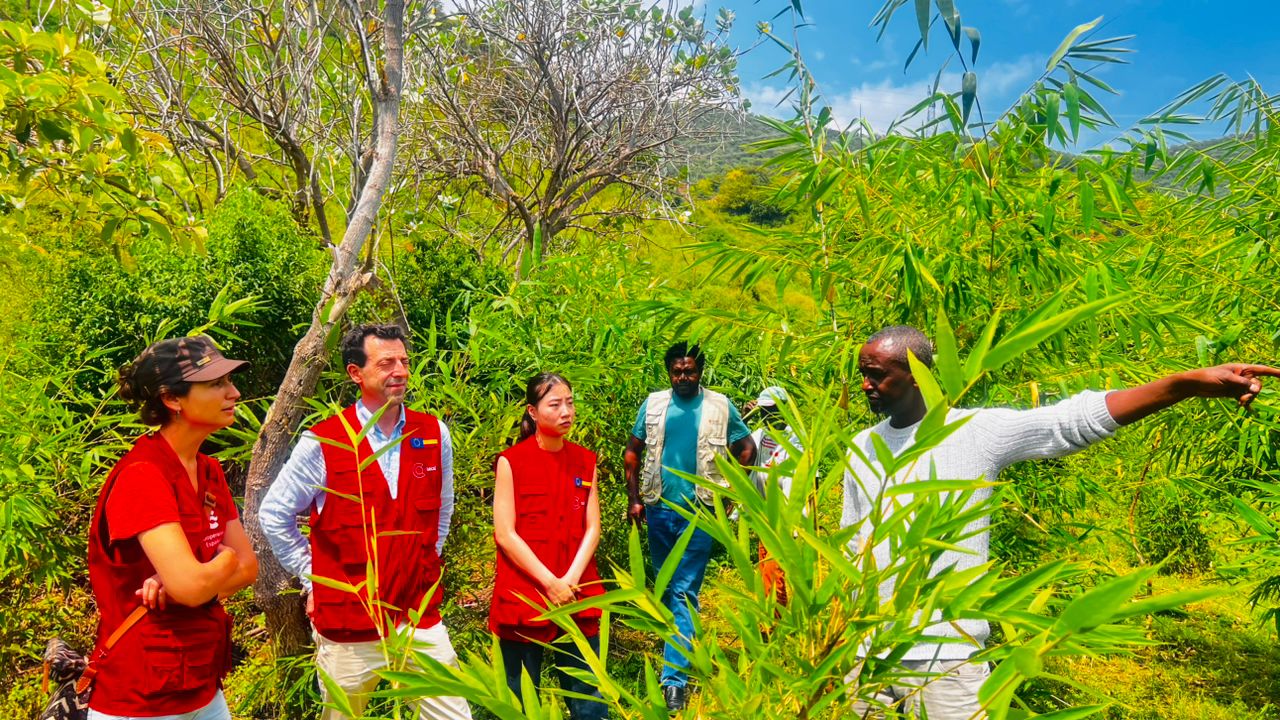
INBAR in collaboration with Arba Minch University and Gamo Zone Environmental Protection and Forestry Development has also carried out bamboo planting at Lante District, Gamo Zone. Participants from Southern Region Forestry Directorate and local district administration were also present in the occasion. More than 14,000 lowland bamboo seedlings were prepared, and out of these 600 were planted at the event on the shores of Lake Abaya.
Dr. Damtew Darza, President of Arba Minch University, said that the university is carrying out annual tree-planting programs as part of the green legacy campaign to rehabilitate degraded and soil erosion prone areas. The President also noted that bamboo is not only used to protect the environment but also to build houses and produce utilities, create jobs for youth and women, and can be used for food and other services. INBAR-AECID Ethiopia Project Coordinator, Dagnew Yebeyen, said that INBAR is working in 50 countries worldwide to achieve sustainable development by protecting the environment and improving the economy of the community through bamboo and rattan. According to Dagnew, of the more than 1600 bamboo species found in the world, two of them are indigenous to Ethiopia, which cover about 67 percent of bamboo resources in Africa.
Zerihun Seyum, Director of the Southern Regional State Forestry Directorate, said that due to the diminishing of the highland bamboo (Oldeania alpina) resources in the region, great attention is now being paid to the adaptation and cultivation of lowland bamboo. Abrahan Aika, Head of the Gamo Zone Environment and Forest Protection Department, said that highland bamboo have been planted extensively in the mountainous areas of the Zone. He added that synergy is crucial for monitoring and protecting the planted seedlings between partner institutions in order to meet the intended target. District officials also expressed their commitment to manage and protect the planted seedlings.

Bamboo seedlings arrive on site.
INBAR-AECID Ethiopia Bamboo Supply Chain Development project has established six nurseries in the Sidama and the Southern region. It is also working in different activities like skill development, restoration of degraded lands, support of small bamboo processors cooperatives, facilitating participation of SMEs in exhibition and market fairs as well as strengthening regional micro and small enterprise agencies.