 News
NewsDefining the future of structural glued laminated bamboo
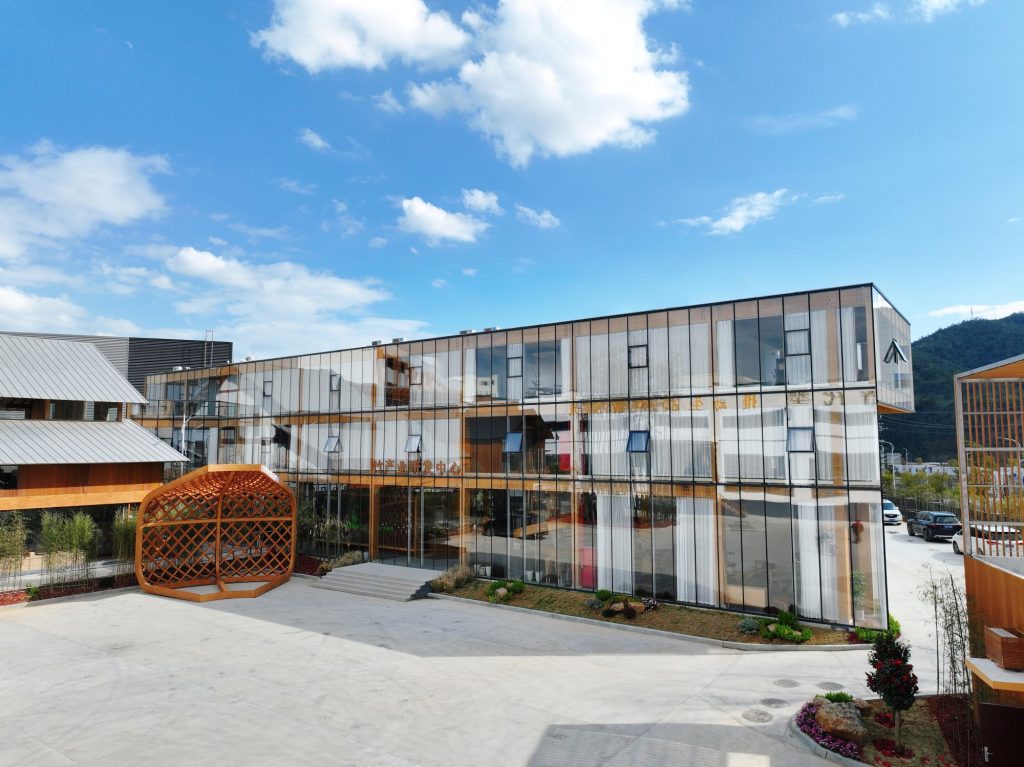
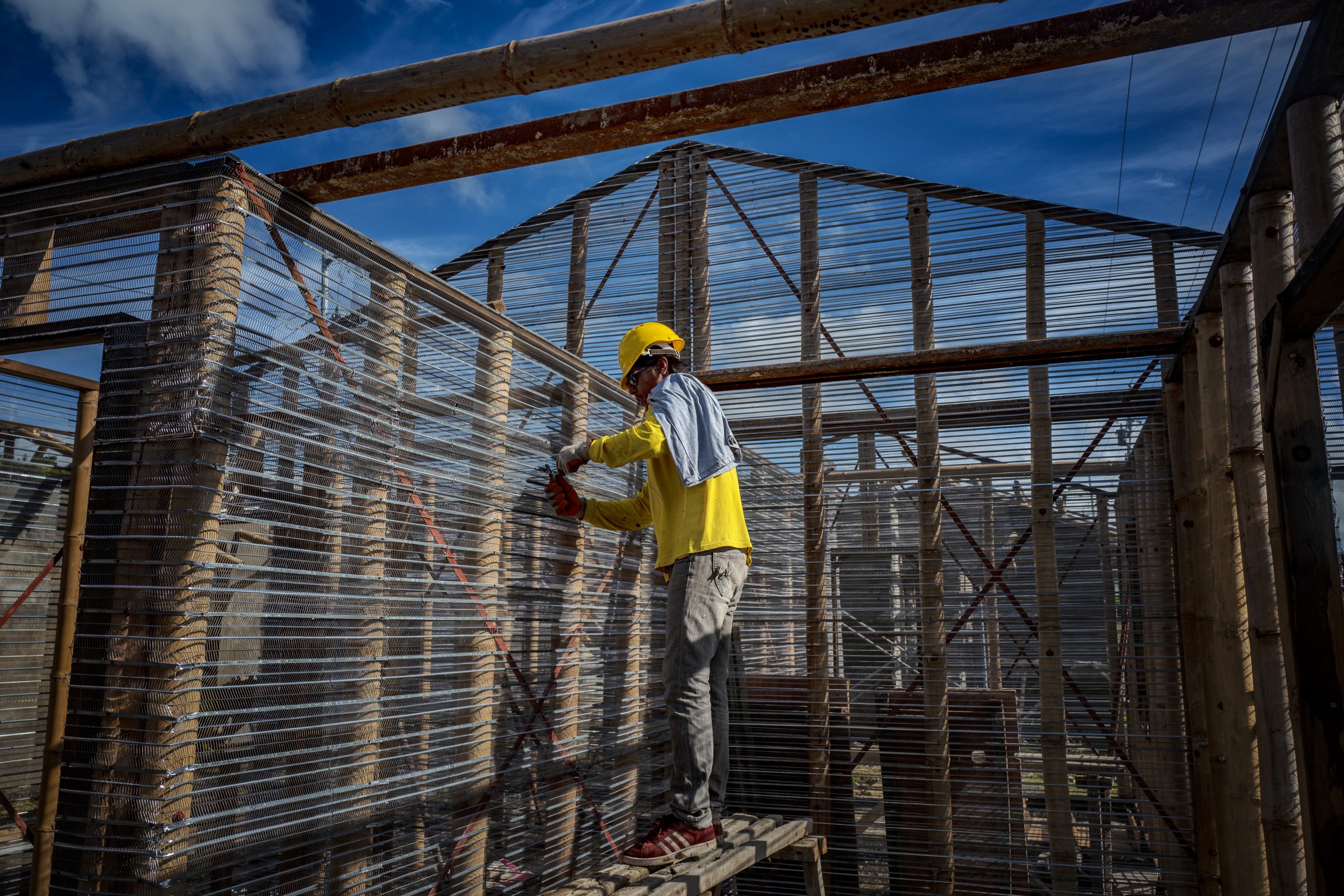
Sentai’s innovative three-story office building, constructed with glued laminated bamboo. Credit: Ganzhou Sentai Bamboo & Wood Co., Ltd.
The world’s first ISO standard for structural glued laminated bamboo marks a significant step toward establishing bamboo as a sustainable material in construction.
On 28 October 2024, the International Organization for Standardization (ISO) officially released the ISO 7567:2024 Bamboo structures – Glued laminated bamboo – Product specification, a groundbreaking international standard for engineered bamboo products proposed by INBAR.
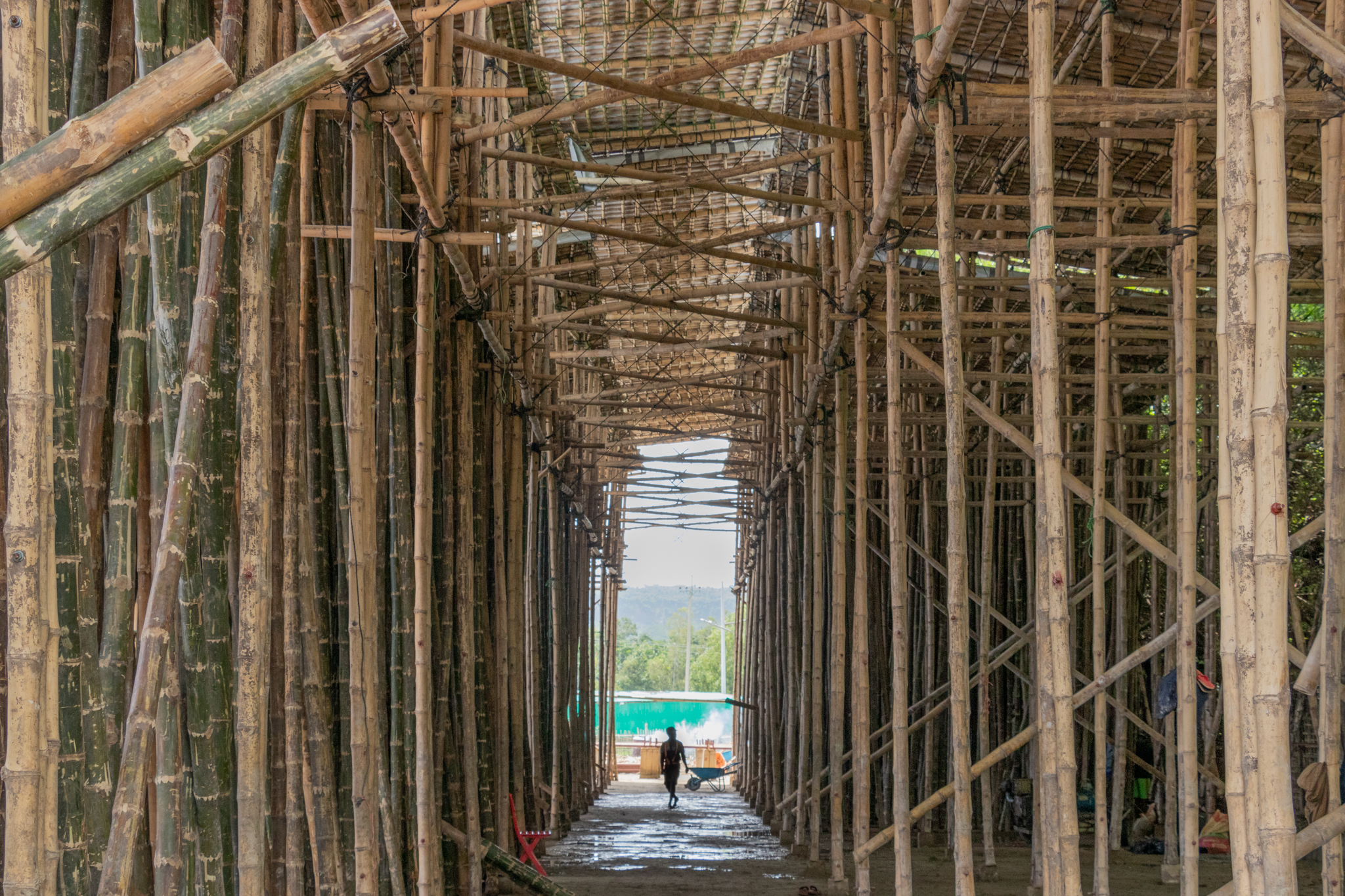
Bamboo, a renewable low-carbon construction material, has been widely used in Asia, Latin America and Africa for centuries. Emerging in the 1990s, engineered bamboo products began to be used as structural components in buildings. After the development of more than three decades, these products have achieved standardization and modernization while preserving ecological sustainability. Glued laminated bamboo, one of the most widely used engineered bamboo products globally, holds immense potential for future engineering applications.
ISO 7567:2024 sets the standard for structural glued laminated bamboo products, marking a historic milestone as the world’s first international standard for engineered bamboo products. This achievement is the result of international collaboration, led by Prof. Haitao Li from Nanjing Forestry University and Prof. Mahmud Ashraf from Deakin University, with contributions from Dr. Dong Yang of Nanjing Forestry University and industry partners such as Fujian Dasso Industry Co., Ltd., Ganzhou Sentai Bamboo and Wood Co. Ltd., and Moso International. Approved in October 2021, this standard has persistently advanced amid the challenges of the pandemic, thanks to the efforts of the ISO/TC165 WG12 on Structural Uses of Bamboo, with strong support from the bamboo industry.
Throughout its development, INBAR and representatives from several countries, including the USA, the UK, Canada, the Netherlands, the Philippines and Australia, actively participated in multiple rounds of extensive online discussions and solicited opinions. Experts such as Kent Harries, Professor at the University of Pittsburgh; David Trujillo, Associate Professor at Coventry University; and Arjan van der Vegte, Technology Manager at Moso International, contributed to refining the draft. The success of this standard would not have been possible without the support of Prof. Chui Ying, Chair of ISO/TC165; Paul Jaehrlich, Manager of ISO/TC165; the ISO/TC165 Secretariat; and Ms. Liu Kewei, Convenor of ISO/TC165 WG12.
The formation of Working Group 12 in 2013 was a pivotal moment in the development of international standards for the structural uses of bamboo. As of December 2024, this group has published six international standards for bamboo structures, including three for round bamboo and three for engineered bamboo products. Two additional international standards for engineered bamboo are currently under development. Alongside ISO 7567, the following ISO standards for bamboo structures have been published:
-
ISO 19624:2018 Bamboo structures – Grading of bamboo culm – Basic principles and properties.
-
ISO 22157:2019 Bamboo structures – Determination of physical and mechanical properties of bamboo culms – Test methods.
-
ISO 22156:2021 Bamboo structures – Bamboo culms — Structural design.
-
ISO 23478:2022 Bamboo structures – Engineered bamboo products – Test methods for determination of physical and mechanical properties.
-
ISO 5257:2023 Bamboo structures – Engineered bamboo products – Test methods for determination of mechanical properties using small size specimens.
INBAR remains committed to working with its Member States and global partners to promote the adoption of international standards for bamboo’s structural applications, contributing to the wider use of bamboo as a sustainable material in construction.
Learn more about the Bamboo Construction Task Force.