 News
NewsINBAR and IFAD sign partnership agreement to bolster historical alliance

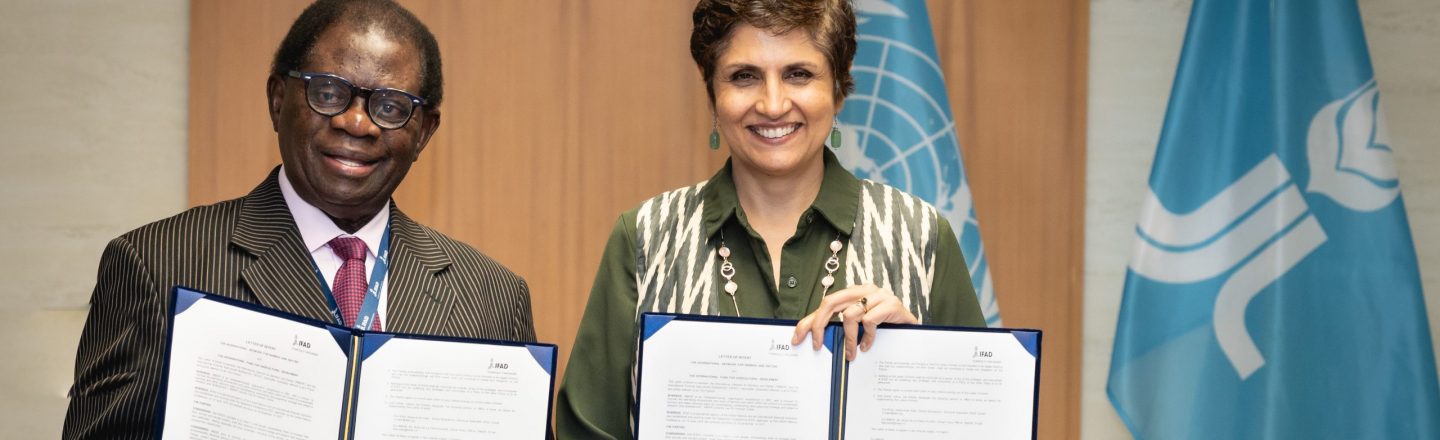
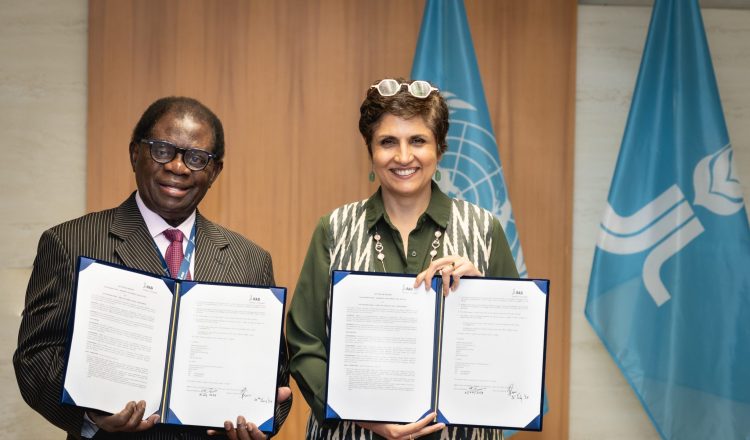
H.E. Ali Mchumo, Chair of INBAR Board of Trustees (left), and Dr. Jyotsna Puri, Associate Vice President of the Strategy and Knowledge Department at IFAD (right).
Letter of Intent builds on the decades-long collaboration between the two organizations.
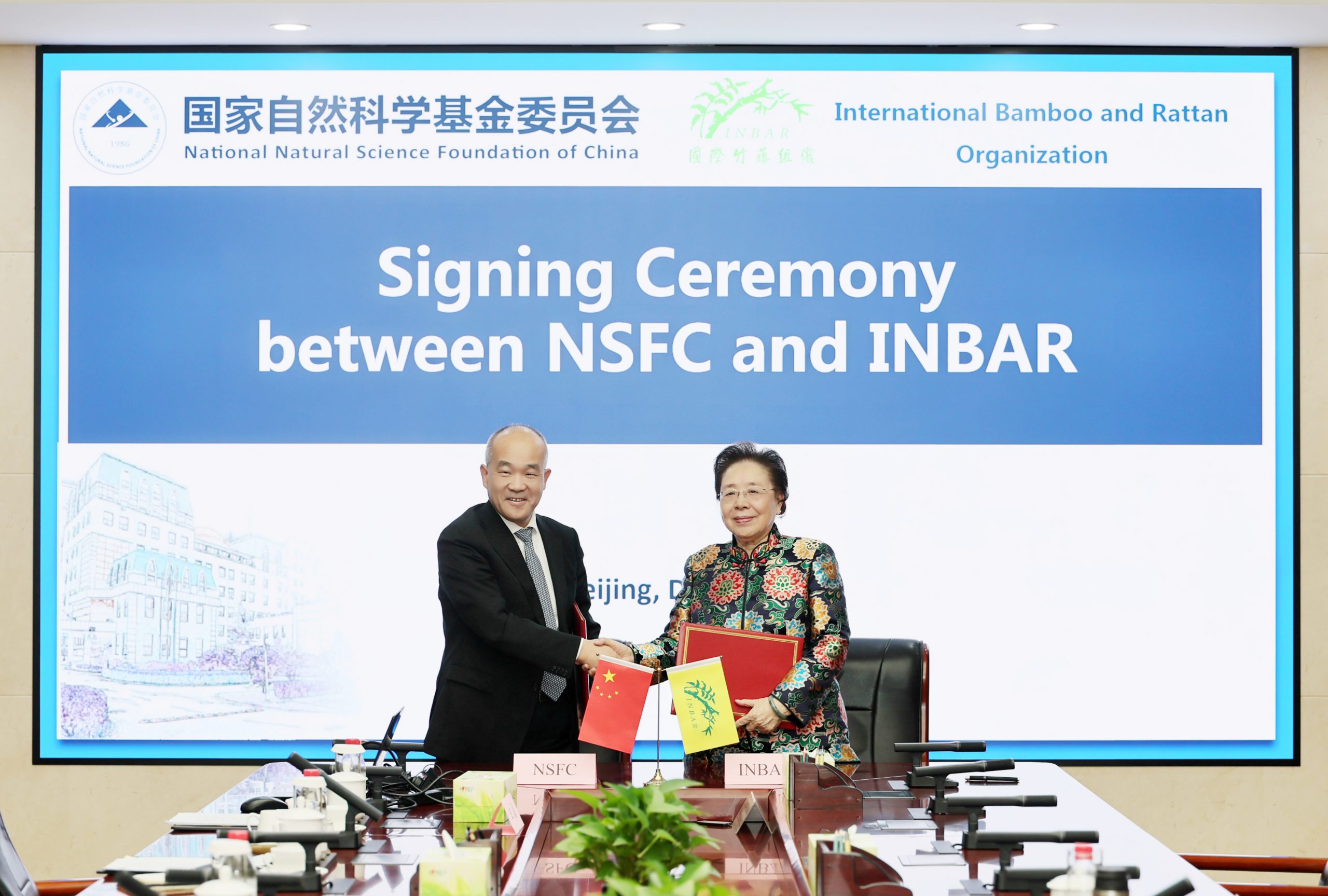
On 25 July 2024, H.E. Ali Mchumo, Chair of INBAR Board of Trustees (left), and Dr. Jyotsna Puri, Associate Vice President of the Strategy and Knowledge Department at the International Fund for Agricultural Development (IFAD) (right), signed a partnership agreement (Letter of Intent) aimed at leveraging a historical project-level cooperation in which both organizations participated even before the formal establishment of INBAR in 1997.
With consistent financial support from IFAD, INBAR has implemented a total of 12 bamboo and rattan livelihood development projects, leading to the creation of green jobs and income with bamboo and rattan while improving the livelihoods of millions of people, benefiting women and youth, alleviating poverty, improving food security and nutrition, and restoring degraded lands across Africa, Asia and Latin America.

Ms. Li Lan, Director of External Relations and Partnerships (left) and Dr. Jyotsna Puri, Associate Vice President of the Strategy and Knowledge Department at IFAD (right), shake hands at the signing.
Both institutions share the commitment to harness the potential of bamboo to alleviate poverty, enhance social inclusion and contribute to achieving climate goals. This commitment has fostered a robust, thriving partnership, enabling interventions for the bamboo sector development in approximately 23 INBAR Member States, including China, Colombia, Ecuador, Ethiopia, Ghana, India, Kenya, Peru and Tanzania.
The formalization of this renewed partnership seeks to build on the decades-long collaboration between the two organizations across the Global South, while further spurring innovation to expand bamboo and rattan value chains.

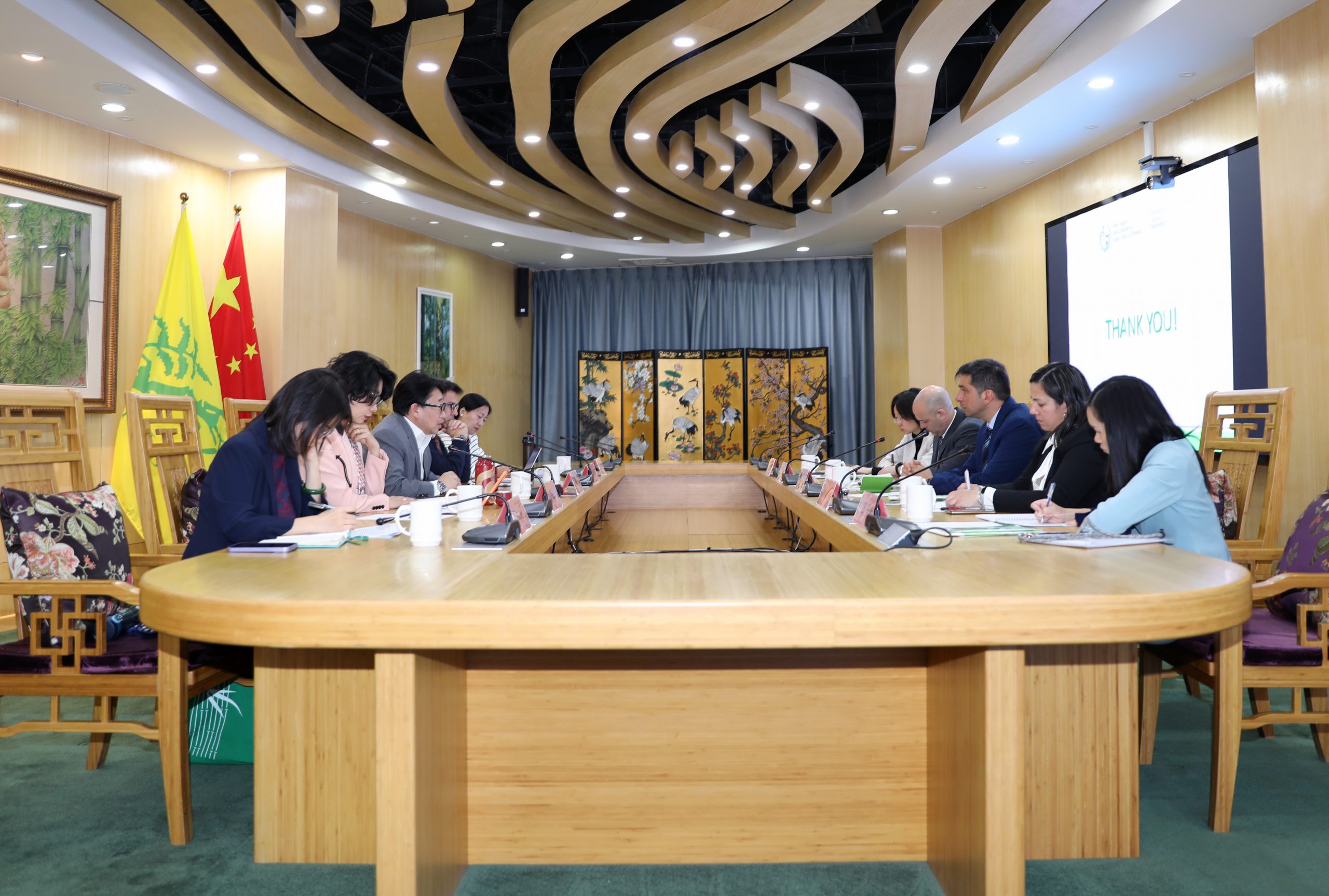
Group photo.
Both INBAR and IFAD recognize the importance of enhancing joint resource allocation and mobilization for bamboo and rattan development, including through the inclusion of bamboo and rattan development interventions in projects and promoting South-South technical cooperation exchanges, policy and advocacy at global and national levels to support common goals related to improving livelihood and environmental outcomes, and collaboration in data generation and knowledge sharing to establish evidence-based approaches for maximizing the contribution of bamboo and rattan to social, environmental and economic development goals.