News
NewsBamboo Standards Workshop kicks off in Kenya

Harmonization of bamboo standards in East Africa to play important role in regional and international trade.
Home to abundant bamboo resources, East Africa has long been an important region for INBAR project work. In the region, Ethiopia is considered a leading country for bamboo sector development, followed by Kenya and Uganda. As part of their development agendas, Ethiopia, Kenya, and Uganda have endorsed bamboo frameworks to promote bamboo sector development. The next crucial step calls for the development and harmonization of bamboo standards in the region.
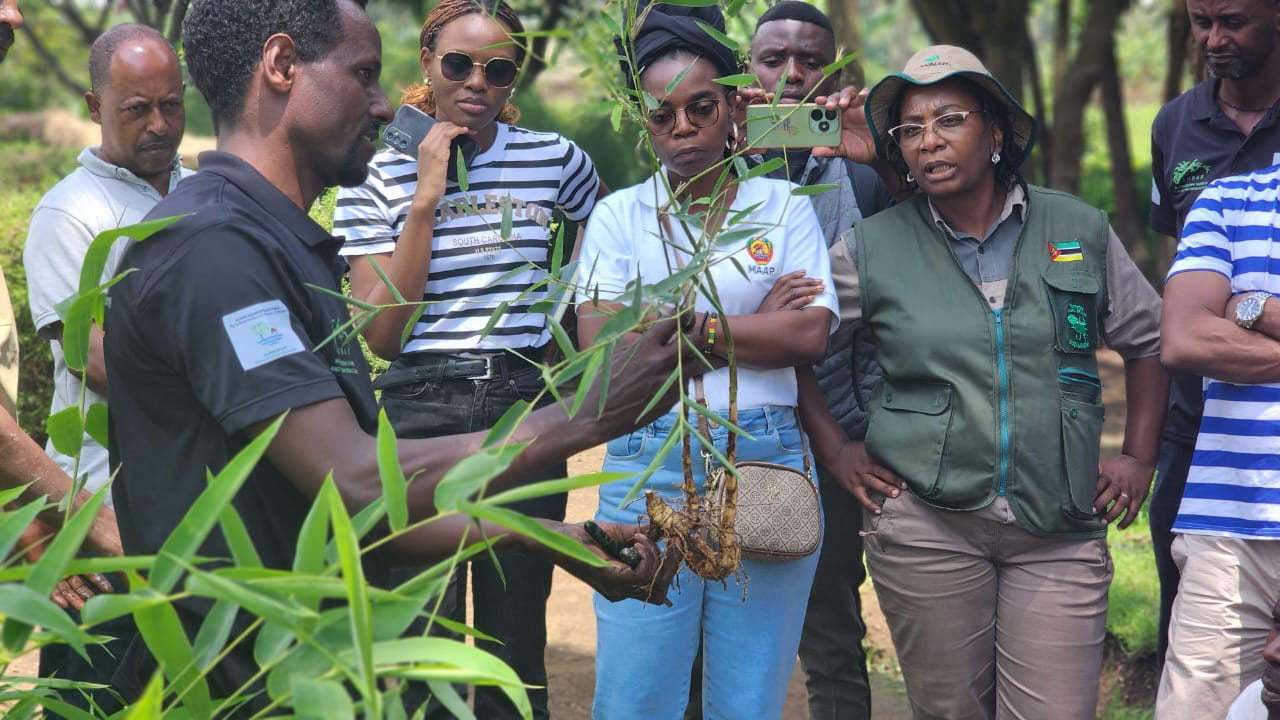
INBAR, in collaboration with the International Centre for Bamboo and Rattan (ICBR), has recently organized a regional workshop on Bamboo Standards in Nairobi, Kenya. The workshop was aimed at introducing the technical guidelines and providing guidance to national standard authorities on how to develop and/or adopt bamboo standards and monitor compliance, as well as helping raise awareness among producers about the standard requirements for international markets. It was also aimed to develop the capacities of East African producers and national standards authorities to use and meet new bamboo products/processes technical guidelines from Chinese experts. The workshop brought participants together from Ethiopia, Kenya and Uganda from government agencies, national standard organizations, bamboo industries and the private sector.
Participants were introduced to the International Standardization Organization (ISO) and why standards are developed for different products and sectors throughout the world. It was stated that ISO brings together experts to share knowledge and develop international standards that provide solutions to global challenges and help ensure the quality, safety and efficiency of products, services and systems that are accepted globally.
In his opening speech, Dr. James Kimondo, Deputy Director of Forest Productivity and Improvement at Kenya Forestry Research Institute (KEFRI), stated that the bamboo resources in East Africa can promote green jobs and employment opportunities, and expressed his appreciation to INBAR and ICBR for organizing the workshop as well as the significant role INBAR has been playing in promoting bamboo in Kenya and the larger East African region. The director noted that the Dutch-Sino-East Africa Bamboo Development Programme supported the formulation of the Kenya National Bamboo Policy 2022 and the realization of bamboo as a cash crop in Kenya. He further noted that harmonizing East African bamboo standards will facilitate trade in the region, and underlined the need for the development of communication channels between China and East African countries for knowledge sharing, technology transfer, research and further development on bamboo standards.
Prof. Xianmiao Liu, Deputy Director of Industrial Development at ICBR, shared his experience in China. He presented that the purpose of developing standards is to harness bamboo and rattan resources; enhance productivity; improve the quality and safety of products; promote the application of scientific and technological achievements; boost green growth; and facilitate international trade. In his presentation, he highlighted that China has developed 50 national bamboo standards, 50 industry standards, 245 provincial standards, 83 social organization and company standards and 104 standards in the forestry sector, which can be a good reference point for the East African region.
Moreover, the workshop discussed several international challenges in the development of bamboo and rattan standards that can potentially apply to the East African region: Lack of unified definitions of bamboo and rattan products hinders both international trade and information exchange; lack of product standards exacerbates trade disputes; and the number of standards for bamboo and rattan does not meet market needs. The workshop also discussed other challenges for standardizing the bamboo sector in East Africa, such as inadequate financial resources, lack of relevant data, inadequate training and support to promote bamboo and rattan products, and limited applications of industry standards in the sector.
As a way forward, the delegates identified action points in order to promote bamboo in the region. These, among others, include the need for more training and support to promote bamboo and rattan products; enhancing cooperation with leading research institutes to generate robust data for standards development; strengthening existing international technical support and inputs in the sector; provisioning advanced training in bamboo and rattan technologies at Zhejiang University in China; establishing and strengthening regional markets and supply chains for bamboo to promote the industry; customizing and adopting available ISO standards as national standards; and networking and collaborating between key actors in the region.
A number of bamboo standards have been developed in East Africa with INBAR’s support under the Dutch-Sino-East Africa Bamboo Development Programme. A total of 21 national bamboo standards have been developed in Ethiopia, Kenya and Uganda on bamboo treatment, products and construction thus far. Furthermore, it was noted that there are a number of standards under development including bamboo skewers and toothpicks, bamboo particle board, bamboo tableware, dehydrated specifications for bamboo shoots, canned specifications for bamboo shoots and brine preservation of bamboo shoots.
In the closing remarks, Jayaraman Durai, INBAR Global Program Director, highlighted that bamboo standards are very important for the region to develop bamboo resources, and such workshops among participating countries enhance synergy, cooperation and understanding of the development of the bamboo sector in each country and contribute to transforming the local industry. He also added the workshops enrich interactions and business opportunities by fostering collaboration and partnerships between stakeholders in the region.