 News
NewsBamboo to boost climate resilience and livelihoods in eastern Uganda

Bamboo can help river communities recover from adverse climate events such as floods and landslides.
INBAR project in east Uganda set to play an important role in the country’s Parish Development Model, with environmental and economic benefits.
Uganda is a country of lakes and rivers, earning it the nickname the “Pearl of Africa.” The main source of the Nile River, Lake Victoria, is connected to a sprawling matrix of rivers and tributaries. Currently, the Government of Uganda is implementing the Parish Development Model as an all-encompassing strategy that addresses the social, economic and environmental aspects of poverty in order to stimulate growth. As the flagship project of Uganda’s Government, it attempts to promote economic opportunities and environmental sustainability while expanding access to essential services including water, sanitation, healthcare and education.
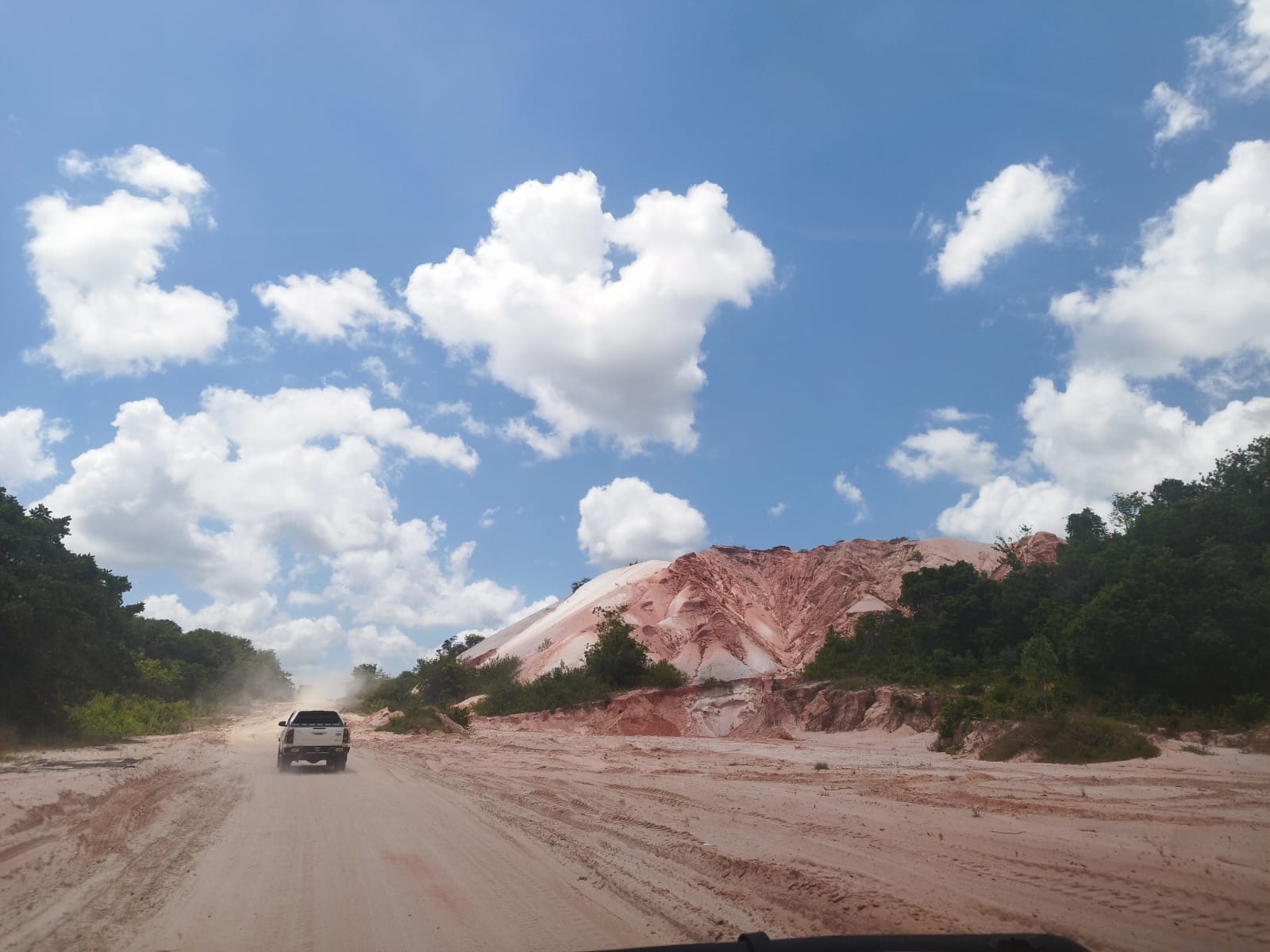
The Manafwa River originates in eastern Uganda. Flowing from Mount Elgon, the water’s course takes it through the districts of Bududa, Manafwa, Mbale and Butaleja. The district of Bududa, in particular, is extremely susceptible to natural disasters like landslides and flooding. In 2022, a series of powerful landslides in the district resulted in the loss of human life and widespread damages as well as the shrinkage of agricultural lands, unexpected floods and soil erosion, substantially impacting livelihoods.
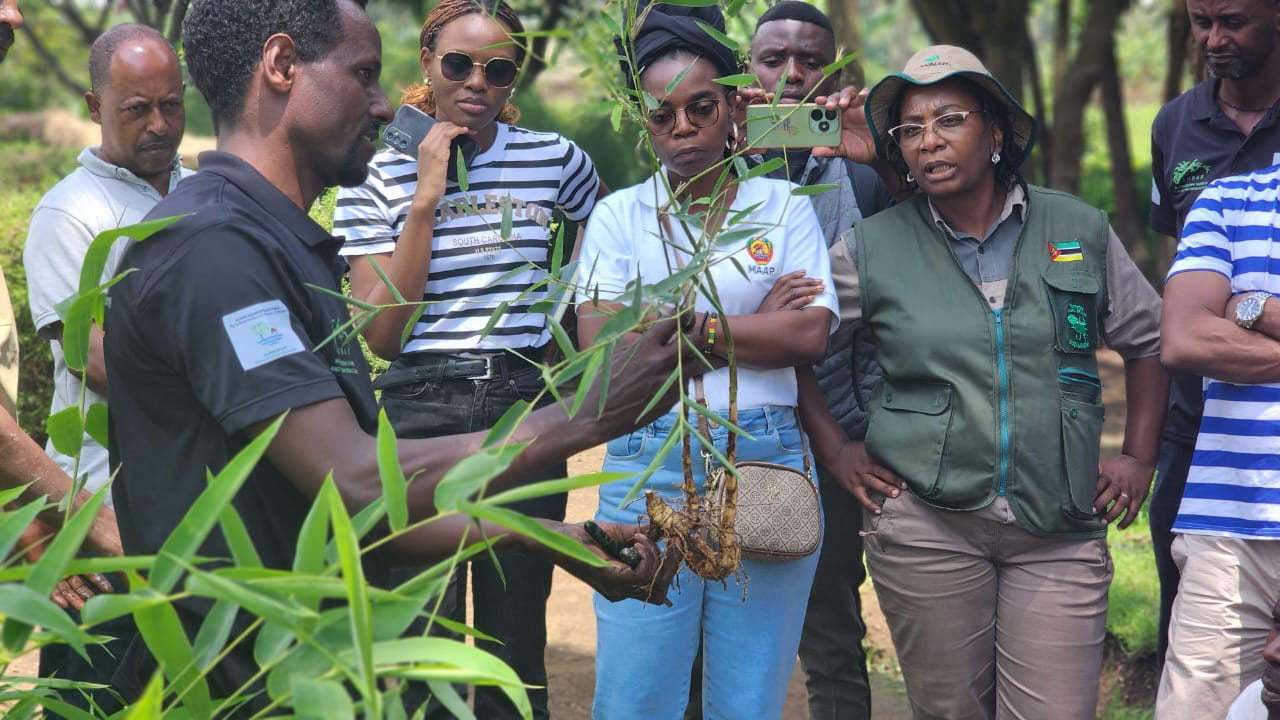
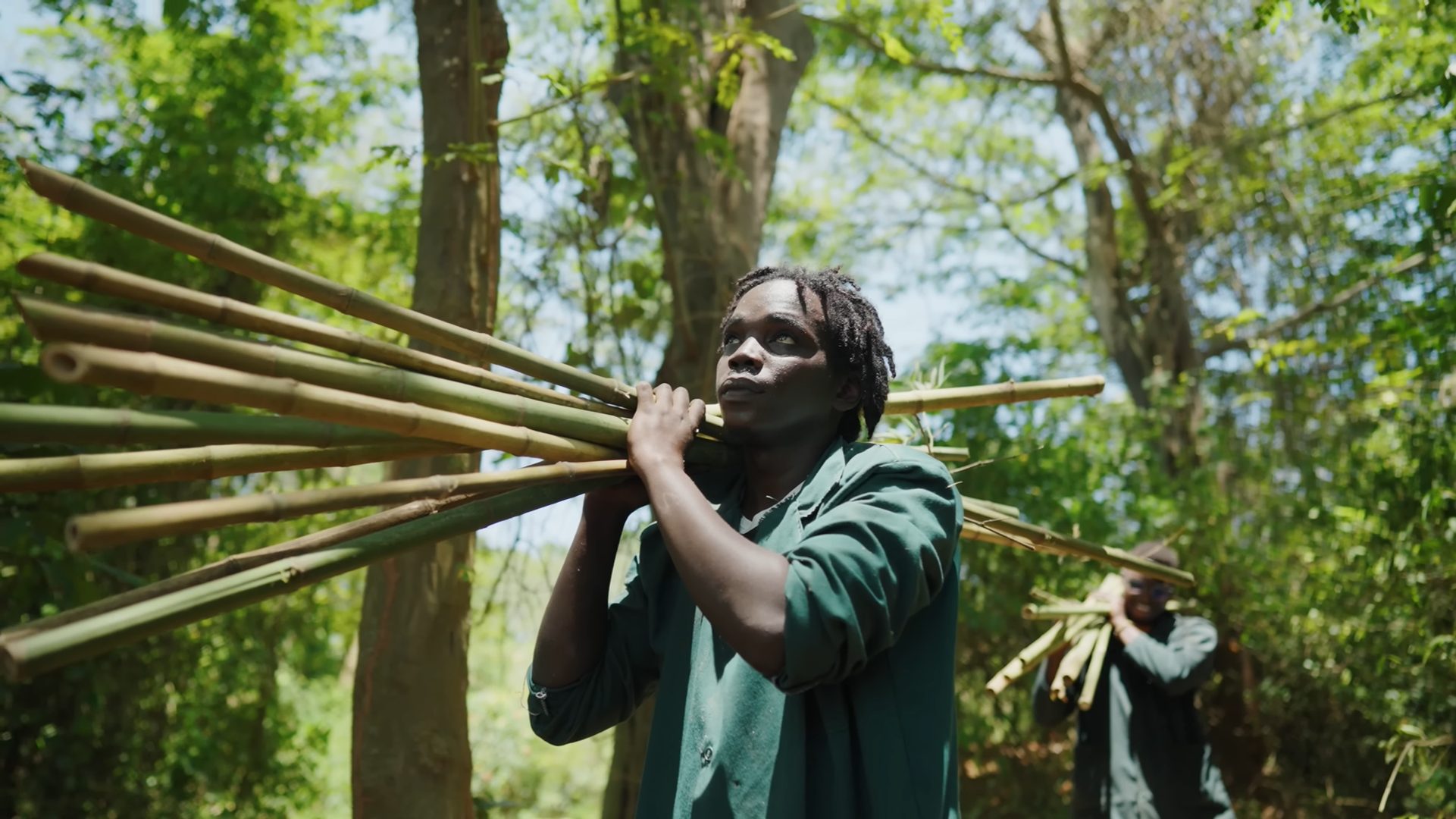
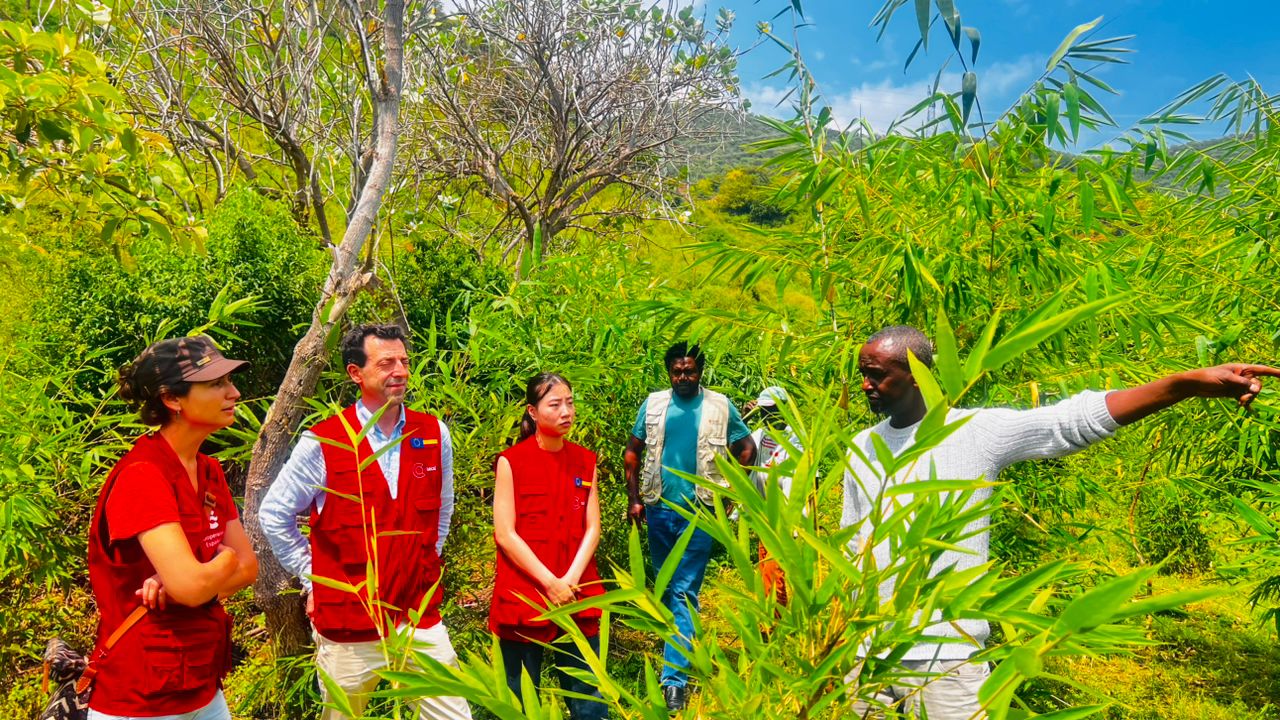
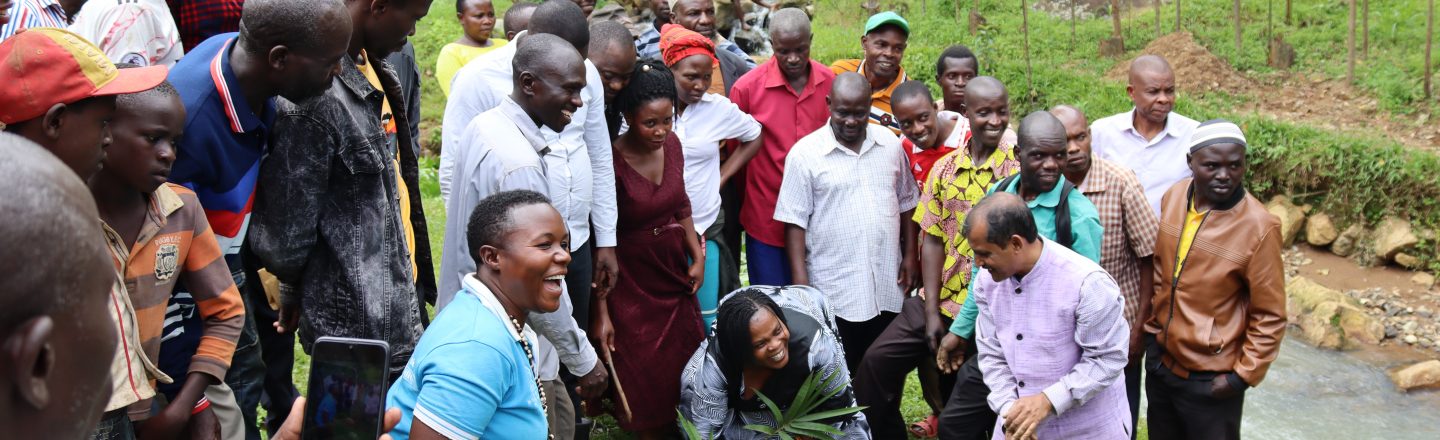
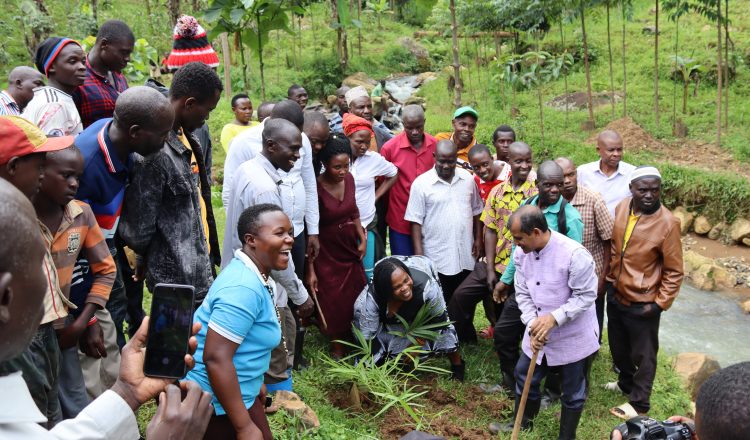
People from the area approached the Dutch-Sino East Africa Bamboo Development Programme in Uganda in search of a feasible way to stabilize the Manafwa River, safeguard the environment and strengthen livelihoods. H.E. Ms. Agnes Nandutu, Minister of State for Karamoja Affairs, spearheaded efforts to organize the community and district officials for a bamboo plantation campaign in the Bududa District, also promising to include bamboo in the Parish Development Model. Additionally, INBAR also used radio and television to raise awareness about the versatile nature of bamboo in order to motivate farmers, many of whom are from the riverine community, to set up local nurseries and participate in value-added training.

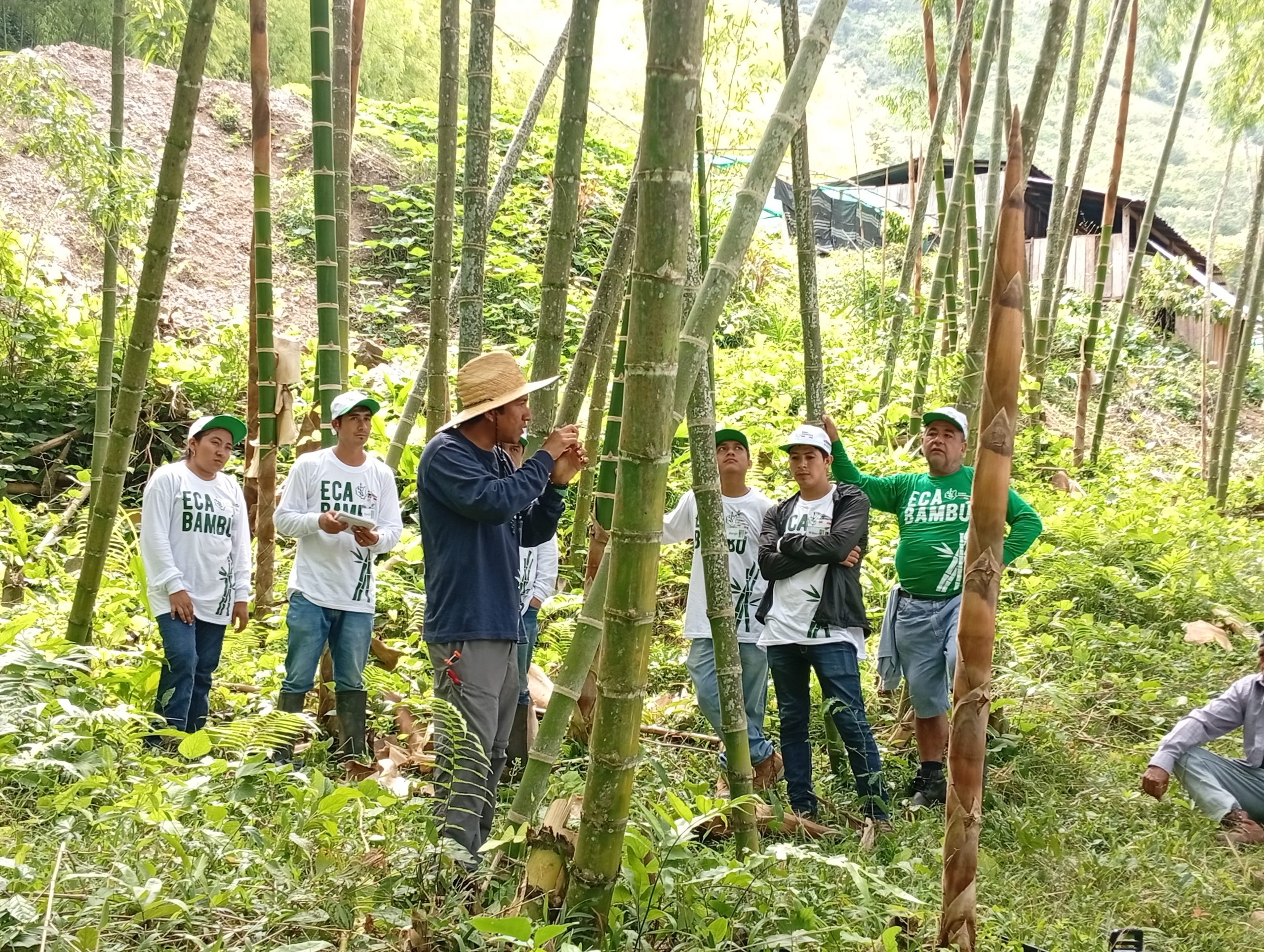
Farmers learned about the numerous benefits of bamboo as part of the campaign.
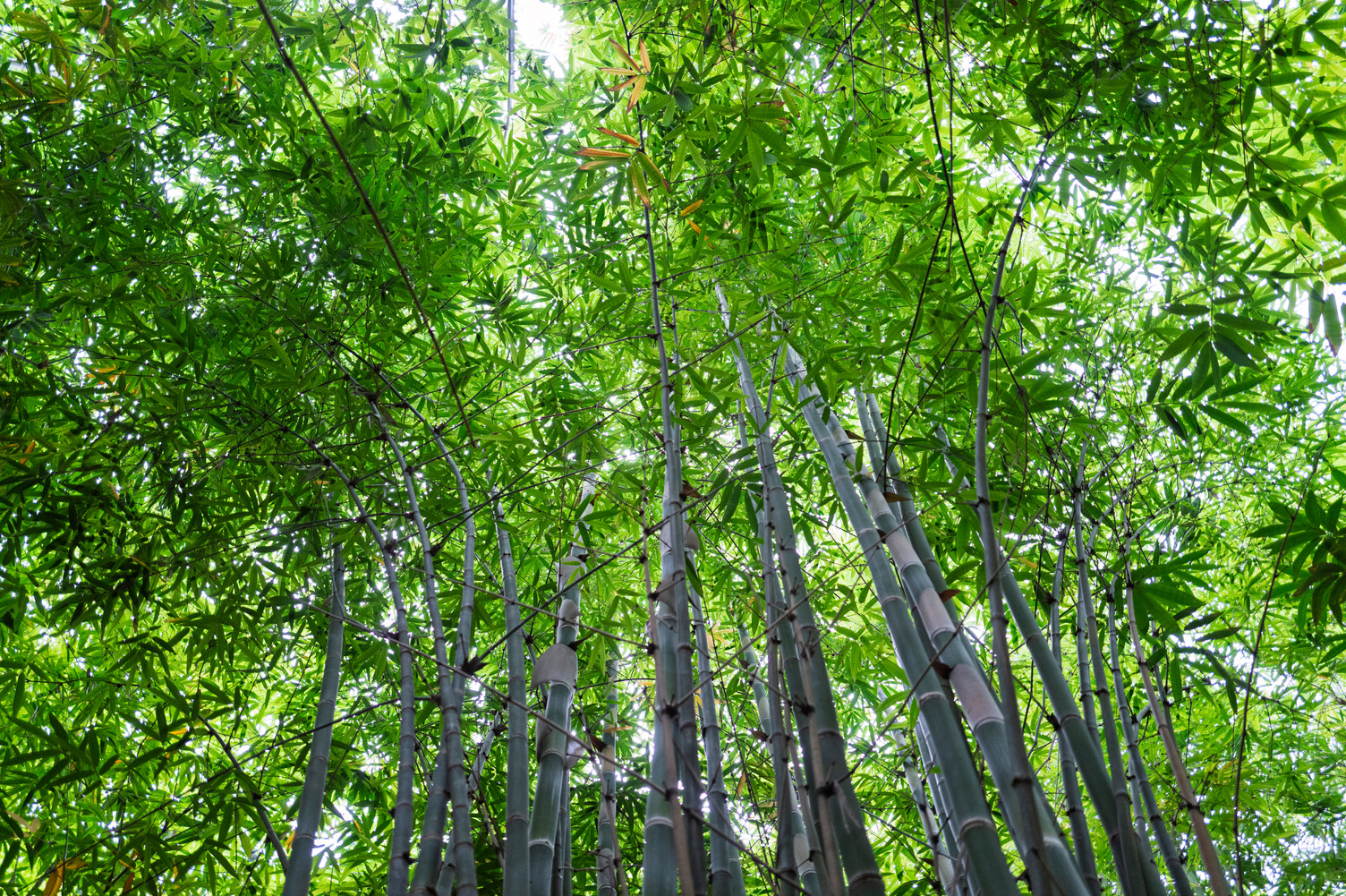
The bamboo planting campaign included a three-tier plantation model, which was designed by a team of experts from INBAR to mitigate soil erosion, introduce bamboo agroforestry to improve local communities’ lives, and provide a source of energy, feed and fodder. To address the economic and environmental concerns, site-specific matching bamboo species were selected for use. In order to make planting materials widely available for locals, the program supported decentralized bamboo nurseries through training and capacity building across farmer networks and established demonstration nurseries including homestead farming system development.
Speaking to the farmers, Nandutu emphasized her desire for Bududa to take the lead in bamboo planting in eastern Uganda near Mount Elgon because of its favorable effects on the environment and potential for entrepreneurship, which will improve the communities’ standard of living and boost food security. Additionally, as true “green gold,” growing bamboo at household scale will reduce deforestation by removing the need to encroach on national parkland to collect firewood.