News
NewsBamboo takes root at Climate COP29’s Forest Pavilion

Three side events at important climate conference demonstrate the versatile nature of bamboo for achieving climate goals.
As part of INBAR’s participation at the 29th Conference of the Parties to the United Nations Framework Convention on Climate Change (UNFCCC COP29), three side events were organized at the Forest Pavilion.
The Forest Pavilion also featured the launch of the Memorandum of Understanding (MoU) between INBAR and the UNFCCC to advance bamboo-driven initiatives for climate action resilience and biodiversity. Dr. Masamba Thioyue, Project Executive of UNFCCC Global Innovation Hub, and Prof. Lu Wenming, Deputy Director General of INBAR, introduced the MoU and bamboo’s potential for carbon sequestration.

Side Event #1: BambooBoost: For Prosperity, Climate Action, Resilience, and Biodiversity
Co-hosted by INBAR and UNFCCC, High-level government representatives from six bamboo-producing countries participated in the side event, giving brief statements on their country’s commitment to include bamboo in Nationally Determined Contributions (NDCs) and National Adaptation Plans (NAPs). These talks focused on the role of bamboo in sustainable development across a wide range of actions.

Mr. Mohammed Andoshe, Director of the Climate Change Planning Implementation Coordination Directorate at the Ministry of Environment, Forest and Climate Change, Ethiopia spoke first. He mentioned that Ethiopia is starting from policy to promote bamboo, focusing on climate resilience and the green economy. Ethiopia’s government is committed to planting seedlings, with 40 billion seedlings planted in the last five years, indicating the immense efforts in the country. Bamboo plantations can contribute to environmental sustainability within NAPs by bamboo interventions in key forest sectors. Finances are needed to expand climate actions for scaling up bamboo’s contributions in an economic, environmental and cultural context. This gap will hopefully be reduced by the China-Africa Bamboo Center, now under construction.
Mr. Angel Ureña, Deputy Director of Climate Change, Ministry of Environment, Panama, discussed some of the challenges facing Panama. He mentioned that bamboo is not widespread in Panama and underappreciated for reforestation. However, as a plant for soil conservation, it has some benefits in Central America. He also said that the government is exploring how bamboo can help sequester carbon as part of its NDCs. He hopes that bamboo plantations can be included in the legal framework for incentives to generate benefits for the country.
Dr. Noralene Uy, Assistant Secretary for Policy, Planning and Foreign-Assisted and Special Projects, Department of Environment and Natural Resources of the Philippines, introduced the Philippines as a top bamboo producer in the world, where bamboo is recognized for its regulating services like carbon sequestration and flood protection. Bamboo is well incorporated into national policies and government agencies; for example, in her ministry, there are clear guidelines for how bamboo plantations should be established, and they also encourage for greater bamboo industries. Capacity building is also an important part of the work being done in the Philippines, particularly with regards to cultivating, processing and craftsmanship. Rural towns and communities are encouraged to work with bamboo. In terms of NDCs, forestry was not included as a sector in last year’s submission, but it will be included next year, where bamboo can be listed as contributing to relevant policies and measures.
Mr. Yamita Hassan Tete, Secretary General, Ministry of the Environment, Fisheries and Sustainable Development of the Republic of Chad, highlighted that Chad is geographically unique, home to a large desert occupying a large expanse of the country’s territory. Now there is work to integrate bamboo into the equatorial forest land of the country. He believes the resource has significant potential for engagement in climate action. Currently an ambitious program is under works based on the growth of large bamboo plantations in the suitable zones, with the primary goal of contributing to carbon sequestration and water management in their NAP. Bamboo also has a role to play in Chad as a shelter belt and buffer zone against desertification. At the same time, he hopes that bamboo can stimulate local economic development along with climate resilience.
Mr. Ernest Elisha Mwamwaja, Director of Marketing, Ministry of Natural Resources and Tourism in Tanzania, spoke on the challenges for scaling facing Tanzania. Bamboo is making an important impact on Tanzania’s economy as the country implements its new strategy for the bamboo industry. Over 1 million hectares have been set aside for the bamboo economy. At least half a million people’s livelihoods are connected to bamboo in Tanzania, indicating the growing importance of the sector. Bamboo products are becoming increasingly commonplace as efforts are scaling up and the plant gains public acceptance. In terms of NDCs, bamboo can offset the pressure on other natural resources by providing alternative livelihood pathways and its own unique characteristics such as being a fast-growing versatile plant. Last year, Tanzania launched a National Bamboo Development Strategy and Action Plan, which is an eight-year plan to foster the growth of the industry. Some challenges include the need for increased funding to scale up production, greater diversity of value addition and more public awareness of the benefits of the plant.
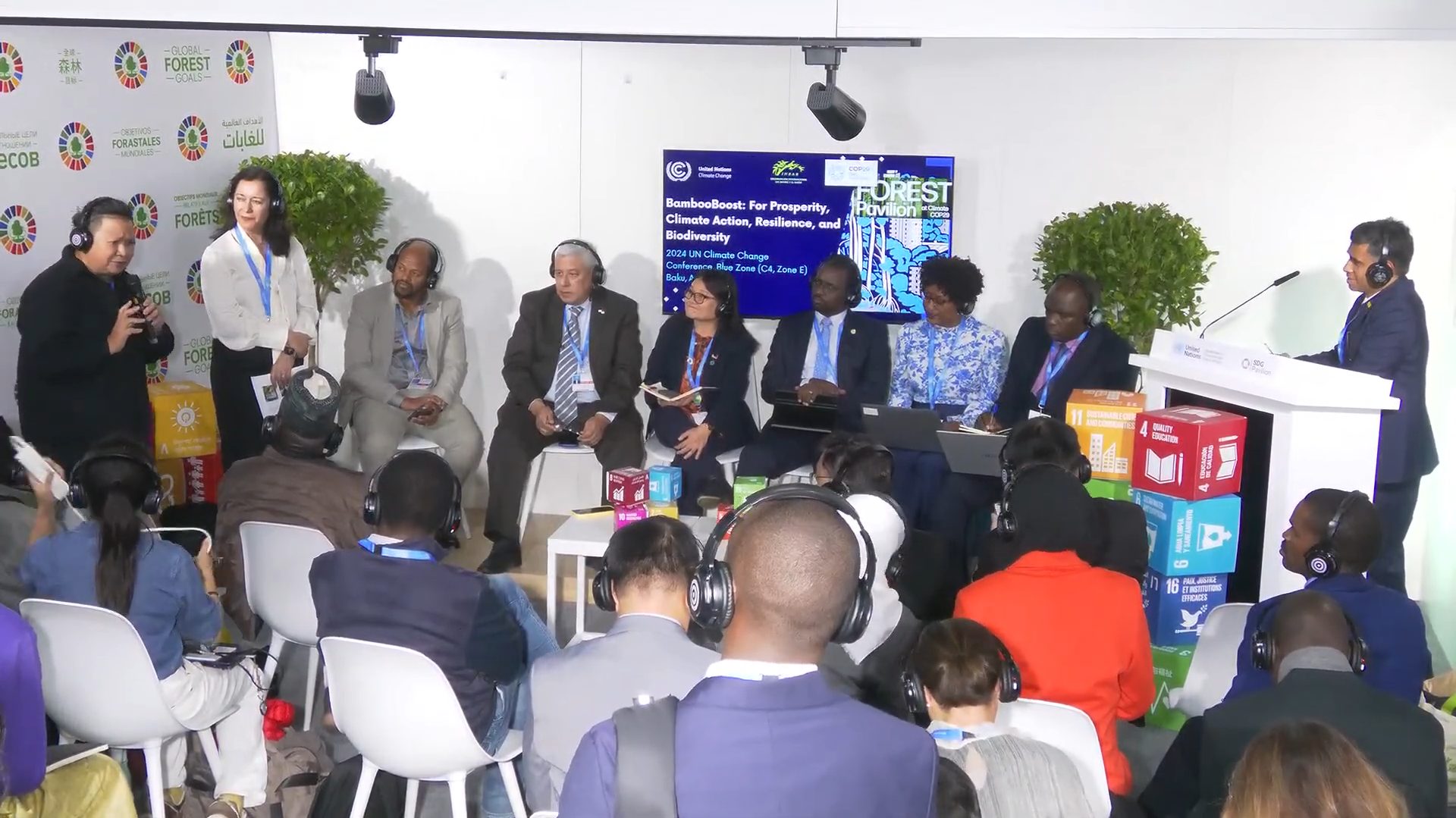
Afterward, a robust Q&A session followed. Questions ranged from how countries should respond to invasive species that may disrupt grasslands and forests to the potential of bamboo as a tool for carbon sequestration. Dr. Durai Jayamaran, Director of INBAR Global Programmes, mentioned that different bamboo species can thrive under different agroecological conditions. He emphasized that when cultivating bamboo, we need to be mindful of whether species are sympodial or monopodial, or indigenous species or introduced species, to ensure the species can thrive without invading into adjacent land. He also went on to state the advisability of introducing certain appropriate species into new countries. Other touched-upon topics include financing mechanisms, innovative technologies, capacity building and more.
At the end, closing remarks were made, and a commitment was given by all parties to deepen collaboration leading up to COP30.
Side Event #2: Promoting transformative innovation for climate action in agroforestry
This session was hosted by the Inter-American Institute for Cooperation on Agriculture (IICA), INBAR and UNFCCC. The event intended to explore how transformative innovation can unlock agroforestry’s full potential. Agroforestry can be a powerful instrument for carbon sequestration, soil health improvement and increased resilience to climate impacts like floods and droughts. Successful innovations and overcoming challenges via policy integration and financing aimed to foster collaboration between global and regional actors, while generating insights into relevant climate policies and agroforestry in alignment with the Paris Agreement.

Mr. Carlos Ruiz-Garvi, Team Lead of the UNFCCC’s Adaptation Division, took the floor first to give a keynote address. He expressed appreciation for activating the agricultural sector within the climate context, identifying the potential for climate action in terms of mitigation, adaptation and resilience. He mentioned that numerous outcomes from COP28 are being connected to concrete outputs at COP29, including work on global carbon mechanisms, climate resilience and adaptation, and ecosystem services. UNFCCC is working with parties to integrate NDCs and NAPs with long-term strategies to facilitate the entry of more benefits. He hoped that the session on agroforestry would connect with the previous session in the context of ecosystem actions and utilizing cross-cutting elements from nature and local communities to unlock the potential of the sector.
Dr. Muhammad Ibrahim, Technical Cooperation Director, IICA, introduced his organization and its mandate to promote policies to address global issues regarding the triple planetary crisis. He stated that agroforestry is a win-win approach to address multiple objectives simultaneously regarding food security, improving nutrition and safeguarding land. He highlighted the scientific validation of agroforestry as a good tool for biodiversity and healthy functioning landscapes. More emphasis is needed on adaptation, on working within NAPs, because farmers are facing difficulties in terms of adopting or scaling up agroforestry systems relating to knowledge, finance and risk. There is an urgent need for a holistic landscape approach to advance resilience. IICA is facilitating this by equipping stakeholders with tools and knowledge and also providing the metrics to monitor practical impacts and promote sustainable agroforestry systems.
Mr. Roland Royer, Minister for Agriculture, Fisheries, Blue and Green Economy, Dominica, mentioned that his country is a heavily forested country, 20% of which is protected by law, and is net-zero emissions. Two national parks exist in the country, and one is a UNESCOO World Heritage Site. Agricultural activities cannot take place in these areas. In 2017, hurricane damage to the country’s forest cover prompted a rapid reforestation program. An agroforestry program is now introducing tree crops into the reforestation efforts to support wildlife migrate back into their natural habitat. Given the country’s mountainous terrain, farmers use a multifaceted system to cultivate on slopes using grass barriers, drains, and other practices to reduce erosion.
Mr. Tristan Tyrrell, Representative from the Secretariat of the Convention on Biological Diversity (CBD), spoke on the recently adopted Global Biodiversity Framework and how parties are revising their national biodiversity strategies and action plans. One of the big pushes is the “whole of society/whole of government” approach, recognizing the fundamental role of nature for living in harmony with nature long-term, acknowledging that nature underpins global food security, health, wellbeing and more. The CBD encourages Parties to consider the sustainability of the methods to ensure incentives are appropriate both on a day-to-day basis and for long-term viability. Agroforestry is a well-received approach from Parties, even those with heavily industrialized systems, but governments need to support farmers with enabling regulations, while also educating consumers and considering relevant positive incentives. NDCs and NAPs are key policy instruments for fostering this work, and agroforestry can play an elevated role in future discussions, especially at national levels.
Dr. Durai Jayaraman, INBAR Director of Global Programmes, emphasized that INBAR has 51 Member States across the Global South working toward the common goal of using bamboo and rattan for sustainable development. He mentioned that INBAR supports action research and projects that selectively utilize over bamboo species to address all elements of the value chain, from research, standards, certification, products, skills and more. Given the numerous forms of agroforestry, bamboo is a great resource for integration with chickens, medicinal plants, mushrooms and others. He ended by reiterating that bamboo can not only protect jobs but also protect the environment while bolstering food security.
Mr. Juan Lucas Restrepo Ibiza, Director General of the Alliance of Biodiversity International and CIAT (CGIAR), spoke on the essential nature of connecting different elements in a value chain to form agroforestry systems. For example, silvopastoral and agroforestry systems need to be understood as a whole. Pastures are often overlooked in these approaches as the tree typically receives more attention. A plethora of benefits can be delivered from agroforestry, including carbon sequestration, soil restoration, water rotation and more. CIAT has launched a platform that can identify trees in a farm that would be a superior seed supplier within a value chain, and though a blockchain process, these trees can be moved into farmers and nurseries, depending on the function of the tree within the farm in terms of ecosystem services. Agroforestry has an “amazing” return on investment, but it takes significant costs to implement. More efforts are needed for financing mechanisms and regulatory policies to achieve this kind of sustainable and long-term return on investment.
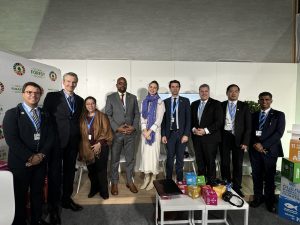
A robust Q&A with the audience followed the presentations. Topics focused on the role of AI in project work, agroforestry for carbon markets, devising allometric equations, methodologies for selecting appropriate species, web platforms for scientific reference, financial incentives, government and policy directives. The complexity of these discussions require a multidisciplinary approach with experts from different fields to drive innovation, from those in ecological sciences to farmers in the private sector.
Side Event #3: Bamboo Economic Enterprise Program (BEEP) as an Effective Three-pronged Transformative Climate Strategy: Adaptation, Mitigation and Prosperity-building
Hosted by the Committee on Climate Change of the Philippines, House of Representatives of the Philippines, and INBAR, the final side event of the afternoon focused on Philippines’ comprehensive efforts with bamboo. The Philippine government has supported bamboo research and industries, such as in the creation of the Philippine Bamboo Industry Development Council and its support for putting into law the promotion of the local bamboo industry. Bamboo has also been used in reforestation projects such as those done in the Marikina Watershed. The initiative highlights collaborative efforts between the government, local communities and the private sector. Another key program is the Bamboo Economic Enterprise Program initiative, which targets engineering bamboo and bamboo charcoal production for economic development. The side event aimed to ultimately showcase the Philippines’ initiatives to use bamboo as a catalyst for promoting a circular economy.

Rep. Jocelyn Limkaichong, First District Representative, opened the event with a presentation on the Bamboo Economic Enterprise Program (BEEP) as an effective three-pronged transformative climate strategy. She highlighted that the Philippines is exploring bamboo for driving the circular economy and generating new possibilities for sustainable development. She outlined that bamboo is a powerful resource not only for the Philippines but also worldwide, as the versatile plant can make a significant contribution to carbon sequestration, livelihood resilience for natural disasters, livelihood opportunities and green growth. As the sixth-largest exporter of bamboo in the world, bamboo plays a key role in contributing to the Philippines’ NDCs under the Paris Agreement. She urged all stakeholders to join hands and recognize bamboo as a catalyst for climate actions and economic growth.
Dr. Monica Ortiz, Intergovernmental Panel on Climate Change Assessment Cycle 7 Scoping Report, Professor at University of Concepción, delivered a presentation on bamboo and climate action in the context of sustainable development. She introduced bamboo as a woody perennial grass, not a tree as many would believe. It has cultural significance around the world for thousands of years. A key part of the diet of pandas, bamboo can be emblematic for safeguarding biodiversity as well. Bamboo is not just a tropical plant, but is distributed around the world, with 60 native species in the Philippines. Bamboo rhizomes were described as underground plant stems from which new shoots and root systems can emerge. In addition, these rhizomes are excellent starch and protein storages. Owing to bamboo’s rapid growth and woody composition, it is ideal for construction and carbon sequestration. Nature-based solutions like bamboo can address multiple issues simultaneously: climate change, human wellbeing, biodiversity, clean energy and many other sustainable development goals (SDGs). It is also responsible for supporting livelihoods for approximately 2.5 billion people worldwide, with applications in housing, furniture, crop production and more. Due to these benefits, bamboo needs more recognition and support as a powerful tool for supporting farming livelihoods in the context of climate change and nature-based solutions.
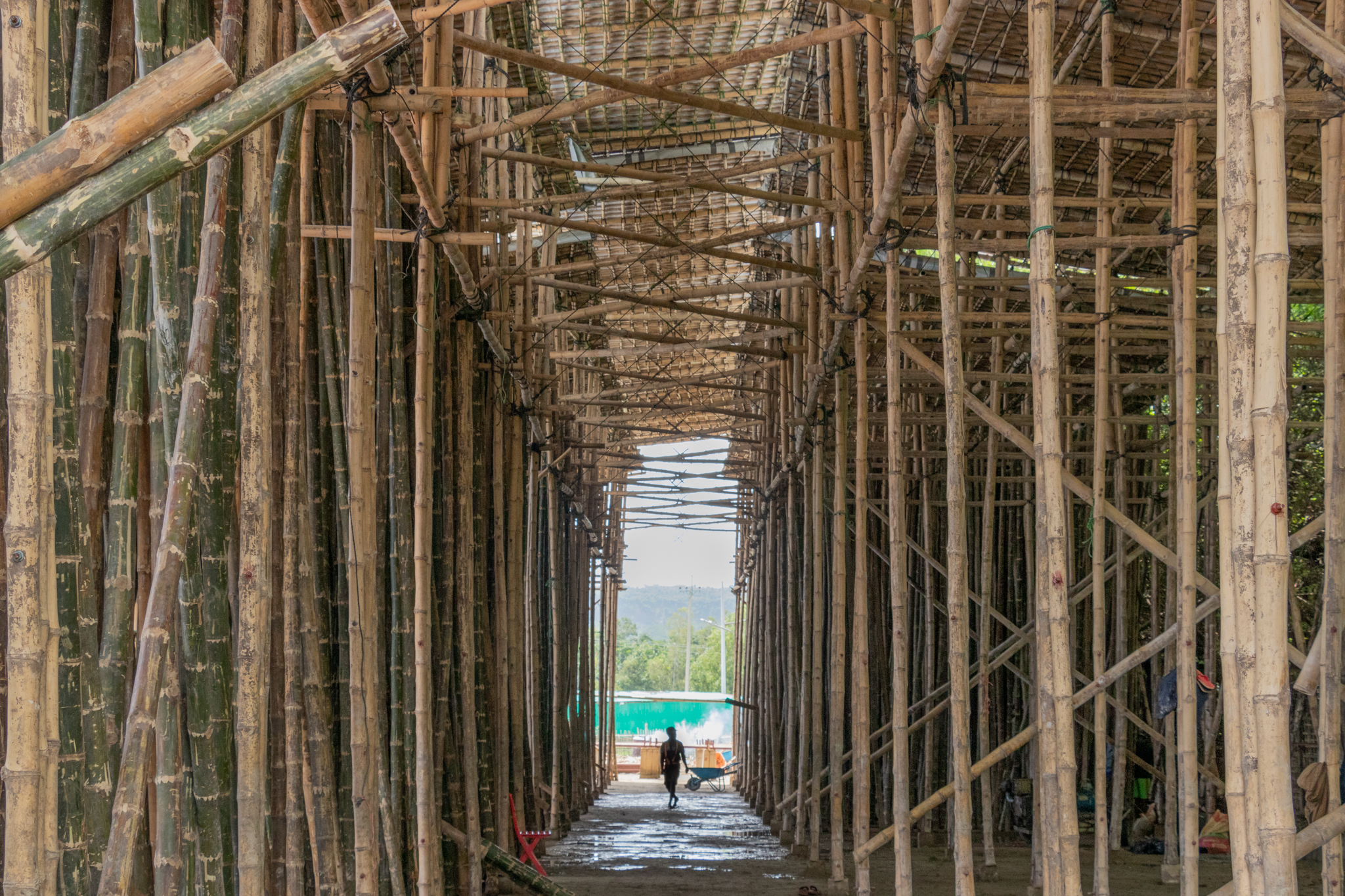
Rep. Anna Veloso, Third District Representative, Leyte, and Vice Chairperson of the Committee of Climate Change and Sustainable Development Goals, spoke next on the ways in which bamboo can contribute to the circular economy and current status of the bamboo industry. UN Development Programme studies have shown that material and energy flows in the Philippines have increased two to fourfold in demand for raw materials. This indicates that the country’s economy is transitioning from an agrarian mode to an industrial and service-based economy. Waste composition is becoming less biodegradable, requiring greater attention to mitigate risks to the environment and public health. SDG 12 can have a major impact on this transition to foster a circular economy that creates value and extends product lifespan. Bamboo as a regenerative grass can help encourage the shift to a more sustainable consumer market while combating poverty and minimizing the country’s carbon footprint. The Philippines uses bamboo as a base material for shelter, baskets, scaffolding and other products. National development plans call for keeping resources in use as long as possible, extracting maximum value from products and keeping residual waste to a minimum; bamboo is the quintessential raw material for achieving these goals, while also being fully compostable. It also has a role to play in sustainable agroforestry to maintain soil health and keep carbon locked in the soil. In sum, the plant resource’s diverse potential is now being unlocked across a wide range of sectors and programs, and it can also be leveraged globally to meet the challenges of our era.
Rep. Jose Manual Alba, First District Representative of Bukidnon, Vice Chairperson of the Committee on Sustainable Development Goals, gave a talk on policy initiatives for the bamboo industry’s integration and development. He remarked that bamboo is a powerful plant for building prosperity, as a sustainable and transformative solution that goes beyond a simple agricultural product. The Philippines Bamboo Industry Development Council was created by Executive Order to act as the orchestrating body for government initiatives related to bamboo. One of the lessons learned was that procurement process should occur at the provincial level, to involve the participation of ordinary, local furniture makers instead of centralized national enterprises. A wide range of bills are pending in the Philippines legislative body to provide incentives for bamboo farmers, appropriating the necessary financial resources to ensure successful implementation. There is widespread acknowledgement that bamboo can support national poverty reduction initiatives, especially as a local driver of economic growth in the countryside. For example, House Bill No. 9144 seeks to incorporate natural bamboo into the built environment. Furthermore, in the future, engineered bamboo will play a role as more standards are generated and reference codes developed. The government is also providing assistance across a wide range of sectors, from organizing groups interested in BEEP, providing technical assistance to groups for setting up processing centers, conducting food product and development, facilitating capacity building in furniture making, strengthening partnerships between cooperatives, organizations and industrial processors, and more.

A Q&A session with audience members followed afterward. Topics touched upon included the kind of tools project developers could use to accurately audit their data and risk assessment when working with bamboo, how carbon levels could be maintained if bamboo is being annually harvested, long-term landscape planning, the accessibility of funding whether via central government, private donors, or local organizations, possible downsides as an invasive plant species, and the need to carefully select species with low invasive potential. Since over 1600 species of bamboo exist, scientific surveys beforehand can help determine the appropriate species for the ecological context to minimize potential downsides. Another hot topic was leveraging engineered bamboo for cladding in airports. It was mentioned that one bamboo culm can be used to make three skateboards, or three guitars, highlighting the immense potential for bamboo to drive income streams to rural communities.
The surge in interest for bamboo at COP29 is testament to the increased recognition bamboo is receiving in industry and environmental circles around the world. As we have seen across the diverse range of presentations at the Forest Pavilion, we are just now beginning to tap into the potential of this miracle plant for making a significant contribution to achieving our climate targets and a number of other pressing challenges.