News
NewsRegional Group of Latin American and Caribbean Countries bets big on bamboo

Forum at INBAR Headquarters highlights the increased role bamboo set to play in driving sustainable development in Latin America and the Caribbean.
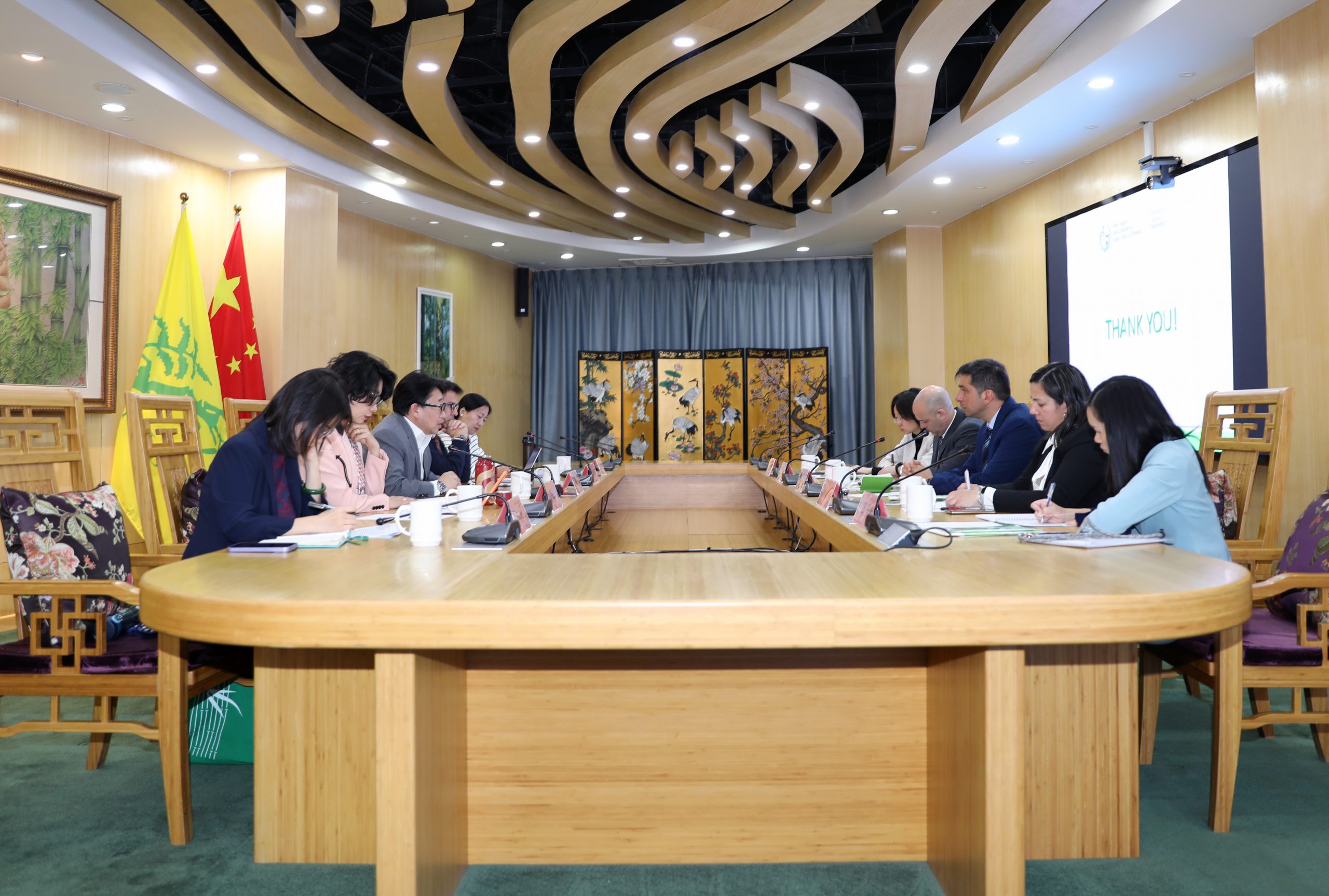
On 16 March 2023, INBAR hosted the Consultative Forum of the Regional Group of Latin America and Caribbean Countries (GRULAC) in Beijing. Ambassadors and diplomats from 16 countries in the Latin America and Caribbean region arrived at INBAR Headquarters to participate in the event. The forum was organized to discuss the potential of bamboo and rattan for sustainable development in Latin America and the Caribbean, and enhance the role of bamboo as a nature-based solution for pro-poor livelihood development and green economic growth, while providing environmental benefits from its versatile uses.

H.E. Mr. Fernando Lugris, Ambassador of the Oriental Republic of Uruguay and Dean of GRULAC in China, arrives at INBAR Headquarters.
The afternoon’s agenda began with a tour of the Bamboo and Rattan Showroom at the International Centre for Bamboo and Rattan, where guests saw firsthand the versatile nature of bamboo and rattan products. Jin Wei, INBAR Capacity Building Manager, led the guests through the showroom, explaining the ancient history of innovation and development behind bamboo and rattan products, and how China’s successes in scaling up the value chain can be replicated in the home countries of the ambassadors and diplomats.
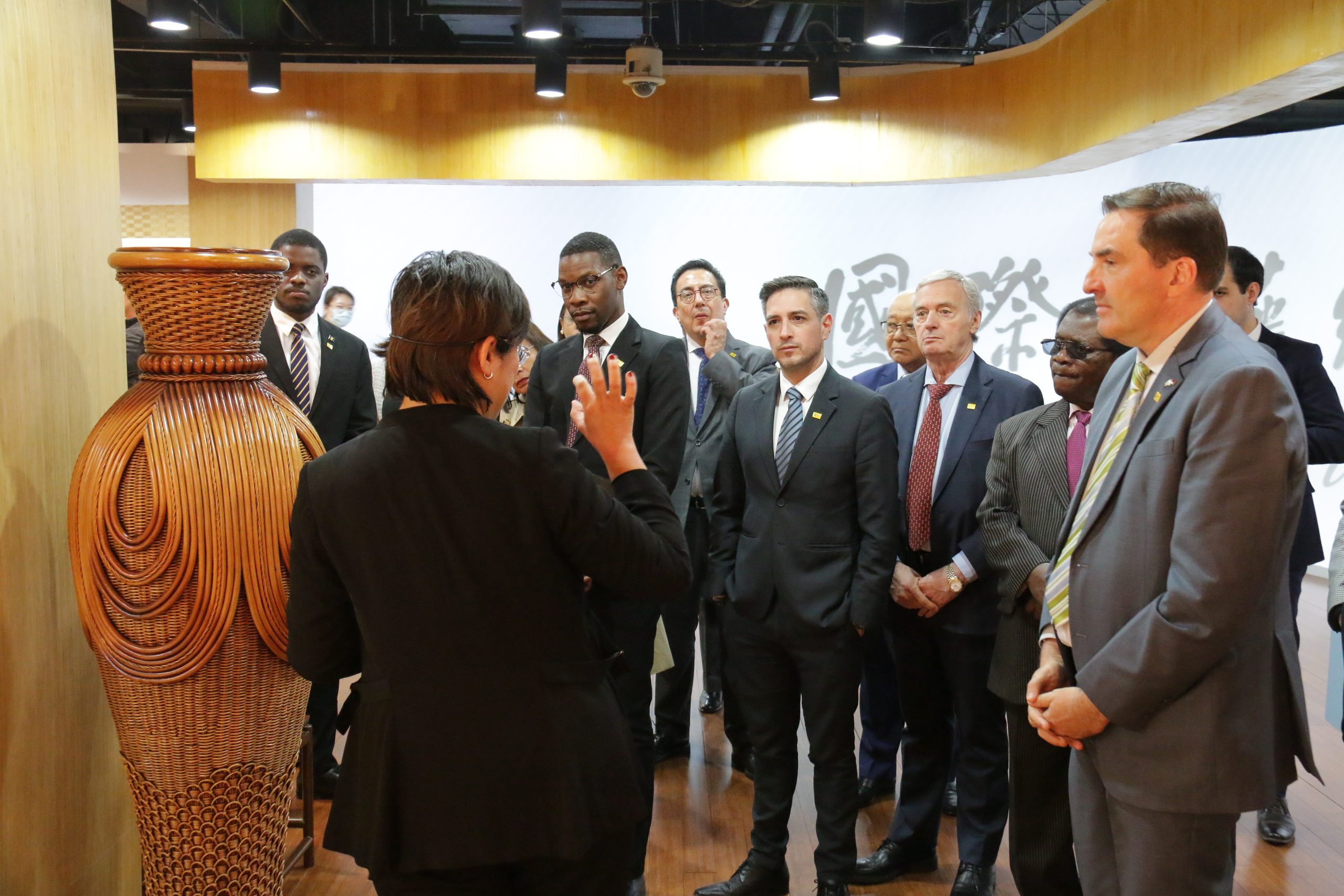
Rattan can be used as a fine decorative material for exquisite pottery and other objects.

Bamboo and rattan have countless applications for enhancing the utility and aesthetics of cups, bowls, pots and more.

China has a long history using bamboo that dates back thousands of years.
The forum began after the tour ended. Welcome remarks were delivered by Professor Jiang Zehui, Co-Chair of INBAR Board of Trustees. She began her remarks by reminding participants that two years ago, INBAR hosted a dialogue with 13 Ambassadors and diplomats from Latin America and the Caribbean, and was happy to gather once again with friends old and new. Her speech outlined the role of bamboo and rattan in the world as critical non-timber forest products — “green gold” — capable of improving livelihoods, driving green economic development, safeguarding the environment and addressing climate change.
She further noted the long history of Indigenous communities in Latin America and the Caribbean utilizing bamboo and rattan resources, mentioning archaeological findings of ancient bamboo materials unearthed in Argentina, Ecuador, Peru, Colombia and Panama. Since INBAR’s establishment in 1997, the intergovernmental organization has strived to deliver upon the immense potential of bamboo and rattan in the region, promoting policy development, arranging project implementation, capacity building, knowledge exchange and more. INBAR’s advocacy work for bamboo and rattan as nature-based solutions for sustainable development emanates from the Regional Office in Quito, Ecuador. Her speech ended by welcoming everyone to join the INBAR family and expressing the wish for the event to be a resounding success.
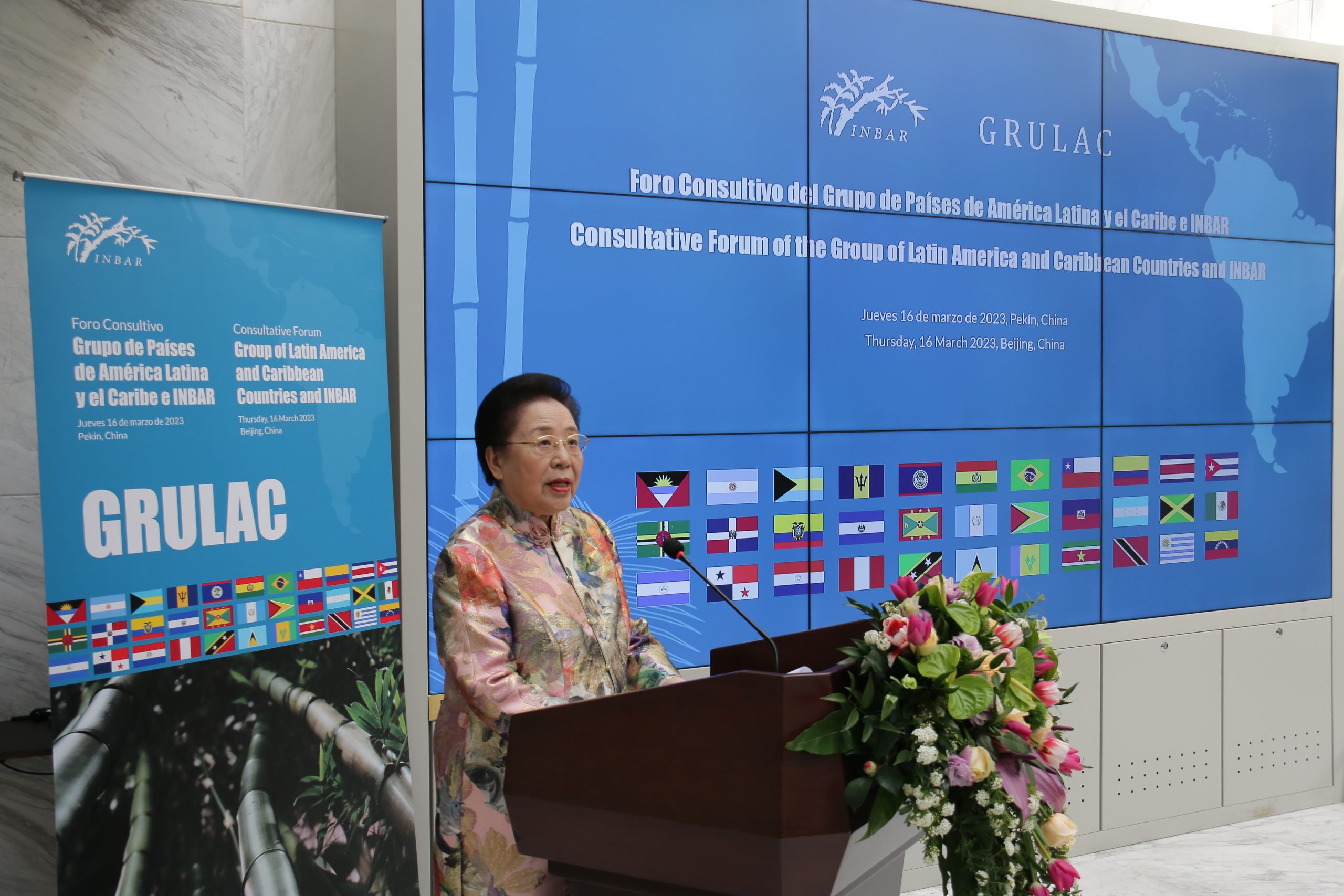
Professor Jiang Zehui spoke on INBAR’s historic growth over the years from 9 founding Member States to 50.
Next delivering opening remarks, H.E. Mr. Fernando Lugris welcomed all guests to INBAR. In his speech, he noted the “beautiful job” INBAR does in promoting bamboo and rattan as nature-based solutions for sustainable development. He hopes that as more governments around the world reach consensus on issues like climate change and environmental degradation, INBAR can play an increasingly prominent role in executing on the mandate of the United Nations’ Sustainable Development Goals (UN SDGs) to achieve a greater quality of life while caring for the environment, creating a brighter future for our descendants.
In particular, he highlighted that Latin American countries may be less equipped to cope with the impacts from climate change, and have accordingly embraced the SDGs with great enthusiasm. He praised INBAR for actively collaborating to achieve the SDGs on topics like raising standards, promoting safe, resilient bamboo construction, restoring degraded land, building capacities and informing green policies. Because of this ambitious umbrella of project work, he called on GRULAC countries to seek out ways to integrate or collaborate with INBAR. He ended by reflecting that if convening the forum at INBAR Headquarters leads to more collaboration between GRULAC countries and INBAR, then it will bring a little more sustainable development to the region — enough to proclaim the event a success.
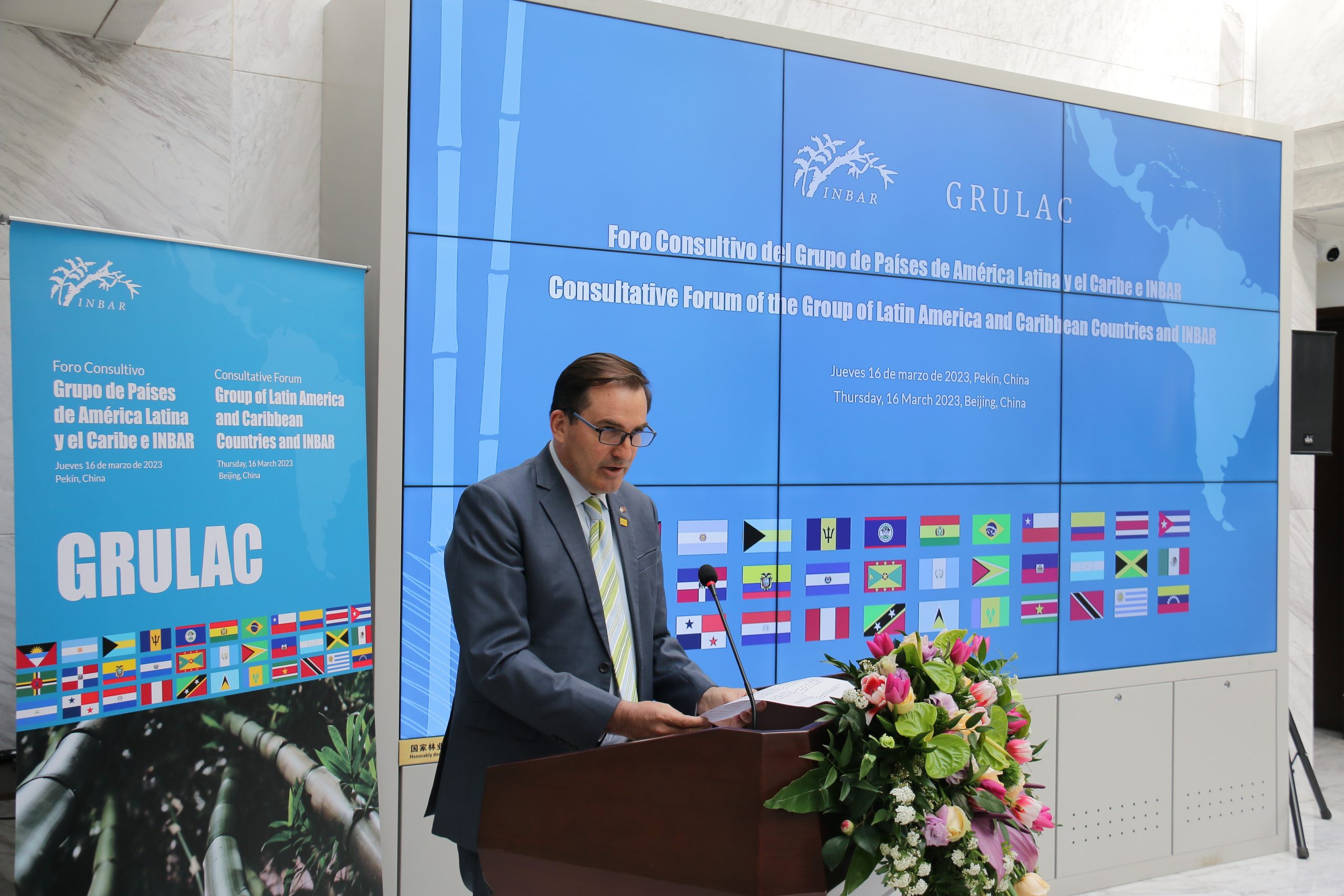
In his speech, H.E. Mr. Fernando Lugris implored ambassadors and diplomats to increase dialogue and come together for the economic and ecological wellbeing of the Latin America and the Caribbean region.
Ms. Li Lan, INBAR Director of Host Country Affairs, next outlined China’s current decade-long plan for sustainably growing the bamboo industry while remarking on the overall trajectory of the industry, illustrating the value of long-term strategic planning. Undergirding the sector’s development has been meticulous forest inventories, which have shed light on native fauna in the country. Trade data from 2020 further highlighted the significant gains in the industry, particularly noting that bamboo kitchenware and bamboo construction materials are being increasingly exported into global markets.
After summarizing China’s experiences, she listed the four main challenges faced by China’s bamboo sector: Imbalanced development among different regions; uncoordinated industrial development; limited scale of enterprises and highly homogenous products; and low brand recognition. However, she also noted that the current moment presents unique opportunities, such as for expanding the Bamboo as a Substitute for Plastic Initiative, comprehensively exploiting the multifunctional applications of bamboo forests, and meeting carbon neutrality goals. Her presentation made the case for industry-university-research platforms as a form of cluster development that can meet challenges and capitalize on opportunities, as these integrated nexuses can guide industry development in a collaborative, cross-sectoral approach that streamlines resources and prioritizes efficiency.
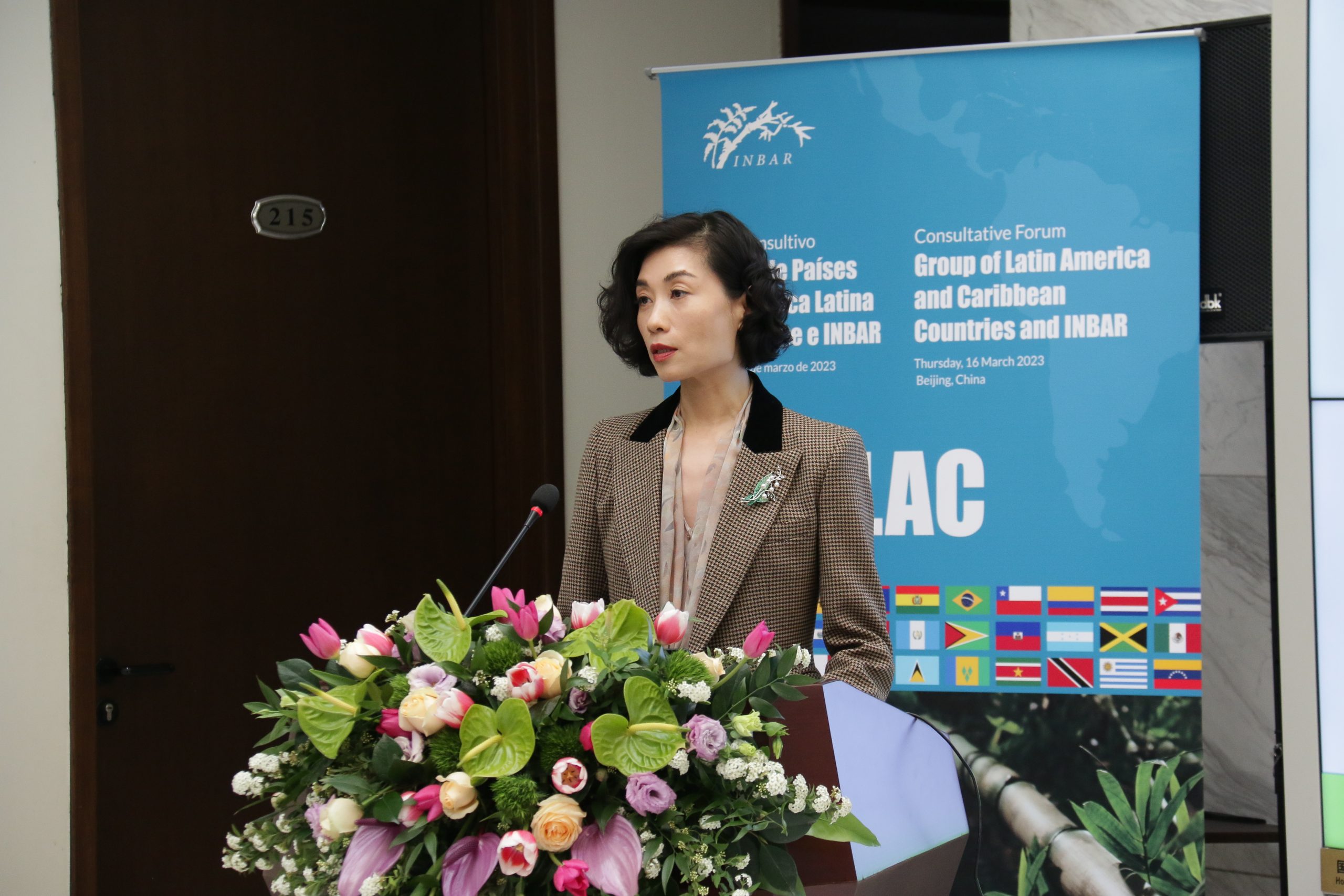
Ms. Li Lan elucidated the growth of China’s bamboo sector and the nexus of industry-university-research platforms.
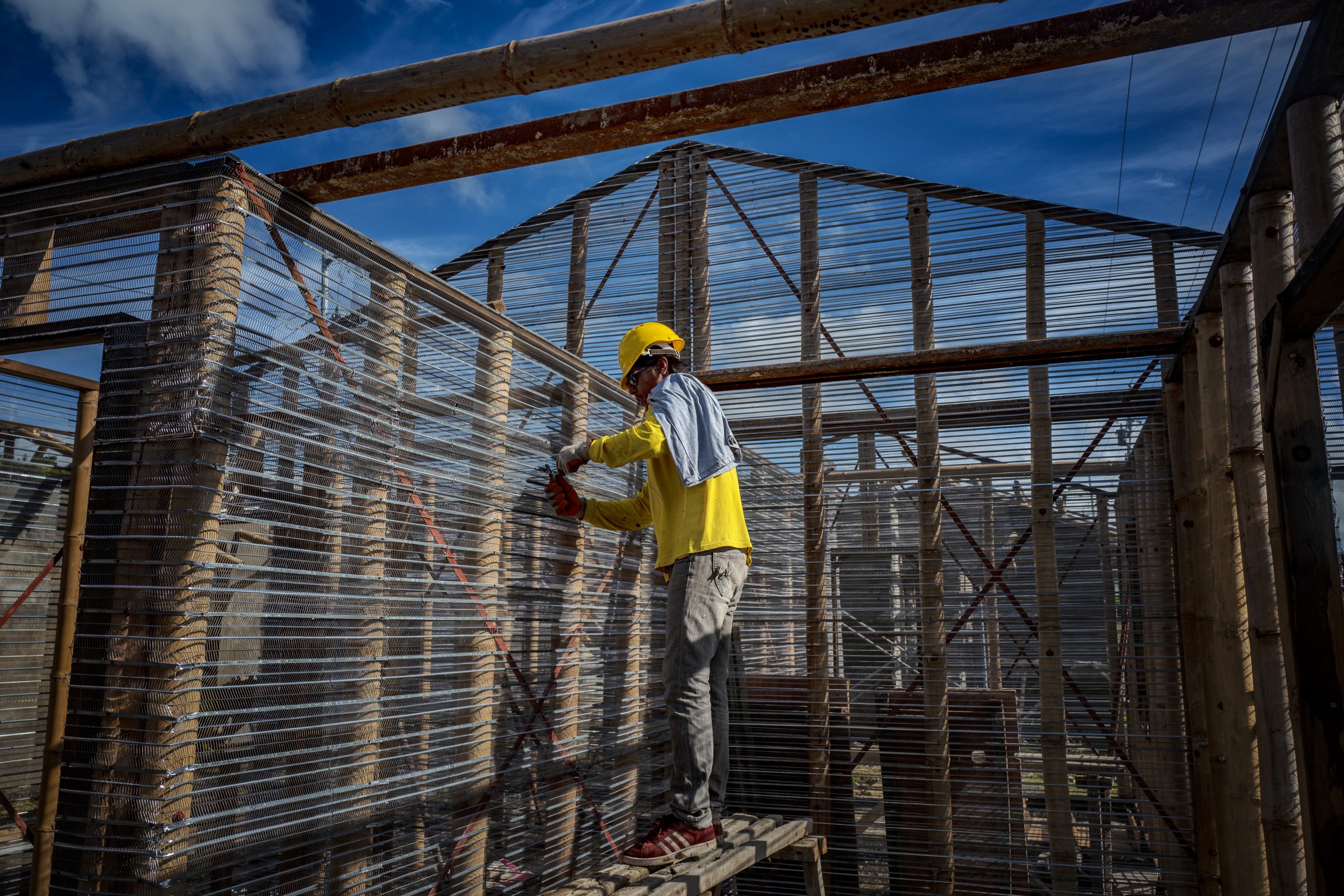
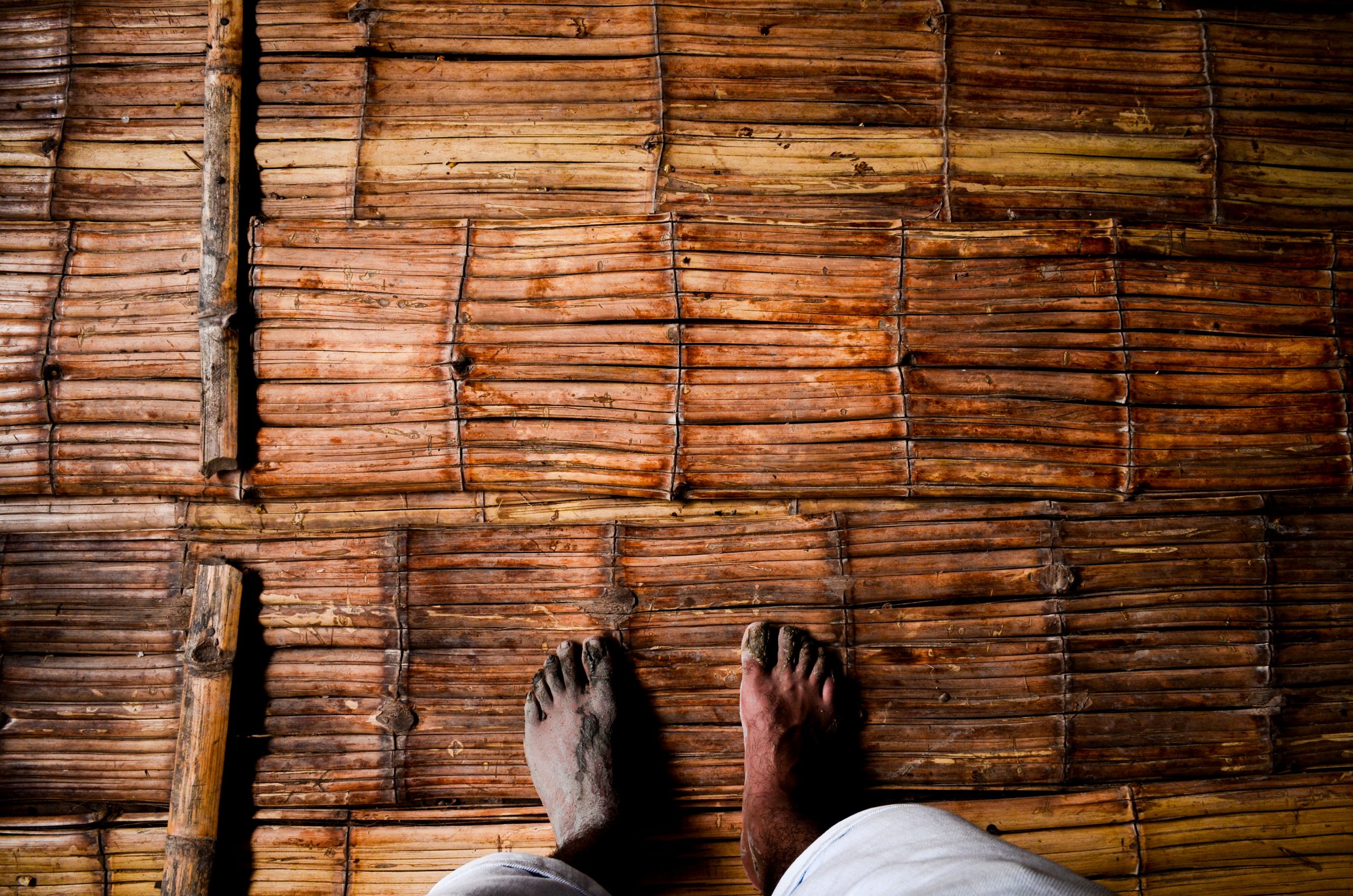
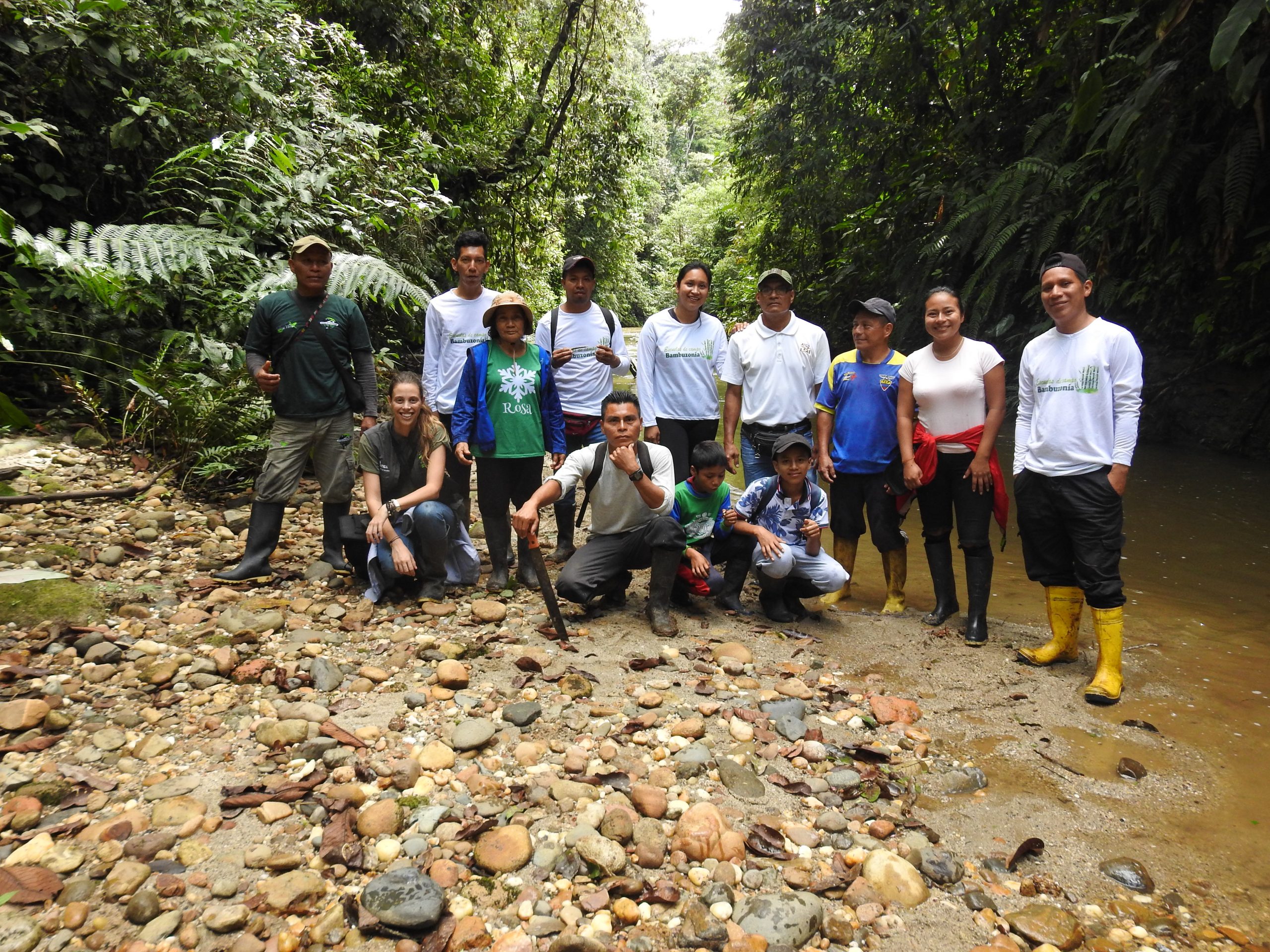
A video overview of INBAR’s activities in the Latin American and the Caribbean region was next shown. The video covers project work undertaken in the region like the Manabí Workshop School, Bambuzonía and bouncing back from COVID-19, featuring the broad applications of bamboo in the region for mitigating climate change, protecting the biosphere and contributing to the green economy. The video also contains interviews with on-the-ground project implementers and Indigenous residents of the Amazonia.
Mr. Borja De La Peña, INBAR Global Policy Officer, spoke next. He introduced bamboo’s global significance and unique characteristics, such as covering nearly 50 million ha of land and featuring over 10,000 uses and utilities. In particular, it can contribute to meeting SDGs, helping to build a cleaner and greener planet. Given its numerous advantages as a fast-growing, annually harvestable, hardy plant that grows on degraded soils with numerous value addition pathways, and also given its recent surge in popularity as reflected in rapidly rising trade values for bamboo products, it is well suited for integration into diverse sustainable development schemes.
In Latin America and the Caribbean, INBAR is currently involved in a suite of project work with diverse partners and funders, reflecting a high degree of multi-stakeholder engagement in the region. The impact from these endeavors has been undeniable: 7000 smallholder farmers trained, 1300 technical professionals equipped with bamboo construction knowledge, 4 national strategies and 5 municipal ordinances instituted, 35 institutions forming a network of university-research centers and more. For advancing to the next stage of activities and project work, robust data and more comprehensive inventories must be generated, the sector needs institutional support at all levels, including increased financial investment, and manpower capacities and research require strengthening. These are the keys to unlocking the USD 70 billion market potential of the industry alongside delivering a spate of other knock-on benefits, such as securing the ecological health of one of the world’s largest carbon sinks in the Amazon and generating high-quality employment opportunities for rural communities.
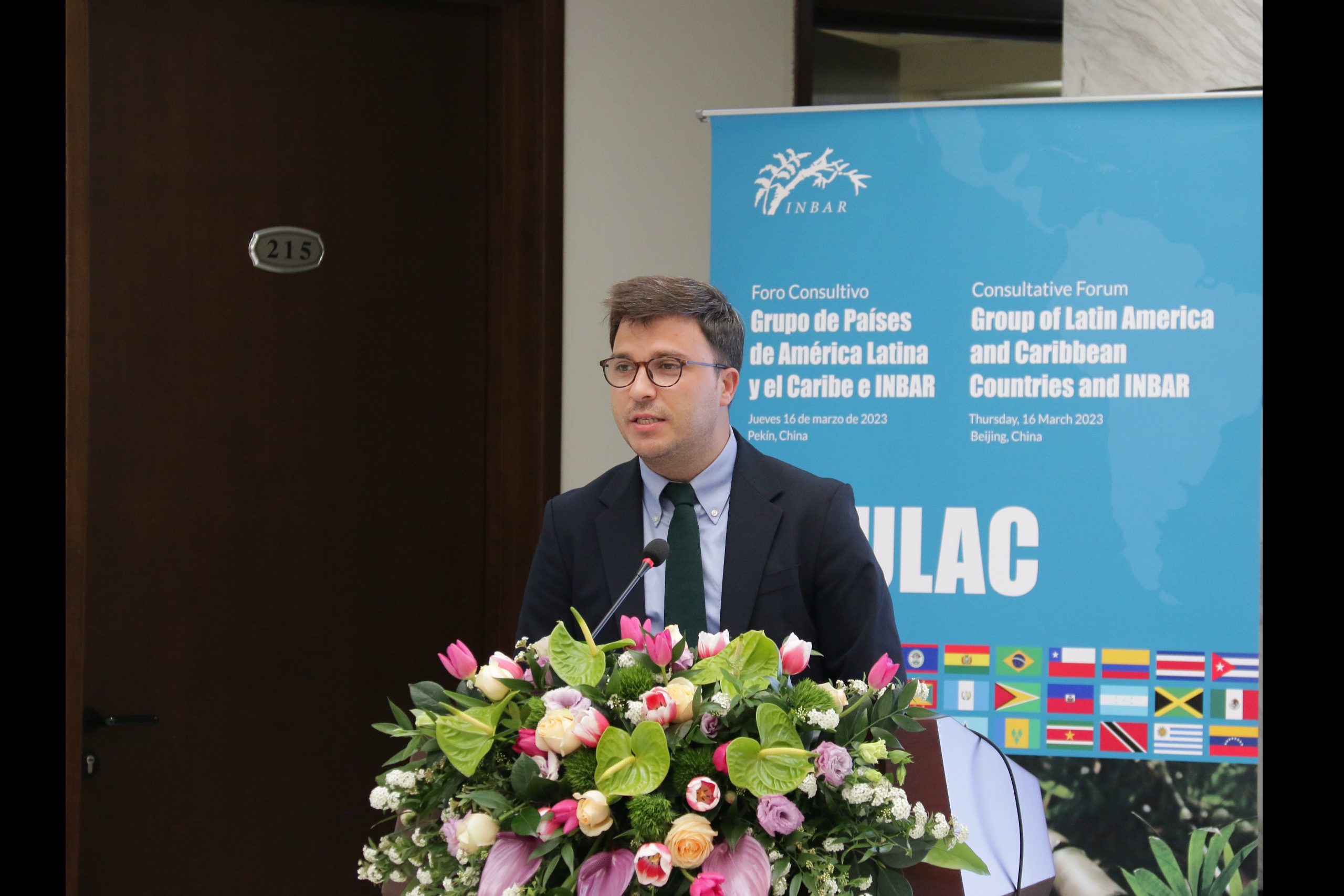
Mr. De La Peña expounded upon INBAR’s robust project portfolio in Latin America and the Caribbean and outlined the pathway for mainstreaming the bamboo industry in the region.
After his presentation, Mr. De La Peña moderated a dialogue between participants. Diplomats offered feedback to INBAR’s work over the years, and pinpointed areas of future cooperation and growth going forward. There was also broad agreement regarding the crucial need to raise awareness about the potential of bamboo and rattan for combating climate change, healing the environment and generating green jobs for local communities.
INBAR’s growing role in the region was welcomed and appreciated by speakers. Importantly, the discussion touched upon the interconnected nature of the bamboo and rattan sectors and the complex ways in which they cut across different industries and government line ministries. To address this, Mr. De De La Peña advocated for the creation of national policy to unite various governmental sectors and mobilize stakeholders, which is at the core of INBAR’s policymaking support to its Member States.

From left to right: H.E. Mr. Hallam Henry, Ambassador of Barbados, spoke on how his country is looking for sustainable solutions and is interested to learn about INBAR’s research into bamboo and rattan applications; H.E. Mr. Leonardo Alfonso Kam Binns, Ambassador of Panama, highlighted the urgent need for inventories of bamboo and rattan resources in the region; and Dr. Cristian Mancheno, Minister Counsellor of Ecuador, discussed the intertwined nature of holistic bamboo industry development.
At the end of the exchange, Mr. Ali Mchumo, INBAR Director General, said a few words. He reiterated the importance of Latin America and the Caribbean to INBAR and the necessity of leveraging its potential for sustainable development. However, to capitalize on this, the world must expand and deepen partnerships, working together with countries in the region and exploring all possible forms of of interaction with leadership in the ambassadors’ countries. Now that the COVID-19 pandemic is largely over and the travel situation has improved, he expressed his sincere intent to engage in more training, more workshops and more projects, increasing our overall activity in the region. He welcomed all countries to join INBAR and that he will personally make the application process as smooth and easy as possible.
In his closing remarks, he reiterated the need to assert the multifunctional value of bamboo and rattan as tools for economic growth, bio-energy generation, low-carbon value chains, food security and plastic pollution reduction across Latin America and the Caribbean. Pointing out that bamboo can enhance natural carbon sinks with massive potential for carbon sequestration, it was also noted that this can reduce deforestation pressures on natural forest land. With one-third of global bamboo coverage, Latin America is poised for scaling up its native bamboo resources. INBAR is now ready and excited to cooperate with countries in the region to fill in the gap with technology sharing, capacity building and facilitating South-South and Triangular cooperation.
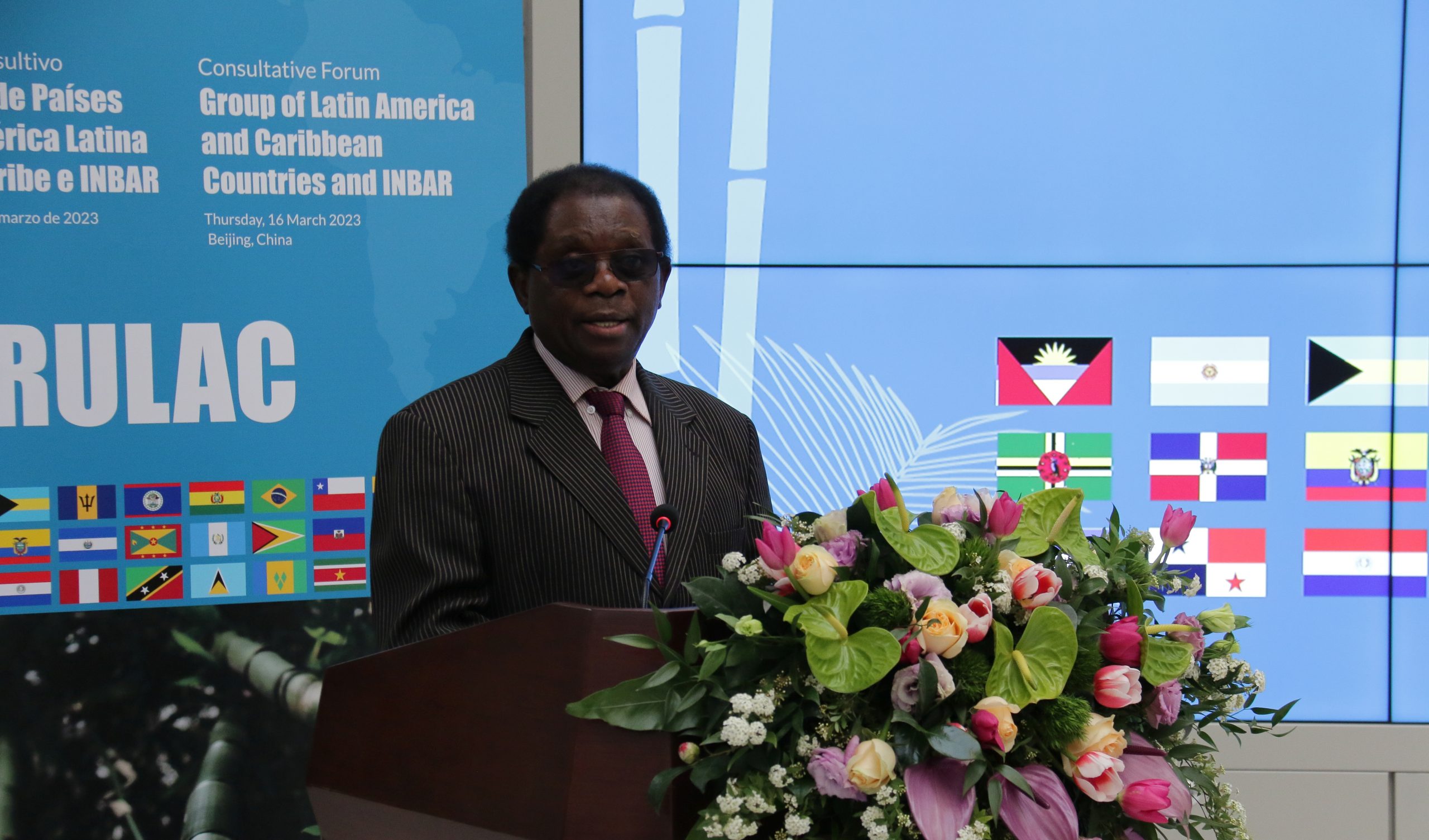
Mr. Ali Mchumo exhorted GRULAC ambassadors and diplomats to promote collaboration between INBAR and leadership in respective countries.
H.E. Mr. Fernando Lugris also offered his thoughts on the discussion. With the increase of bamboo plantations, there is clear evidence that the region is moving in the right direction and thinking more in terms of the green economy. He also described the great biodiversity present in the region, from the small islands of the Caribbean to the towering mountain peaks of the Andes, as well as region’s rugged coastlines and dry deserts, with prolific bamboo varieties thriving throughout Latin America. In particular, he singled out that there is still much to be learned from INBAR, and looks forward to a new age of cooperation with the organization as research, travel and project work begin to resume regular post-COVID-19 operations. He commented that ambassadors had some “homework” to do after this meeting, i.e., to explore the value of partnering with INBAR with respective country leaders to open a new dimension for the development of bamboo and rattan resources.
In his closing remarks, he stated he hoped everyone had gleaned new ideas from the presentations and discussions, and that much work still remains to be done. Ambassadors need to be more active in consulting with country leadership and reaching out to INBAR for trainings and workshops, and at the same time, INBAR needs to be more active in expanding its efforts across the region and liasoning with country representatives. He expressed his sincere hope that there can be greater activity and collaboration between INBAR and the members of GRULAC that bring tangible benefits to communities across the region, strengthening livelihoods and bolstering ecosystems.
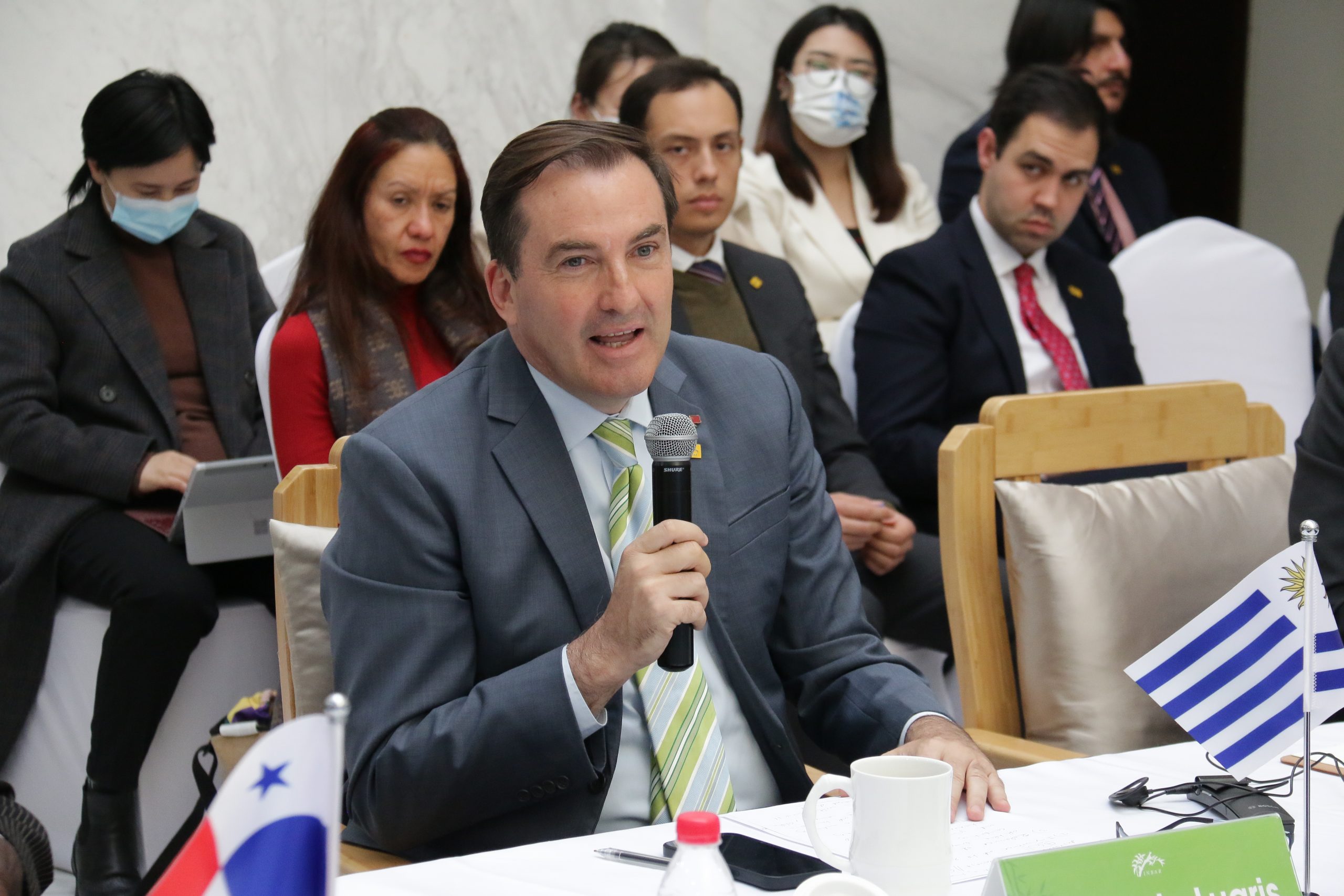
H.E. Mr. Fernando Lugris thanked INBAR for its hospitality and for facilitating a productive and informative afternoon.
The event ultimately highlighted the important role and immense potential of bamboo industry development in Latin America and the Caribbean and reiterated the importance of enhancing partnership networks and project collaboration in the future.
GRULAC, as one of the five UN Regional Groups, comprises 33 Member States from Central and South America as well as some Caribbean islands. The Group serves several important functions such as facilitating dialogue on international issues, reaching consensus on complex topics and enabling collective decision-making for regional and international affairs. It is also the responsible party for allocating seats on UN bodies by nominating candidates from the region.
Out of the 24 countries of GRULAC in China, 11 countries are INBAR Member States and 2 are INBAR Observers.
Discover more about INBAR projects in Latin America and the Caribbean.