News
NewsStrengthening bamboo business development services in Uganda

Bamboo sector SMEs in Uganda are improving their business management capabilities through capacity development support.
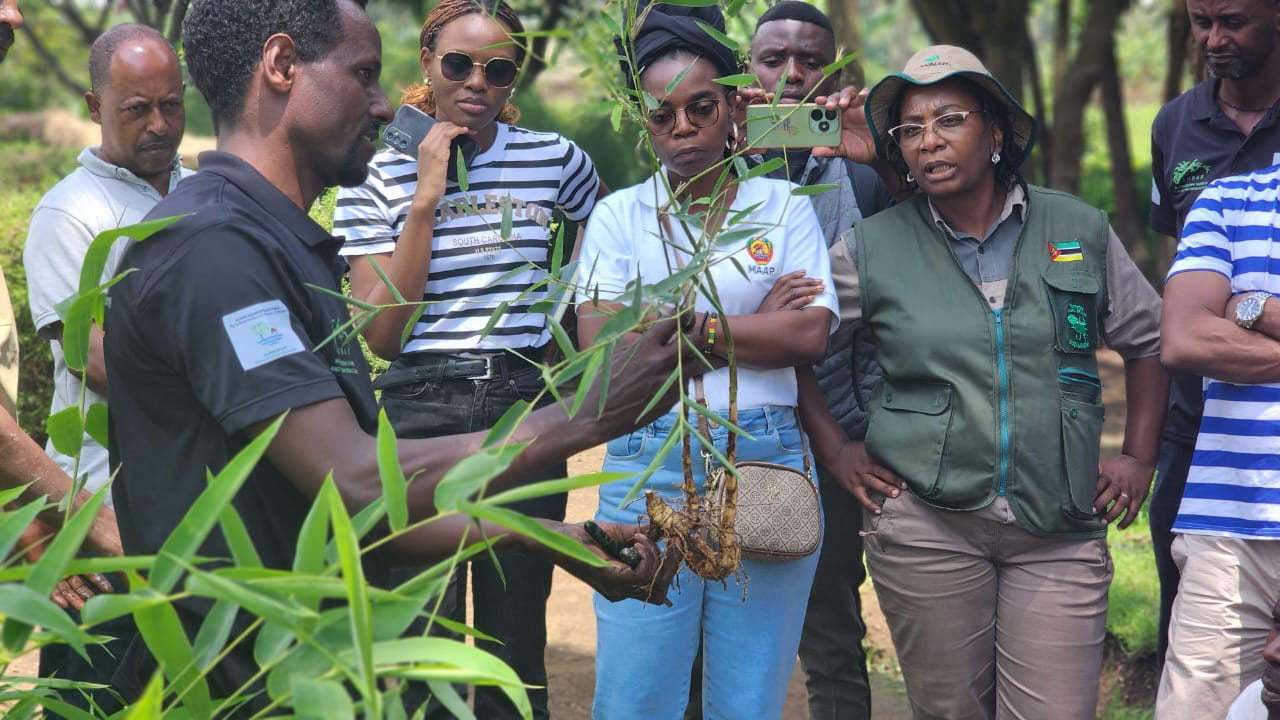
In April, INBAR, through its Dutch-Sino-East Africa Bamboo Development Programme Phase II, conducted a capacity building training on Business Development Services (BDS) for 19 bamboo small and medium-sized enterprises (SMEs) and entrepreneurs working in the bamboo cottage industry in Uganda.
BDS particularly help support the development of small businesses, which are known to create employment, generate income and contribute to economic development and growth. INBAR has been providing these services to bamboo SMEs and entrepreneurs through its development projects across the Global South.
The training, aimed to improve target beneficiaries’ basic business skills in financial recording, product quality management, pricing and business registration, equips participants with the skill set to meet competitive market demands and instils successful entrepreneurial traits to boost their confidence, initiative and creative thinking.
Dr. Selim Reza, Program Manager of the project, delivered a presentation on the ways in which SMEs can run sustainable and successful bamboo businesses and generate lucrative business models. He advised trainees to pursue a social entrepreneurship model to address inadequate finances and challenges in seed capital.
Miss Sarah Mumbi, Marketing Head of Uganda Industrial Research Institute (UIRI), presented on e-marketing and how the bamboo sector can benefit from it to market products to a broader audience. She stressed the need for utilizing social media and other e-platforms, such as mobile apps, to virtually showcase and sell bamboo products, encouraging participants to work together to create an app that links bamboo producers and consumers. She also advised the importance of protecting intellectual property.
Participants benefited from the training and expressed their hope that it will enhance their entrepreneurial ability to either pitch a business plan successfully or operate their existing businesses. They further stated that continued follow up and mentorship are needed and welcomed, especially for startups if they are to become proficient in the industry.
BDS include an array of business services, such as training, consultancy, marketing, information technology development and transfer, and business linkage promotion, that improve the performance of enterprises, their access to markets and their ability to compete. Including strategic medium to long-term issues that improve performance and operational day-to-day issues, BDS are designed to focus more on individual businesses as opposed to larger businesses.
The Dutch-Sino-East Africa Bamboo Development Programme II aims to support at least 10,000 jobs through strengthened SMEs and bamboo industries across its three beneficiary countries, Ethiopia, Kenya and Uganda. This work has created employment and income generation opportunities for communities belonging to impoverished rural areas. In this sense, supporting BDS is an important means of achieving local and international development goals by addressing poverty while empowering the rural poor.