 News
NewsGetting hands-on in new INBAR Member State

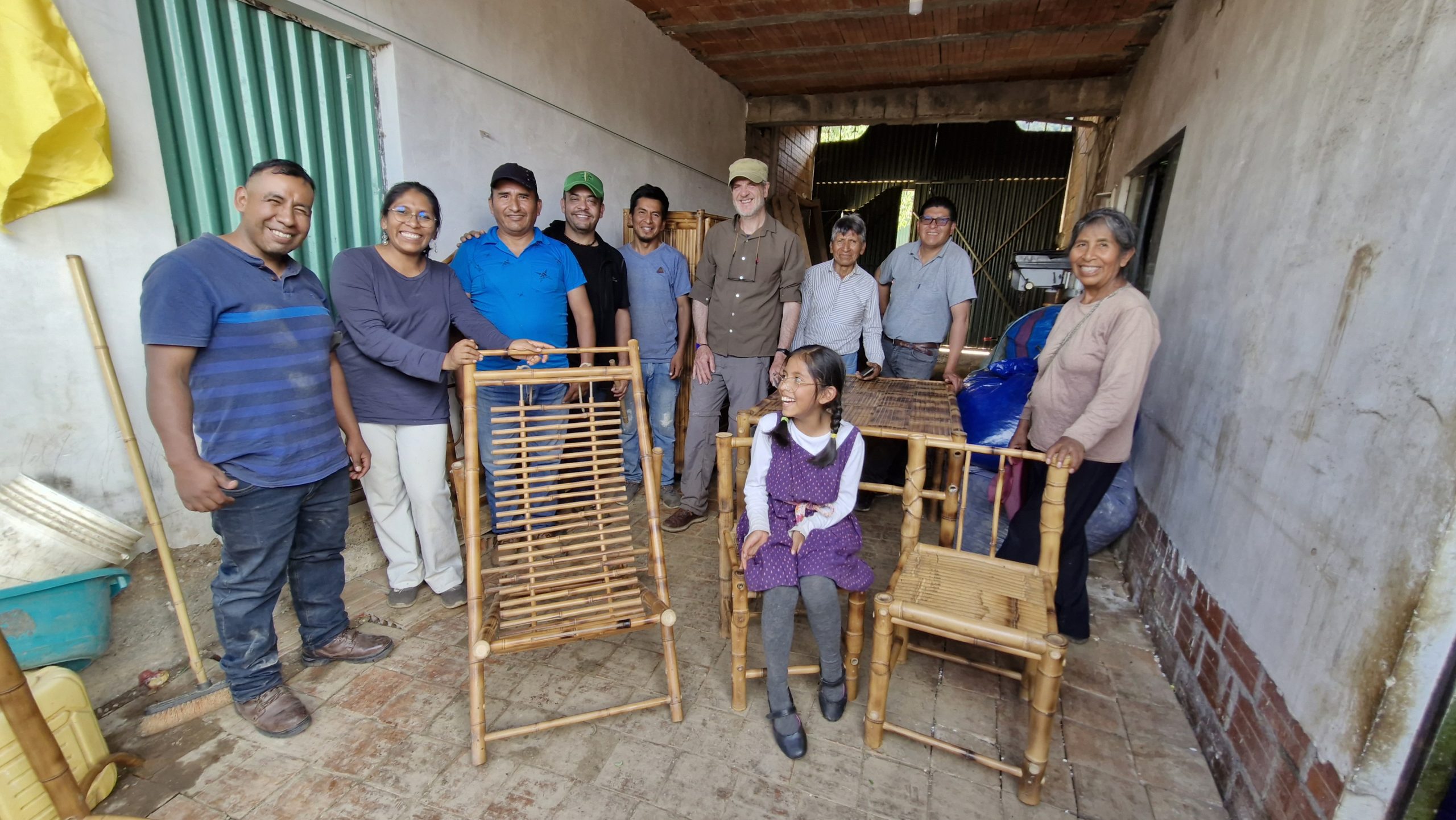
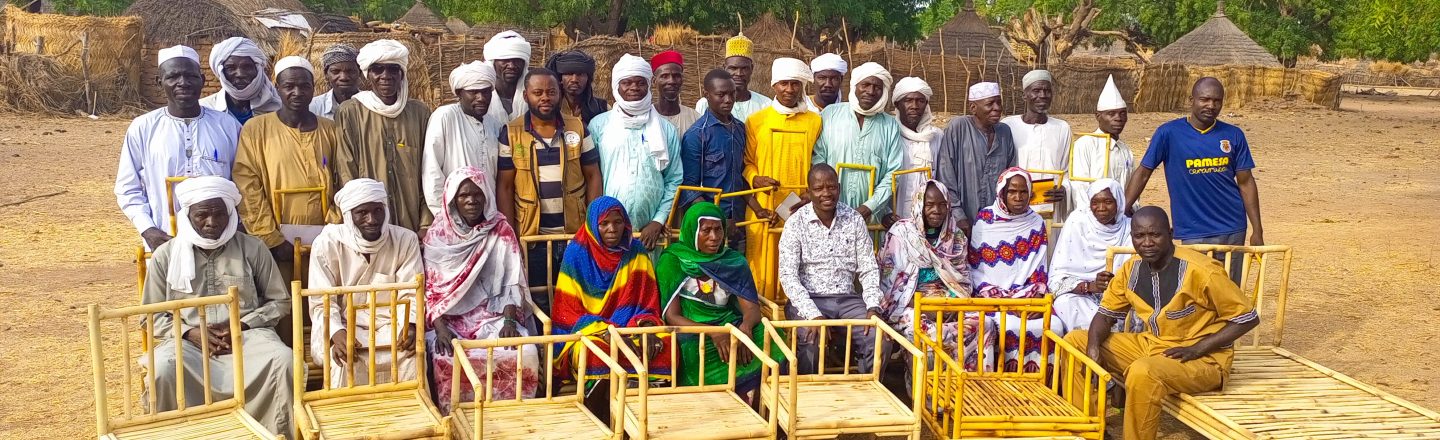
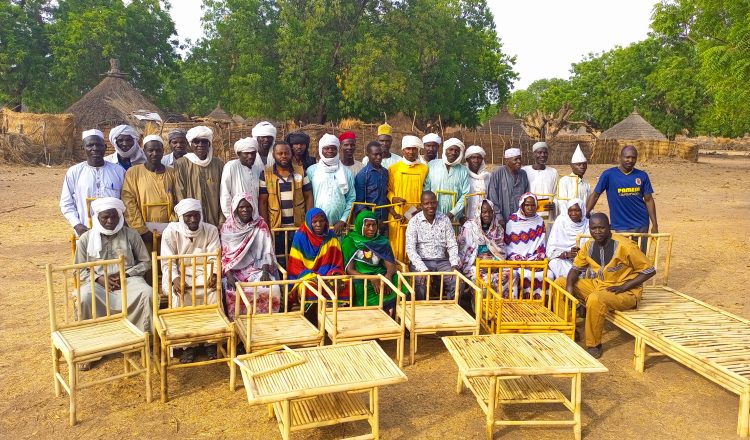
Participants with their finished bamboo furniture. Credit: Kfutwah Belmond.
The first workshop to launch in Chad since the country became INBAR’s 49th Member State delivers skills and knowledge on bamboo harvesting and furniture making.
Acceding to INBAR on 1 September 2022, Chad is home to natural bamboo that is used daily for making agricultural tools such as hoes, axes and fencing as well as furniture and roofs. However, smallholders face challenges in obtaining viable seedlings, and a knowledge and technical gap exists for cultivation. But help is on the way.
From 22 March to 10 April 2023, a workshop was organized for 28 artisans from 14 villages from the Division of Aboudéia, Salamat Province. Convened in the small village of Liwi, the main objective of the workshop was to contribute to the sustainable management of bamboo forests through the transfer of technical capacities in order to improve the income of bamboo users in the region. Adopting the “Training of Trainers” model in which key actors from a region are targeted for instruction, allowing them to rapidly disseminate new knowledge and skills upon their return home, the workshop was intended to trigger a cascade effect among relevant stakeholders, building capacities at scale.
This training was organized within the framework of the project “Support for the development and implementation of a concerted and integrated model for the conservation of the Great Functional Ecosystem of the Zakouma National Park (APEF-GEFZ),” implemented by The International Union for the Conservation of Nature (IUCN) in partnership with other agencies and associations in Chad. INBAR was solicited to facilitate the technical know-how of the workshop.
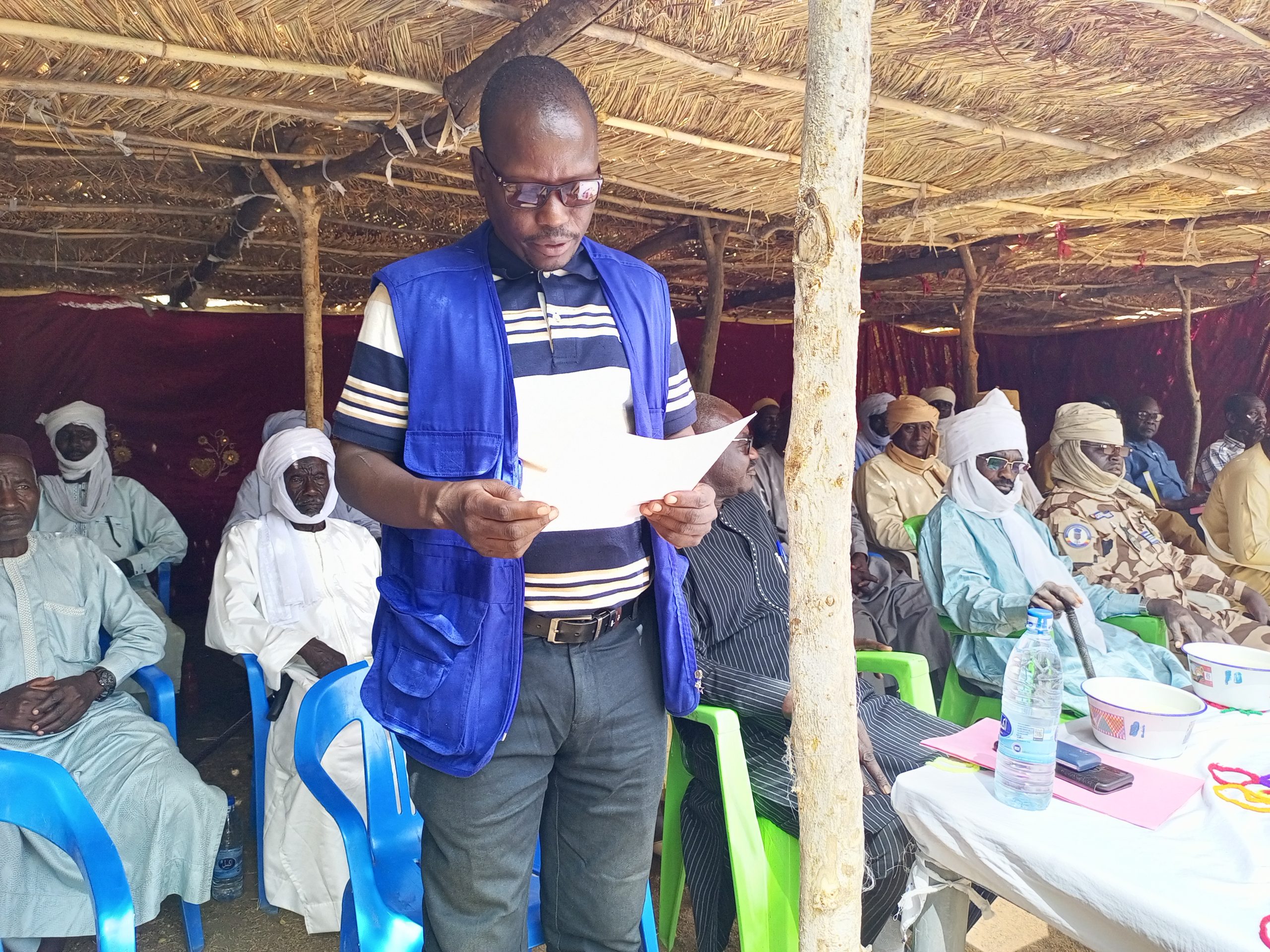
Sanga explained the importance of the project to rural development and sustainable management goals. Credit: Kfutwah Belmond.
In his opening remarks, Azina Sanga Ditcho, Project Manager of APEF-GEFZ, welcomed the participants and different delegations before introducing the project scope and relevance of the workshop to the local population.
In particular, he mentioned that the project focuses on development actions that respect the principles of sustainable management. Focusing on the capacity building of local actors in key intervention areas, the work contributes overall to development policy in the region.
He ended his speech by exhorting participants to take advantage of the opportunity to develop new and existing skills in order to improve their livelihood.
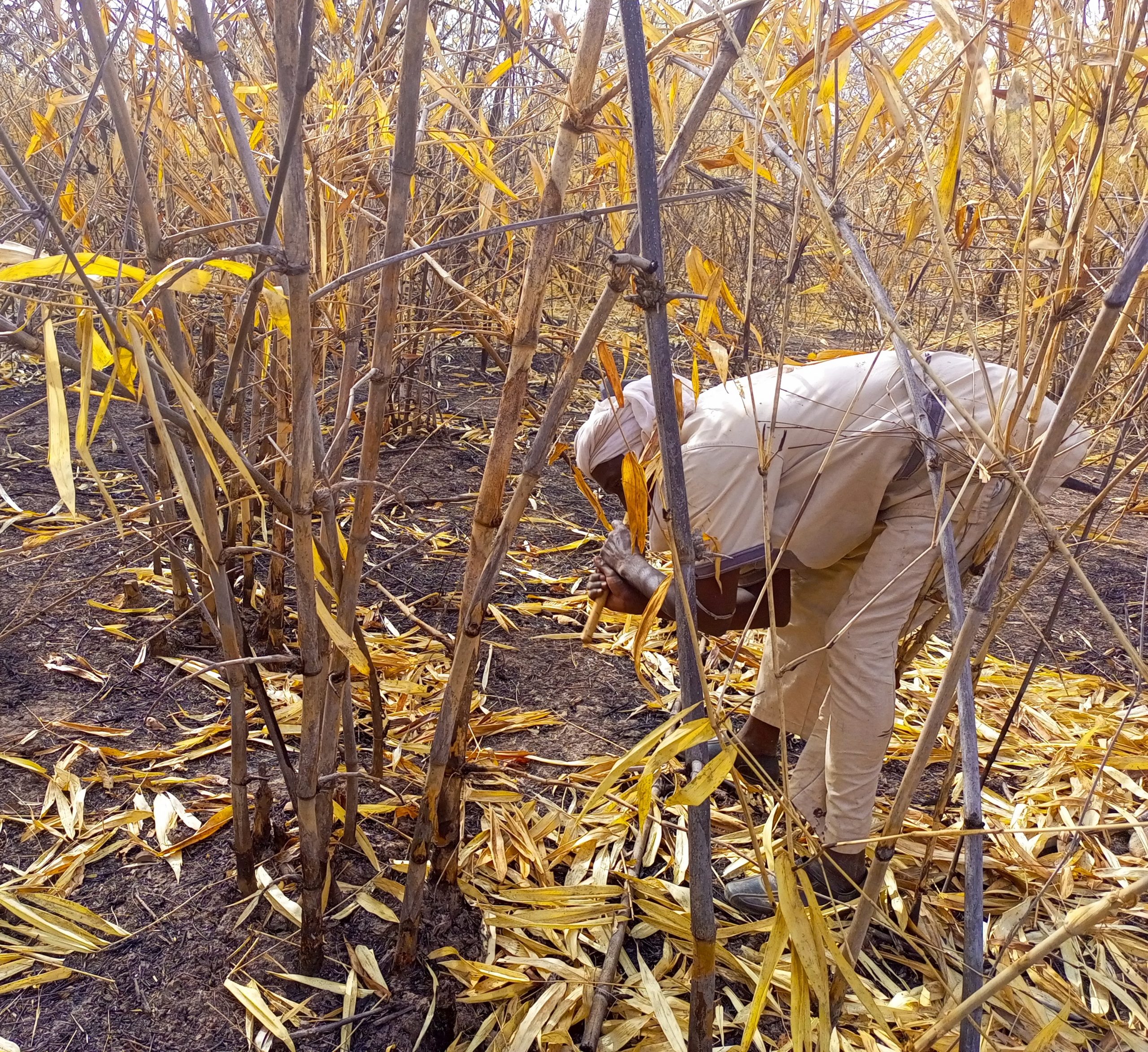
Field demonstrations on bamboo harvesting. Credit: Kfutwah Belmond.
The 20-day training consisted of two phases. The first phase sought to provide participants with a solid theoretical basis for the work and was made up of presentations, discussions and Q & A.
The second stage facilitated participants applying the knowledge gained during the theoretical phase in practical exercises and group activities.

Heat-treating the harvested bamboo culms. Credit: Kfutwah Belmond.
The training was comprehensive in scope, covering a wide variety of topics:
- An introduction to the bamboo plant and its uses
- Identification, selection and sustainable harvesting of bamboo
- General knowledge on bamboo propagation, plantation establishment and agroforestry
- Conservation and treatment of bamboo
- Bamboo processing tools, equipment and maintenance
- Processing treatments
- Component making, assembly and finishing
Through the holistic training course design, participants acquired a solid foundation of knowledge and skills on which more advanced techniques could be developed in the future, also allowing them to teach these essential topics to other rural inhabitants back at their original residence once the training concluded.

Assembling bamboo chairs. Credit: Kfutwah Belmond.
INBAR is now working hand-in-hand with the Government of Chad to generate tailor-made solutions to address challenges in growing the country’s bamboo and rattan sectors.

Participants sand down the surface of a bamboo bed frame. Credit: Kfutwah Belmond.
As a global knowledge broker, INBAR will integrate project work in Chad under the framework of South-South cooperation, facilitating the entry of innovative technology and solutions into the new Member State. Ultimately, the main goal is to boost livelihoods in local communities while revealing the promise of bamboo as a vital tool for effecting positive change in many different ways, from raising household incomes, delivering sustainable land management schemes and contributing to carbon sequestration.

Women also played an active role in the training. Credit: Kfutwah Belmond.
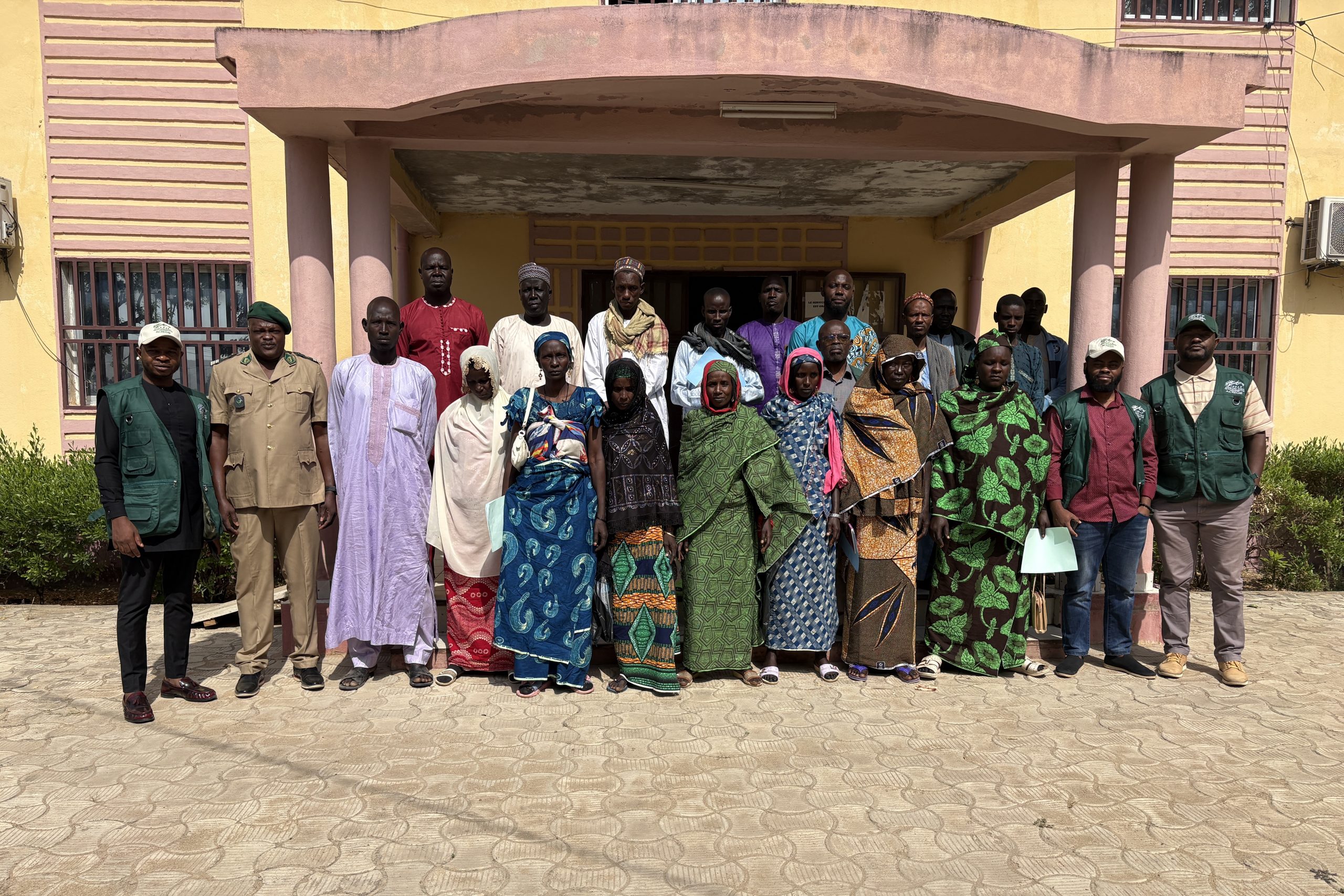
The closing ceremony was attended by the Secretary General of the Province of Salamat (Representative of the Governor), the Senior Divisional Officer of Aboudéia, Rural Divisional Officers of Aboudeia, the heads of the defense and security forces, the heads of cantons, representatives from the Ministry of Environment, Fisheries and Sustainable Development and the Ministry of Culture, Tourism and Handicrafts, and representatives from other organizations and associations.

Mara closed the workshop by thanking the participants and organizers for convening such an important event. Credit: Kfutwah Belmond.
In his closing speech, Maab Mara, Secretary General of the Province of Salamat and representative of the Governor of the province, thanked the trainees for honoring the training with their presence and participating diligently, despite their multiple occupations and busy lives. He reminded them to practice the skills they had acquired and stated his wish to see them apply them in order to improve their livelihood. He further advised trainees to use the opportunity to integrate with ongoing projects and programs in the province. In his closing statement, he particularly thanked INBAR for sharing its technical know-how with stakeholders in Chad and expressed his hope for the collaboration to continue in the future.
INBAR will continue working in partnership with the Government of Chad to ensure the sustainable development of the country’s bamboo and rattan value chain through South-South cooperation as well as technology and solutions transfer.