 News
NewsBamboo highlighted in airport’s ‘Garden Terminal’

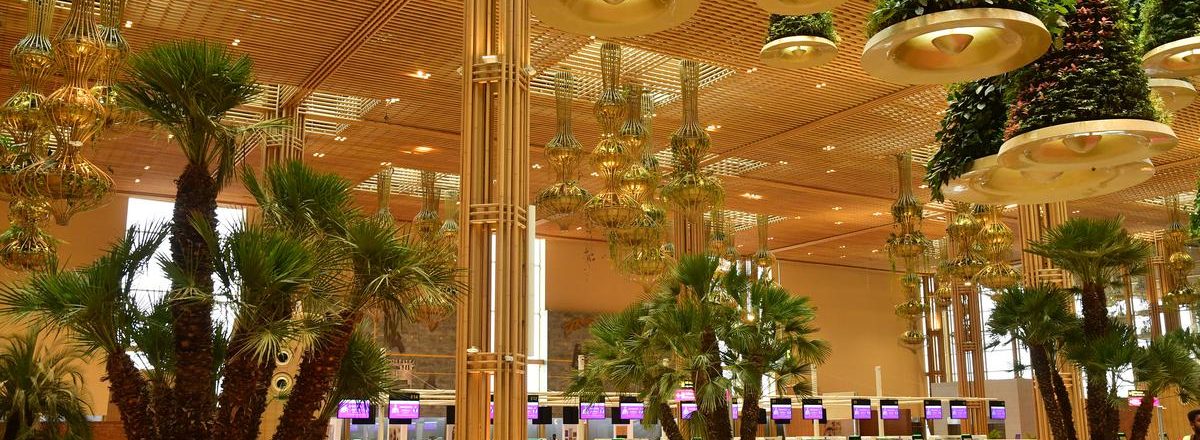
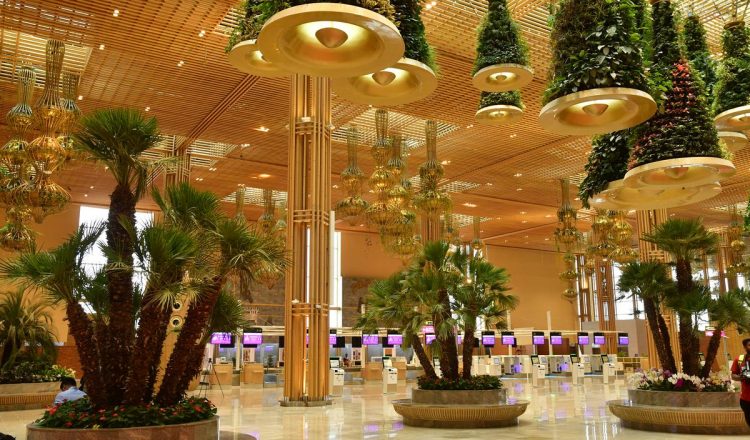
Engineered bamboo is fitted across the ceiling and pillars of the new airport terminal. Credit: K. Murali Kumar/The Hindu
A new terminal in one of India’s busiest airports is leading the way for engineered bamboo in public spaces.
When airports come to mind, one rarely thinks of lush green landscapes teeming with natural fauna. Instead, we are often assailed with images of fluorescent lights, grey surfaces and mechanical structures. But one airport in India is challenging those images.
In November 2022, Kempegowda International Airport in India’s Karnataka region finished construction of Terminal 2. Known as the ‘Garden Terminal,’ six key sustainable principles resided at the core of its design and construction process: water stewardship, net-zero carbon emissions, community-aligned noise management, circular economy, sustainable procurement and sustainable mobility.

Green plants line the corridor walls. Credit: K. Murali Kumar/The Hindu
Designed by Skidmore, Owings & Merrill LLP, the terminal re-imagines the bustling airport as a locus of serenity, connecting human travelers with the natural environment. Trees, plants, ponds and plant species adorn the space, helping absorb carbon and clean the air, while offering shade and cooler temperatures for travelers. At the same time, natural materials were sourced for building: The walls are made of brick, and the floors are covered with natural terrazzo.
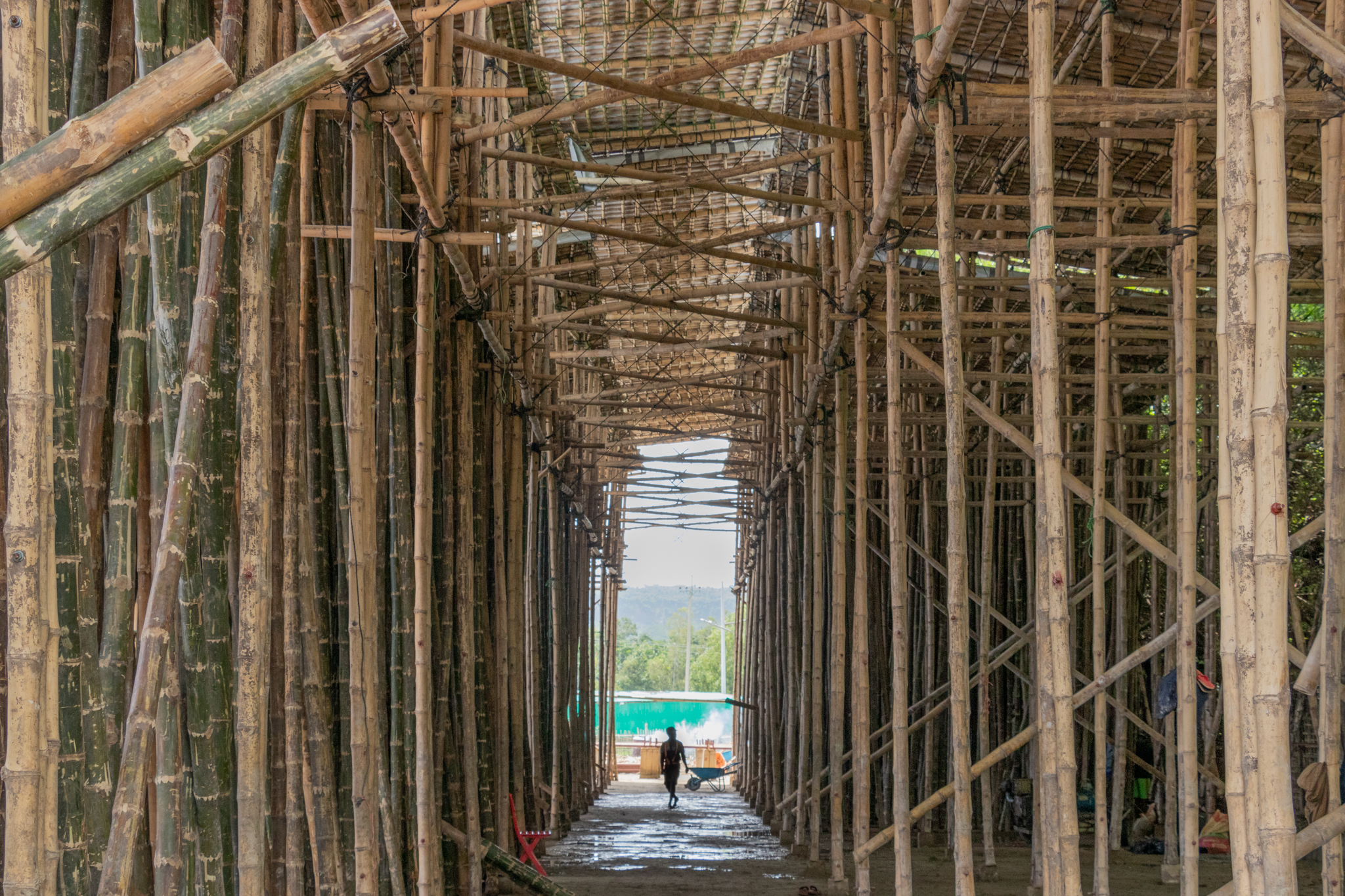
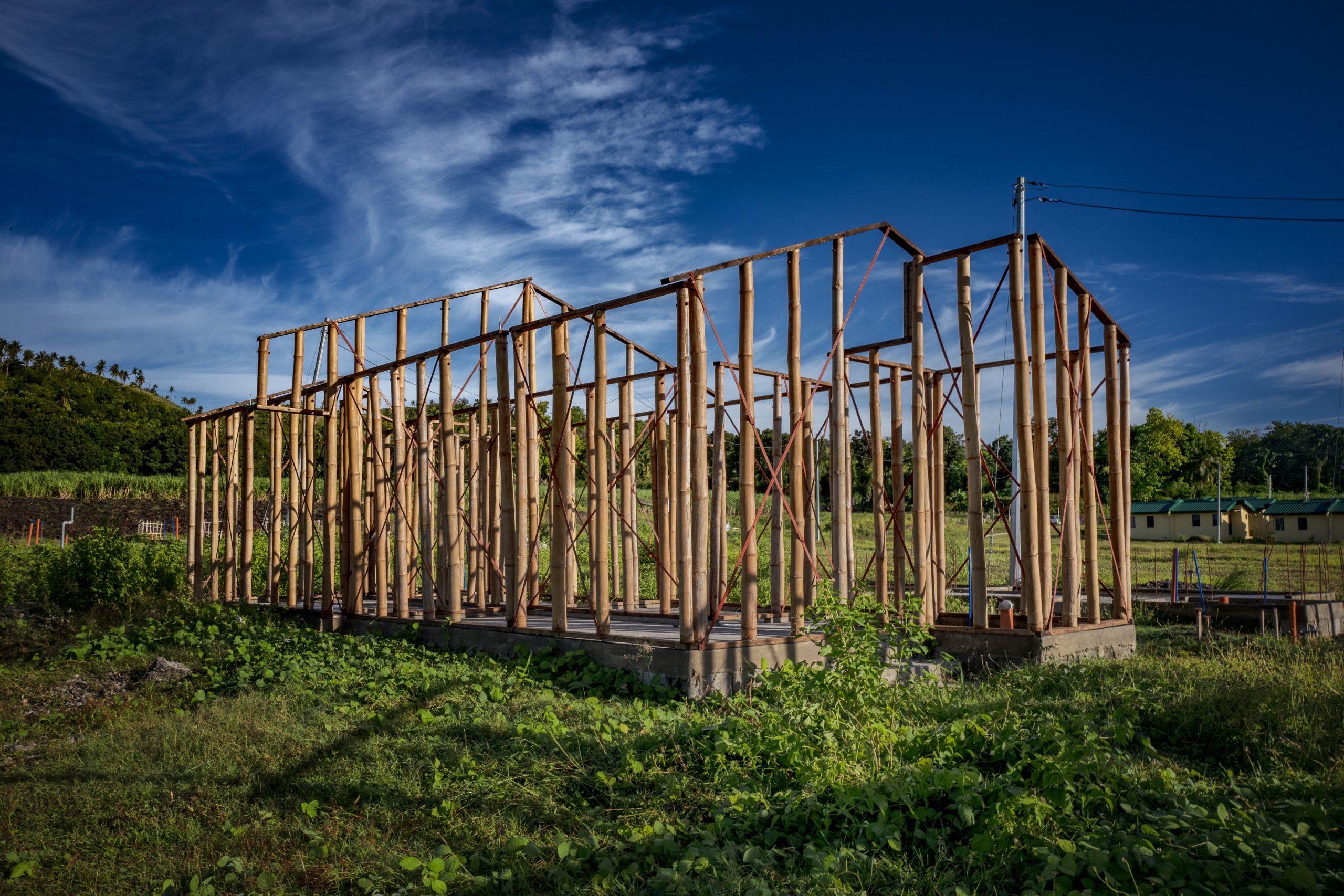
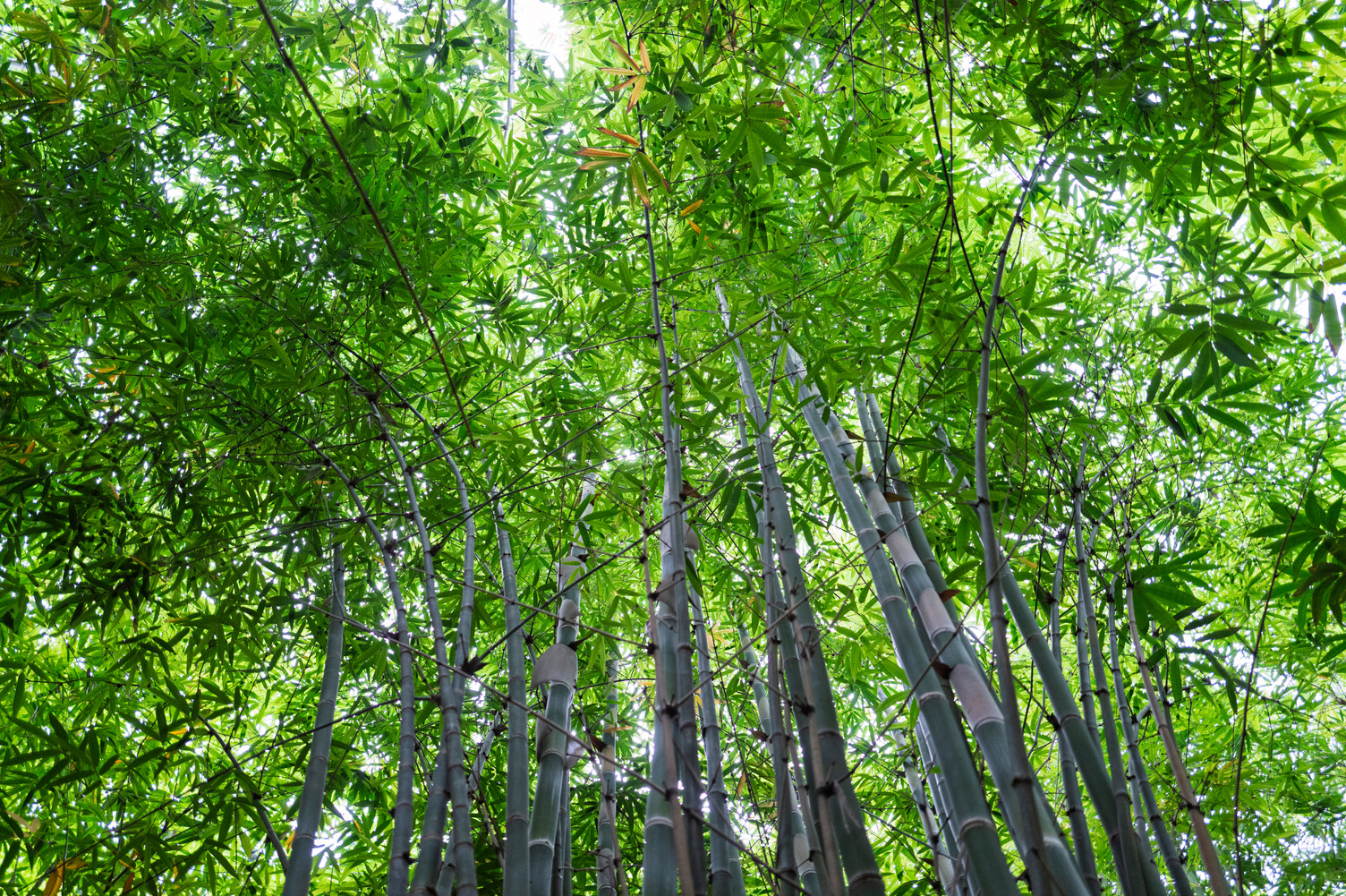
Bamboo, as a renewable, fast-growing resource, also features prominently across the terminal. An innovative form of engineered bamboo provided by MOSO International has been fitted across the ceilings and pillars. Given that bamboo can be harvested annually, grows across sloping and degraded soils, prevents erosion and boosts water recharge, the forest resource is becoming increasingly recognized as a premiere building material for sustainable development.
Its inclusion in the project exerts a significant impact on lowering the project’s carbon emissions, as approximately 2650 tons of carbon will be stored in the tubes over the lifetime of the material. Sourcing bamboo over abiotic alternatives for the project also avoided the production of nearly 2500 tons of CO2. This means that, when added to the construction stored carbon, over 5000 tons of CO2 were saved in the project due to the use of engineered bamboo. This is the emissions equivalent of driving 42 million kilometers in the average passenger car, enough to complete 1000 laps around the Earth’s equator.

Plants receive natural light from skylights in the ceiling. Credit: MOSO International.
Though INBAR was not involved in the Garden Terminal project, INBAR’s Bamboo Construction Task Force coordinates the activities of research facilities and private companies interested in the structural uses of bamboo. The Task Force contributes to updating standards across strength grading, connection design, test methods, and determining values for engineered materials and products. It also releases publications on bamboo construction and related technologies to the general public.
Given that nearly 40% of global CO2 originates from the construction sector, bamboo can play a significant role in mitigating the effects of climate change if its potential is recognized and scaled up in strategic planning. It is hoped that more construction projects can accommodate natural materials like engineered bamboo to build spaces that intertwine modern design concepts with sustainable principles, helping to not only deliver positive experiences for individuals but also meet environmental goals.